
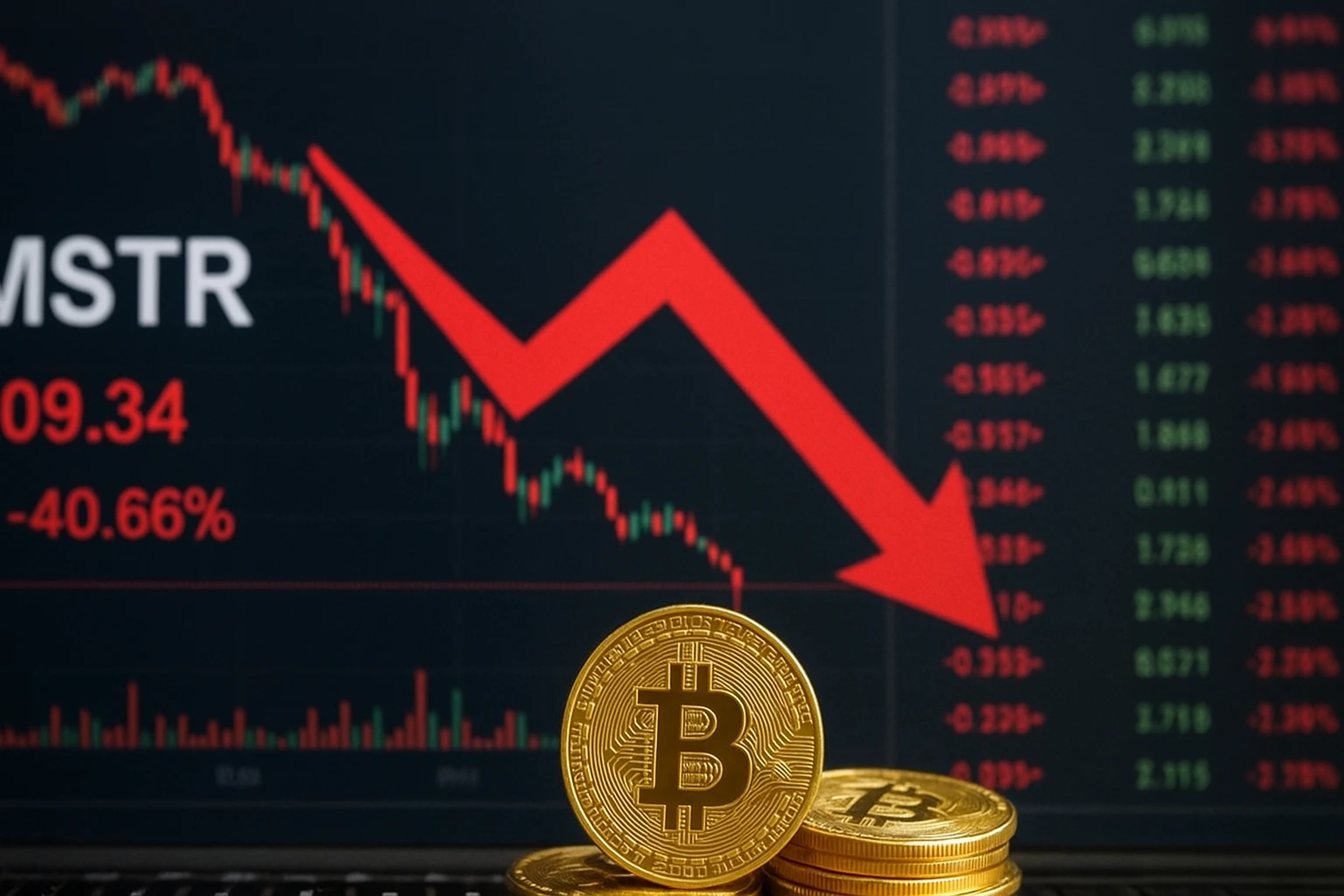
Global equities retreated Monday as a sharp selloff in cryptocurrencies and renewed concerns over monetary tightening in Japan rattled investor confidence.
Stocks drop across major regions, with US futures pointing lower and European benchmarks slipping at the open. The downturn came as Bitcoin fell more than five percent, adding fresh strain to already fragile market sentiment.
S&P 500 futures dipped 0.5 percent while contracts tied to the Nasdaq 100 lost 0.6 percent. The MSCI All Country World Index began December in negative territory after ending a seven month rally in November.
“This feels like the type of morning where everything is weighing on everything else,” said Mark Delaney, a senior strategist at Equinox Financial in London. “When cryptocurrencies plunge and central bankers turn hawkish at the same time, sentiment breaks quickly.”
The week opened with multiple headwinds converging on global markets. Bitcoin slid below $87,000 early Monday, dragging most major digital tokens lower.
The move amplified concerns that speculative pockets of the market remain vulnerable despite recent resilience in equities.
At the same time, comments from Bank of Japan Governor Kazuo Ueda signaled that policymakers are actively considering conditions for a potential rate hike, a move that could tighten global liquidity.
Traders now price an eighty percent chance of a rate increase when the BOJ meets December nineteen. Meanwhile, investors are preparing for another round of closely watched US economic data, including consumer spending figures and private payrolls.
The Federal Reserve enters its pre meeting blackout period ahead of its December nine to ten gathering, where officials are expected to debate labor market trends and the case for a third rate cut.
A shift in Fed leadership is also looming. President Donald Trump said Sunday he has chosen a nominee to succeed Chair Jerome Powell, although he did not disclose the name. Market participants widely expect White House adviser Kevin Hassett to be a leading contender.
Analysts said the combination of crypto volatility, policy uncertainty and year-end seasonal effects helped explain why stocks drop when investors typically hope for a modest December rally.
“December can be calm, but it is not always predictable,” said Andrea Tueni, head of sales trading at Saxo Banque France. “The drop in Bitcoin is weighing on sentiment and so are the comments from the BOJ. The market is hesitating ahead of major macro data.”
US Treasury yields moved unevenly in early trading. The ten year yield rose two basis points while the two year note was little changed. A steady dollar helped soothe some volatility after four days of losses.
Energy and metals markets offered a mixed picture. WTI crude jumped after OPEC+ confirmed it would pause production hikes during the first quarter. Silver and copper climbed, extending gains after hitting records last week.
“Some of the commodity strength is linked to supply constraints, but risk assets as a whole are treading more carefully,” said Carla Mendes, a portfolio manager at Alto Ridge Capital in New York. “Investors want clarity. Until they have it, they avoid large commitments.”
The MSCI All Country World Index declined 0.1 percent in November, ending a long streak of monthly gains fueled by enthusiasm around artificial intelligence and technology stocks. The rally had cooled in recent weeks amid concerns that valuations in high growth sectors were becoming stretched.
Historical data show the global gauge rose an average of 0.5 percent in December over the past decade, though analysts caution that past performance is not a reliable indicator of near term direction.
The Bloomberg Dollar Spot Index steadied Monday, while Asian equity markets showed mixed reactions. Chip related stocks in South Korea and Japan were broadly weaker as traders assessed the impact of potential rate changes by the BOJ.
Crypto markets, however, were almost uniformly lower. The latest decline extended a weeklong slide driven by profit-taking and renewed regulatory scrutiny in several jurisdictions.
“Bitcoin volatility often spills over into broader financial markets, especially on days when macro catalysts are limited,” said Fawad Khan, a digital asset researcher based in Dubai.
When Bitcoin falls sharply, risk sentiment across asset classes typically cools, and that’s part of why stocks drop simultaneously.
Away from the trading desks, business owners and consumers expressed concern about the broader implications of Monday’s market moves.
“It’s the uncertainty more than the headlines,” said Haruka Sato, who runs a manufacturing supply firm in Nagoya. “If the Bank of Japan raises rates, borrowing costs could rise for small companies like mine. That affects planning for next year.”
In Frankfurt, retail investor Lena Walter said the combination of crypto losses and shifting central bank policies made her reconsider end of year portfolio allocations.
“I haven’t sold anything, but I’m not buying either,” she said. “When stocks drop, I usually see opportunity, but this time the signals feel mixed.”
Small business owner Jamal Edwards in Detroit said customers remain cautious despite signs that inflation has moderated. “People are still budget focused,” he said. “If markets stay unstable, it could affect holiday spending.”
Economists say the coming week will play a pivotal role in shaping expectations for early 2026. Several data points, including the ISM manufacturing and services surveys, ADP private employment numbers and updated spending figures, will help refine views on whether the US economy is cooling or holding firm.
The Fed is also scheduled to release industrial production data for September, adding further context to the central bank’s policy calculus.
“The next several days will show whether this pullback is temporary or a sign of deeper caution,” said Jung In Yun, chief executive officer at Fibonacci Asset Management Global. “Investors appear to be in wait and watch mode.”
Analysts believe the nomination of the next Fed chair could also sway markets depending on how quickly the White House moves and how investors perceive the nominee’s policy stance.
As the new month begins, global markets are contending with a mix of crypto turbulence, central bank uncertainty and a shifting US policy backdrop.
While some seasonal factors historically support year end gains, the latest retreat shows how quickly sentiment can shift when multiple variables collide.
For now, investors remain cautious, watching for data signals to determine whether Monday’s stocks drop marks a brief stumble or the start of a more protracted phase of volatility.


