
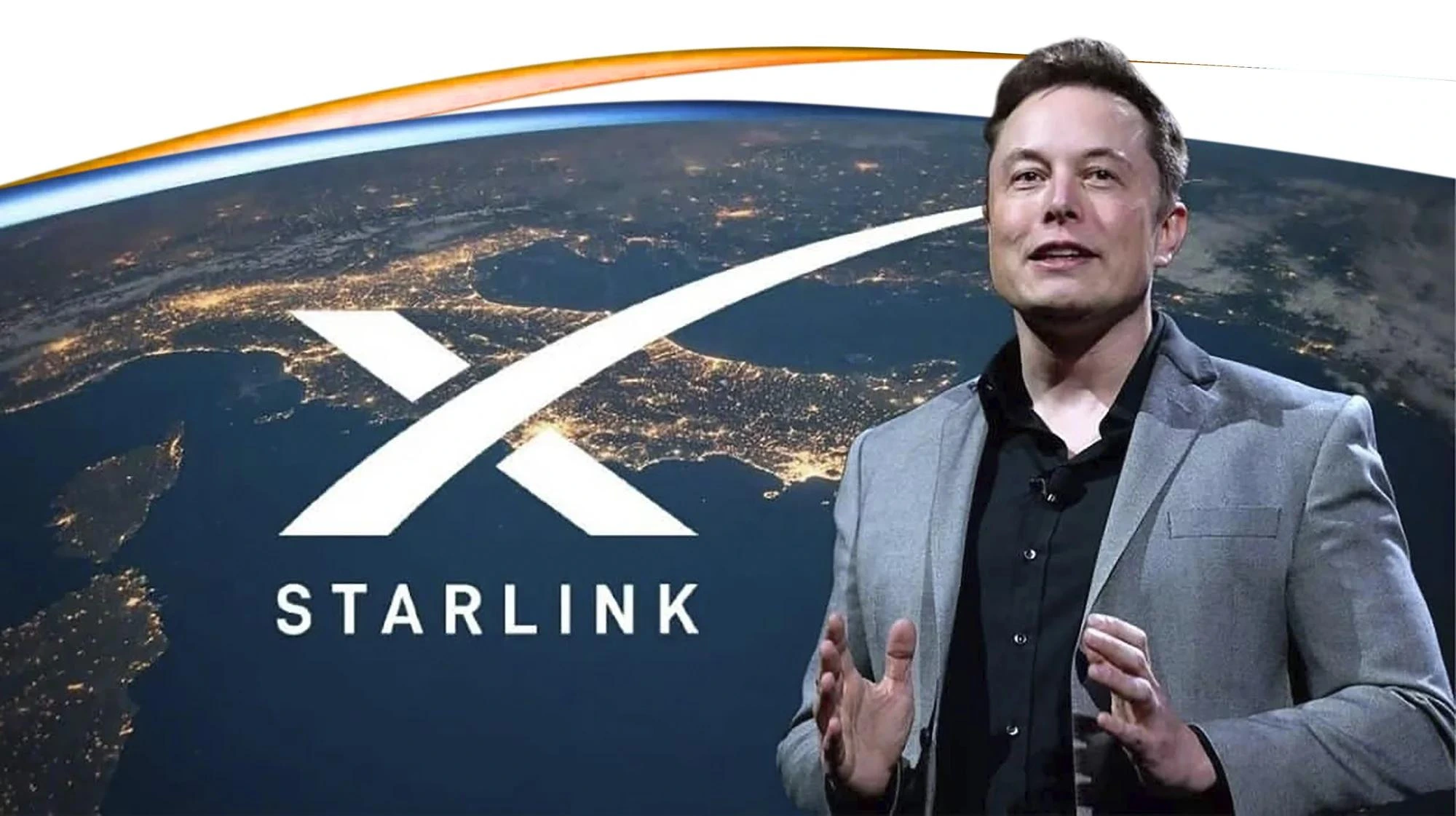
Elon Musk’s Starlink, a division of SpaceX, has signed its largest global direct to cell partnership to date with telecommunications group Veon, giving the satellite internet provider potential access to more than 150 million users across Asia and Eastern Europe.
The agreement, announced Thursday, marks a major step in the fast growing race to bring satellite connectivity directly to smartphones without the need for specialized hardware.
Both companies said the partnership will begin with Veon’s subsidiaries Beeline in Kazakhstan and Kyivstar in Ukraine before expanding to other markets where Veon operates, including Pakistan, Bangladesh, and Uzbekistan.
“The collaboration with Starlink is the biggest partnership in terms of addressable customer base in the world,” said Ilya Polshakov, Kyivstar’s new business director, in an interview with Reuters. “There will be more announced soon.”
Direct to cell technology allows standard smartphones to connect directly to satellites orbiting Earth, providing voice and data services in areas where mobile networks are unavailable or disrupted.
Starlink, which operates more than 8,000 satellites, of which about 650 are dedicated to direct to cell service, has rapidly emerged as a leader in the field.
The technology aims to close long standing gaps in coverage across rural and remote regions an issue that traditional telecom infrastructure has struggled to solve due to high deployment costs.
The Kazakhstan component of the deal was unveiled during President Kassym-Jomart Tokayev’s official visit to Washington, highlighting the geopolitical importance of satellite connectivity as countries seek to secure digital resilience amid global instability.
Veon CEO Kaan Terzioglu said earlier this year that the company was exploring multiple partnerships to expand connectivity options, including discussions with Amazon’s Project Kuiper, AST SpaceMobile, and Eutelsat OneWeb.
However, Polshakov said Veon chose to move forward with Starlink immediately due to its operational readiness. “These plans with other players will be in 2027 or 2028,” Polshakov said. “I don’t want to wait. I want to develop business today.”
Industry analysts view the Veon Starlink partnership as a milestone in the evolution of hybrid terrestrial satellite networks.
“Starlink’s deal with Veon could redefine how telecoms operate in emerging markets,” said Mira Al Hassan, a telecom analyst at London based Orion Insights.
“Rather than competing with satellites, carriers are now integrating them directly into their service offerings. This hybrid model will become the norm by the end of the decade.”
Analysts also note that the partnership’s nonexclusive nature allows both sides flexibility to adapt as the market matures. “It’s a strategic hedge,” said Victor Zhou, a space technology researcher at the Asia Connectivity Institute in Singapore.
Veon gains early mover advantage with Starlink, while keeping doors open for Amazon or OneWeb as those constellations go live.
The move comes amid rising competition in the satellite to phone sector. AST SpaceMobile has already signed partnerships with Verizon and Saudi Arabia’s STC, while Amazon’s Project Kuiper aims to begin commercial service in 2026.
Starlink currently has more than seven million users globally and operates in partnership with 11 telecom providers, including T-Mobile in the United States and Rogers in Canada.
According to SpaceX, its direct-to-cell satellites can provide connectivity even in regions affected by conflict or natural disasters. The company plans to expand its constellation to over 12,000 satellites by 2027.
Veon, which reported more than 150 million customers across its markets in 2024, sees satellite integration as a way to reinforce its networks and ensure continuity in areas where terrestrial infrastructure is damaged or underdeveloped.
A parallel development occurred Thursday when EchoStar announced a $2.6 billion deal to sell additional US airwave rights to Starlink, further strengthening SpaceX’s domestic network capabilities.
“Satellite operators are not just chasing rural markets anymore,” said Zhou. “They’re positioning themselves as complementary layers to 5G and future 6G systems. That’s where the long-term economics are heading.”
For consumers in regions with unreliable connectivity, the announcement carries significant promise.
“In rural Kazakhstan, coverage gaps have always been a problem,” said Almaz Nurkenov, a teacher in Almaty who often travels to remote areas. “If this works, it could finally allow us to communicate without worrying about losing signal for hours.”
Residents in Ukraine also view the move as a vital step for resilience amid ongoing disruptions caused by war.
Starlink already played a big role in keeping us connected during blackouts, said Kyiv resident Anastasiia Kovalenko. “If we can access that through our regular phones, it would be a game changer.”
The Kyivstar service is expected to launch in the fourth quarter of 2025, followed by Beeline in 2026. Analysts believe that if the rollout succeeds, Veon could become one of the first multinational telecom groups to fully integrate satellite to cell coverage across multiple regions.
Competition, however, is likely to intensify. Amazon’s Project Kuiper plans to begin service within two years, and AST SpaceMobile is preparing to deploy commercial direct to phone satellites by late 2026.
Governments are also watching the sector closely. Satellite based networks raise regulatory questions about spectrum allocation, data privacy, and national security especially in conflict-prone regions.
“Cross border satellite connectivity is not just a technical challenge it’s a geopolitical one,” said Al Hassan. “Operators must coordinate with multiple jurisdictions to ensure compliance and security.”
The Starlink Veon partnership underscores the accelerating shift toward a global communications infrastructure that blends space based and terrestrial systems.
As the satellite to smartphone race heats up, billions of people in remote or underserved regions may soon find themselves within reach of high speed, direct to cell connectivity for the first time.
Whether Starlink can maintain its early lead will depend on execution, affordability, and regulatory cooperation. But for now, the deal marks a pivotal step toward realizing a long promised goal: universal mobile coverage, powered from space.


