
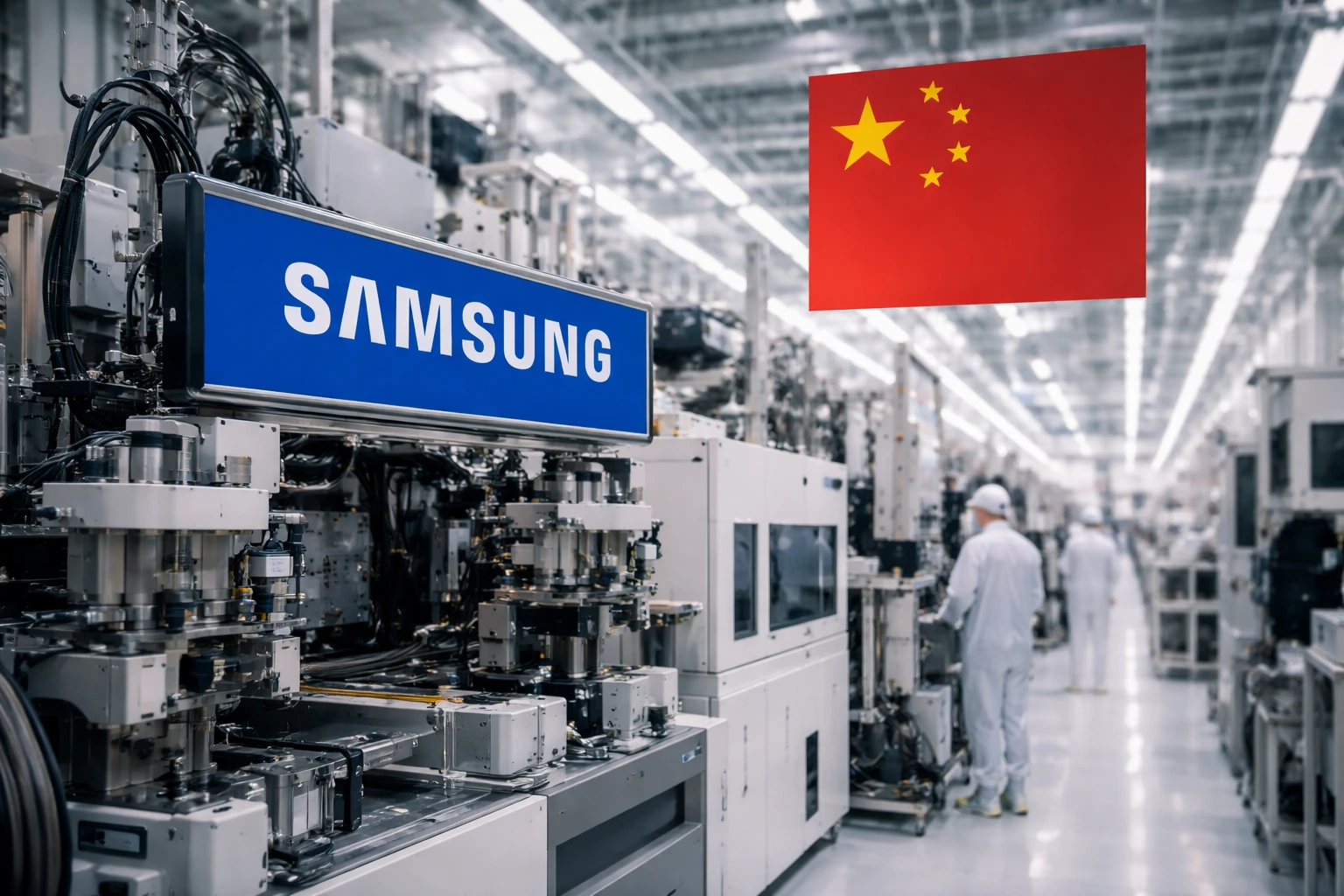
The United States has granted annual licenses allowing Samsung Electronics and SK Hynix to ship chipmaking equipment to their facilities in China through 2026, sources familiar with the matter said Tuesday.
The approval offers temporary regulatory clarity for the world’s leading memory chipmakers as Washington implements tighter controls on sensitive technology exports.
The annual licensing system replaces the long standing validated end user exemptions, which are set to expire on Dec. 31.
Previously, Samsung, SK Hynix, and Taiwan Semiconductor Manufacturing Co. were allowed to import certain US chipmaking tools for their China operations without seeking individual licenses.
One source said the shift to annual approvals reflects Washington’s effort to maintain oversight over exports while allowing companies to continue operations.
The US Department of Commerce was not immediately available for comment. Samsung and SK Hynix declined to comment, while TSMC did not respond to requests for comment.
The move comes amid ongoing US China technology tensions, with Washington seeking to limit China’s access to advanced semiconductor manufacturing equipment.
Industry analysts said the decision demonstrates a delicate balance between national security and global supply chain needs.
“This is a measured approach,” said Daniel Harper, a trade policy analyst in Washington. “Samsung China chip plants can continue operations, but under closer scrutiny and temporary licenses.”
Mei Lin Zhou, semiconductor analyst at TechInsights Asia, said the annual system introduces planning challenges. “Firms must prepare for renewals each year, making long term investment decisions more uncertain,” she said.
China is a major production hub for memory chips, particularly older generation DRAM and NAND products. Samsung and SK Hynix operate large fabs in China, producing chips for consumer electronics, cloud data centers, and enterprise servers.
Global memory chip prices have surged this year due to AI data center demand and supply constraints. According to industry reports, China based production accounts for a significant portion of output in the traditional memory market.
In Xi’an, home to Samsung’s largest memory chip plant in China, local suppliers said stability is critical for operations. “When equipment shipments are delayed, the entire supply chain feels the impact,” said Li Wei, a logistics coordinator for semiconductor facilities.
“Annual licenses provide more predictability than temporary waivers.” A South Korean industry official, speaking on condition of anonymity, said firms are adjusting to heightened oversight.
“They understand this is part of the new regulatory environment,” the official said. Analysts expect the US export controls to evolve as geopolitical dynamics and AI driven demand shape semiconductor production.
While Samsung China chip plants can operate in 2026, future renewals will likely depend on compliance and US China relations.
Companies are expected to continue diversifying supply chains to mitigate risk, with China remaining a key yet closely monitored production base.
The annual license system grants temporary clarity for Samsung China chip plants and SK Hynix, highlighting Washington’s intent to monitor sensitive technology exports.
The approach ensures short term continuity while reinforcing tighter oversight in a rapidly changing global semiconductor market.


