
SUMMARY
- Robert Duvall’s death closes a six decade career spanning more than 90 films and a best actor Oscar.
- He was widely recognized for restrained performances in The Godfather and Apocalypse Now.
- Colleagues and film historians credit Duvall with redefining modern screen masculinity through subtle, internalized acting.
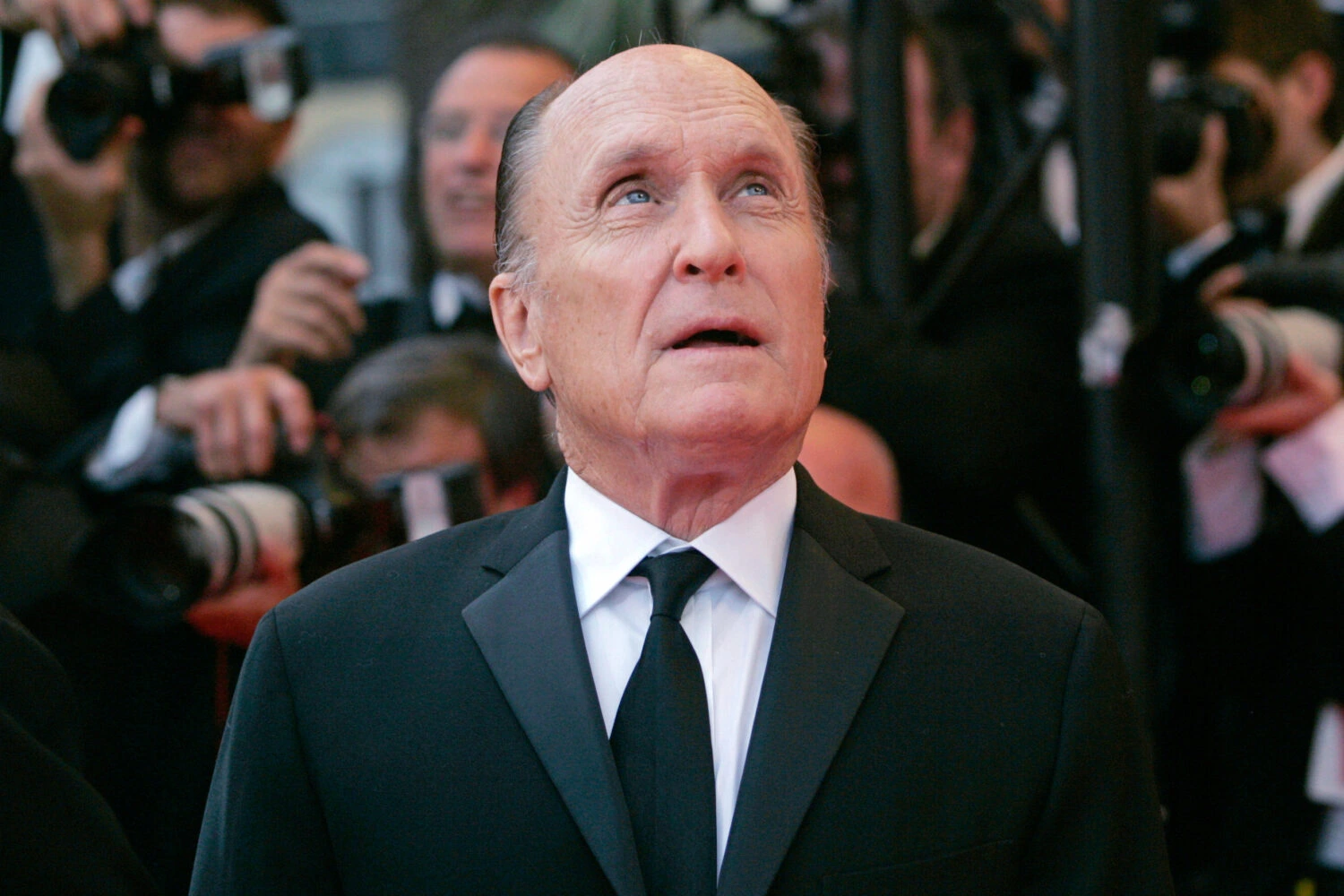
Robert Duvall, the Oscar-winning actor whose understated intensity shaped some of American cinema’s most enduring films, died Sunday at his home, according to a statement posted Monday by his wife, Luciana Duvall.
He was 95. The veteran performer, known for roles in The Godfather, Apocalypse Now and Tender Mercies, passed away peacefully surrounded by family, she wrote.
The death of Robert Duvall marks the passing of one of the last major figures of the New Hollywood era, a generation that reshaped American filmmaking in the 1970s.
From quiet supporting roles to commanding lead performances, Duvall built a body of work that bridged studio-era traditions and a more psychologically nuanced screen style.
His wife wrote on Facebook that “we said goodbye to my beloved husband, cherished friend and one of the greatest actors of our time.” No cause of death was disclosed.
Born Jan. 5, 1931, in San Diego to a military family, Duvall studied at the Neighborhood Playhouse School of the Theatre in New York.
He shared early career friendships with actors Dustin Hoffman and Gene Hackman, part of a cohort that would dominate American film in the 1970s.
His breakthrough came in 1962 as Boo Radley in To Kill a Mockingbird. Though he had no dialogue, his brief appearance established a screen presence built on physical restraint.
By 1972, he gained global recognition as Tom Hagen in The Godfather, portraying the Corleone family’s adopted son and consigliere with measured composure.
In 1979, Duvall earned Academy Award nominations for The Great Santini and Apocalypse Now. His portrayal of Lt. Col. Bill Kilgore in Francis Ford Coppola’s Vietnam War epic delivered one of cinema’s most quoted lines.
He won the best actor Oscar for 1983’s Tender Mercies, playing a troubled country singer seeking redemption.
Across more than six decades, Duvall appeared in over 90 films, also writing and directing The Apostle in 1997, which earned him another Oscar nomination.
Thomas Schatz, film historian at the University of Texas at Austin, said Duvall’s performances reflected a shift in acting styles during the New Hollywood movement.
“He represented a move away from theatrical expressiveness toward interior realism,” Schatz said. “That subtlety influenced generations of screen actors.”
Jeanine Basinger, founder of the Department of Film and Media Studies at Wesleyan University, said Duvall expanded traditional portrayals of male authority figures.
“Whether playing soldiers, lawyers or preachers, he located vulnerability within strength,” she said. “That complexity became a defining trait of late twentieth century American cinema.”
Industry analysts note that Duvall’s collaborations with directors including Francis Ford Coppola and Bruce Beresford coincided with a period when actor driven storytelling dominated Hollywood production.
Bruce Beresford, director of Tender Mercies, said in a statement that Duvall brought “absolute authenticity to every frame.”
He added that the actor’s willingness to perform his own singing deepened the realism of the role.
Film critic Leonard Maltin said Duvall’s longevity reflected discipline and craft. “He never relied on spectacle,” Maltin said. “Audiences trusted him because he avoided excess.”
Actor Robert Duvall’s peers frequently cited his professionalism on set. Producer Fred Roos, a longtime Coppola collaborator, previously described him as “a consummate actor who served the story first.”
With Robert Duvall’s death, film archives and streaming platforms are expected to revisit his catalog, introducing younger audiences to performances that shaped modern American drama.
Institutions such as the Academy of Motion Picture Arts and Sciences typically commemorate influential members through retrospectives and tributes.
Robert Duvall’s career spanned the transformation of Hollywood from the studio era to contemporary filmmaking.
His performances in The Godfather, Apocalypse Now and Tender Mercies remain central to the history of American cinema, reflecting a disciplined approach that emphasized character depth over spectacle.
His death closes a chapter in film history defined by restraint, realism and enduring craft.
NOTE! This article was generated with the support of AI and compiled by professionals from multiple reliable sources, including official statements, press releases, and verified media coverage. For more information, please see our T&C.


