
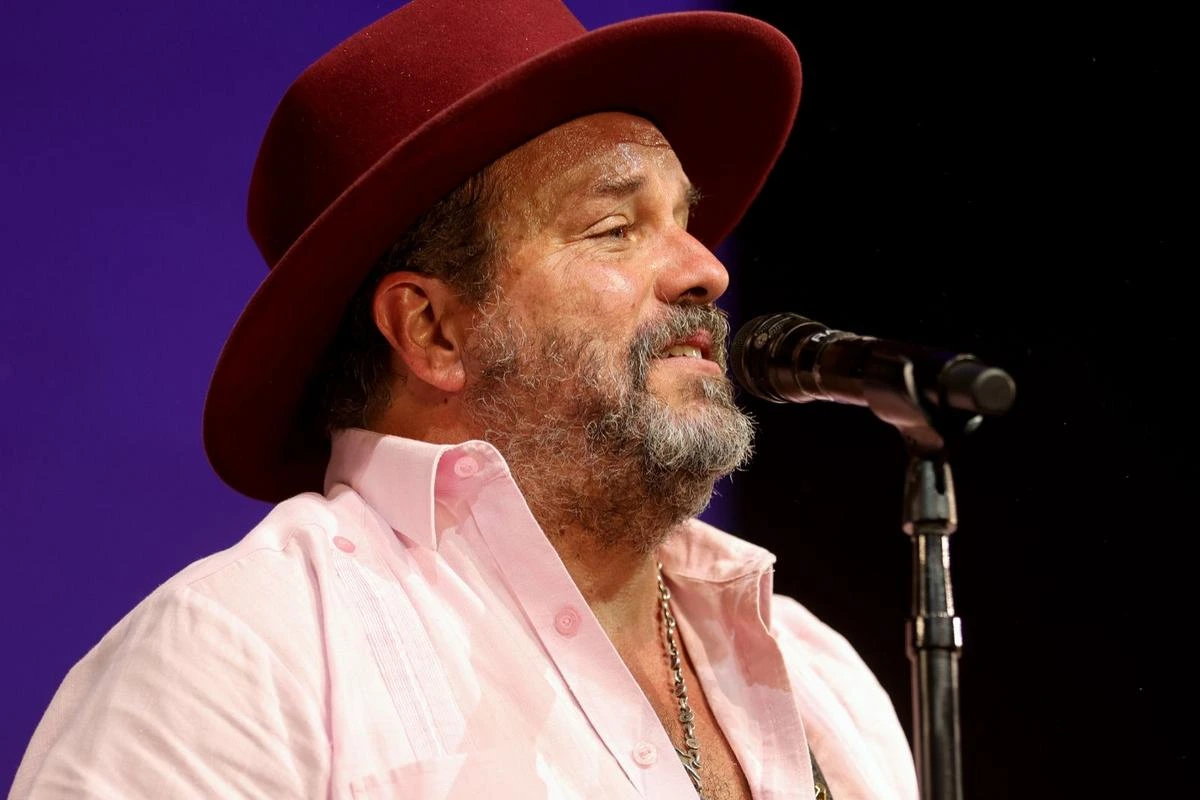
Raul Malo, the acclaimed tenor and frontman of the Grammy winning band The Mavericks, has died at age sixty after a widely shared battle with cancer.
His wife, Betty Malo, announced the Raul Malo death late Monday on his official Facebook page, saying he had been undergoing treatment for colon cancer and later leptomeningeal disease.
The news prompted an outpouring of tributes from fans, collaborators and music historians who credited him with reshaping American roots music.
Born Raul Francisco Martínez Malo Jr. to Cuban parents in Miami, Malo co-founded The Mavericks in 1989 with drummer Paul Deakin and bassist Robert Reynolds.
The band quickly gained attention for its blend of country, rock, Latin, surf, Tejano and Americana influences, defying standard industry categories.
Their debut album arrived in 1990 on Miami’s independent Y&T Music label, launching a career that spanned more than three decades.
The Mavericks went on to win a Grammy Award, two Country Music Association awards and three Academy of Country Music Awards.
Malo also built an extensive solo catalog, from the all Spanish children’s album “el Cancionero de la Familia Volume 1” to his instrumental record “Say Less.”
His work with the Latin supergroup Los Super Seven earned him additional recognition, including a Grammy nomination. The Raul Malo death also brought renewed attention to his recent health challenges.
Malo disclosed in 2024 that he was receiving treatment for colon cancer, later sharing his September 2025 diagnosis of leptomeningeal disease, a rare condition where cancer spreads to membranes around the brain and spinal cord.
Music historians say the Raul Malo death marks the loss of one of the most versatile vocalists of his generation. Dr. Pamela Rios, a professor of American roots music at the University of Texas, said Malo “kept expanding what country influenced music could sound like.”
“He had a multidimensional voice that could shift from velvety baritone to near operatic high notes,” Rios said. “But more importantly, he embodied the multilingual, multicultural reality of American music. Few artists stitched together as many traditions with such emotional clarity.”
Industry analyst Mark Halpern said The Mavericks’ success in the 1990s and early 2000s helped broaden the audience for Latin infused country.
“Malo brought Cuban rhythms and American twang into the same space,” Halpern said. “The Raul Malo death will spark renewed discussion about how genre boundaries limit innovation.”
During their three decade run, The Mavericks released thirteen studio albums, most recently “Moon & Stars” in 2024.
Their catalog regularly charted across multiple genres including country, adult alternative and Latin pop. Malo himself earned a BMI songwriting award for “All You Ever Do Is Bring Me Down,” one of the band’s biggest hits.
Streaming data shows a resurgence in Mavericks listeners in recent years, particularly after the release of their all Spanish album “En Español” in 2020.
According to industry tracking firm SoundMetrics, the band’s streaming numbers grew by nearly twenty percent between 2021 and 2024, illustrating their continued cross generational reach.
Fans and fellow musicians reacted with emotion after the Raul Malo death. Nashville guitarist Tony Delgado, who occasionally performed with Malo, said the singer “had a voice that filled an entire room before he even touched a microphone.”
“He carried the history of his family and his culture in every note,” Delgado said. “Anyone who worked with him learned something about discipline and joy.”
In Miami, where Malo first honed his blend of rock and traditional rhythms, longtime fan Elena Morales described him as “a bridge between cultures.”
“For Cuban Americans like me, he showed we belonged in every musical conversation,” Morales said. “We didn’t have to choose between our heritage and the country we grew up in.”
A member of The Mavericks’ touring crew, who asked not to be named because the band had not authorized public comment, said the frontman was “always the first to ask how everyone else was doing, even when he was sick.”
The Mavericks have not yet announced long term plans following the Raul Malo death, though band members said in a statement they would “honor Raul’s commitment to the preservation of the multilingual American musical repertoire.”
Industry experts note that bands facing the loss of a central vocalist often take extended breaks before deciding whether to continue.
Halpern, the music analyst, said Malo’s recordings and collaborative catalog will likely see renewed academic interest. “His influence stretches beyond country or Americana,” he said. “Future artists will study his phrasing, his arrangements and his refusal to stay in one genre.”
The Raul Malo death leaves a significant void in American music, ending a career defined by vocal mastery, cultural fusion and decades of storytelling that crossed borders and generations.
Malo is survived by his wife, Betty; his sons Dino, Victor and Max; his mother and sister and his longtime Mavericks bandmates. His legacy endures in a body of work that reshaped how audiences understand the possibilities of American sound.


