
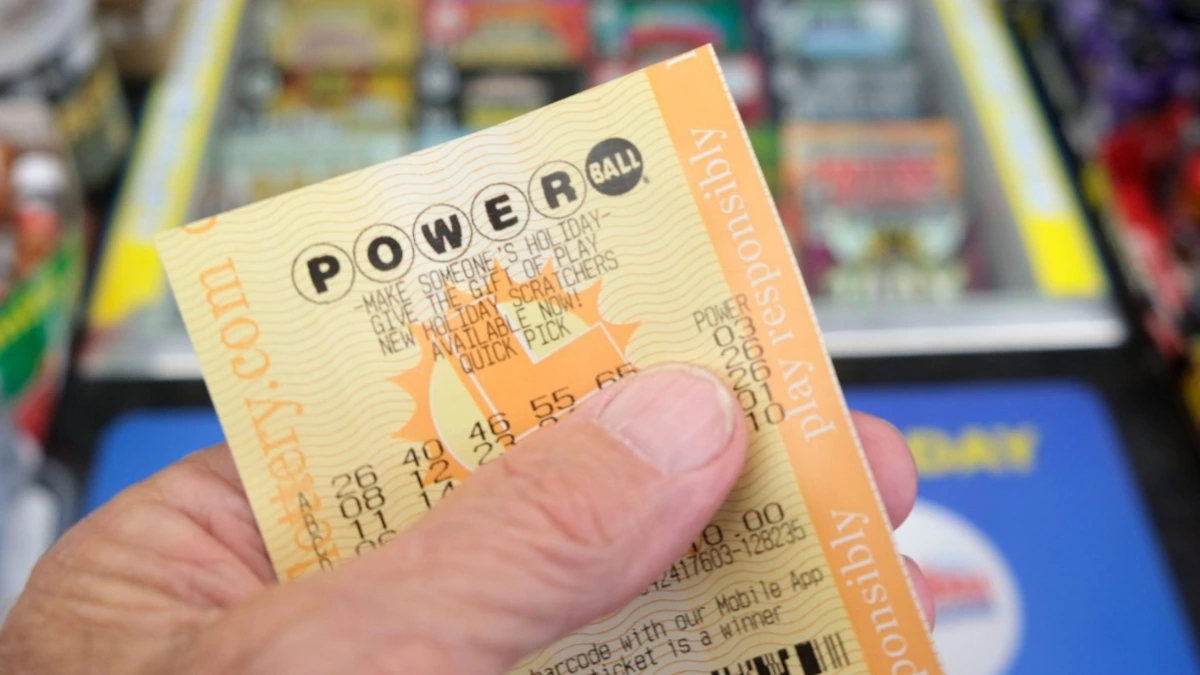
The Powerball jackpot after taxes would leave a potential winner with hundreds of millions of dollars, but far less than the eye catching $1.1 billion headline suggests.
After no tickets matched all six winning numbers in Saturday night’s drawing, the jackpot rolled over, raising fresh questions about how much money a winner would actually receive if the prize is claimed in the next drawing.
Lottery officials said the winning numbers drawn Saturday were one, twenty eight, thirty one, fifty seven, fifty eight and Powerball six. With no jackpot winner, the prize climbed to an estimated $1.1 billion ahead of Monday night’s drawing.
Powerball winners are given two payout options a thirty year annuity paid in annual installments or a one time lump sum worth about $503.4 million. According to lottery data, the majority of winners historically choose the lump sum.
Under federal law, lottery winnings are considered ordinary income. A lump-sum winner would face an immediate federal withholding tax of twenty four percent, reducing the initial payout to about $382.5 million.
“The advertised jackpot represents total payments over time, not cash in hand,” said Daniel Morris, a former state lottery finance consultant. “That distinction often surprises people.”
After filing a federal tax return, the winner would likely owe the highest marginal tax rate of thirty seven percent, cutting the Powerball jackpot after taxes to roughly $317.1 million.
Financial planners said the annuity option offers a different structure but does not eliminate the tax burden.
Under the annuity, the winner would receive thirty annual payments over three decades, averaging about $23 million per year after federal taxes.
“An annuity provides long term income and can help protect winners from spending too quickly,” said Melissa Grant, a certified financial planner based in Chicago. “But inflation and future tax changes can affect the real value of those payments.”
Grant said the lump sum remains popular because it allows immediate control of the funds, including investing or estate planning. Still, she said winners should seek professional guidance before making a decision.
The odds of winning the Powerball jackpot remain one in 292.2 million, according to the lottery’s organizers. Matching all five white balls for the $1 million prize carries odds of one in 11.6 million.
Despite the long odds, several players won major prizes in Saturday’s drawing. Five tickets matched all five white balls, earning $1 million each. Those tickets were sold in California, Florida, Minnesota, New Jersey and Virginia.
Two additional winners in North Carolina and Pennsylvania doubled their winnings to $2 million by purchasing the Power Play option.
The Powerball jackpot after taxes can vary significantly based on state residence. States such as New York impose lottery tax rates as high as 10.9 percent, while states including California and Florida do not tax lottery winnings.
Outside a convenience store in northern New Jersey where one of the $1 million tickets was sold, players reflected on the realities behind the jackpot.
“Everyone talks about the billion dollars,” said Carlos Rivera, a regular Powerball player. “But even after taxes, that kind of money would change generations.”
Store owner Farah Ahmed said jackpot rollovers typically drive a surge in ticket sales. “People know the odds are low,” she said. “But the excitement builds every time the number goes up.”
The next Powerball drawing is scheduled for Monday night at 10:59 pm Eastern. The drawing will be streamed live on Powerball’s official website and YouTube channel.
If no ticket matches all six numbers, the jackpot will continue to grow, potentially pushing the Powerball jackpot after taxes even higher despite the shrinking take-home percentage.
The jackpot last surpassed $1 billion in August and continued growing until September, eventually reaching $1.78 billion, the second largest prize in Powerball history. That jackpot was ultimately split between two winners.
While the $1.1 billion Powerball prize captures national attention, the Powerball jackpot after taxes tells a more measured story. Federal and state taxes, along with payout choices, significantly reduce the final amount a winner receives.
As Monday’s drawing approaches, the gap between the headline jackpot and real world winnings remains a defining feature of America’s biggest lottery.


