
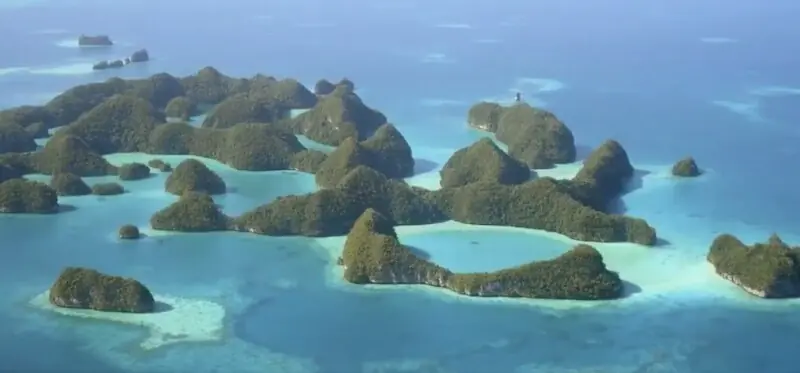
The Pacific island nation of Palau has agreed to accept up to seventy five deportees from the United States under a new agreement that underscores.
The Trump administration’s accelerated push for mass removals and highlights the growing role of small partner nations in US immigration enforcement.
The arrangement, formalized through a memorandum of understanding, allows so called third country nationals who have never been charged with a crime to live and work in Palau.
In return, Washington will provide millions of dollars in foreign assistance to the country of about eighteen thousand people.
The Palau deportation agreement was announced Wednesday by President Surangel Whipps Jr.’s office and confirmed by the US Embassy in Koror, the island nation’s capital.
Under the terms of the deal, the United States will provide seven point five million dollars to support Palau’s public services related to hosting the deportees.
Additional funding includes six million dollars to help shore up Palau’s struggling civil service pension system and two million dollars for new law enforcement initiatives, according to Whipps’ office.
“The United States deeply appreciates Palau’s cooperation in enforcing US immigration laws, which remains a top priority for the Trump administration,” the embassy said in a statement.
Palau’s government said labor shortages played a central role in its decision to enter the agreement.
“Palau and the United States signed a memorandum of understanding allowing up to seventy five third country nationals, who have never been charged with a crime, to live and work in Palau, helping address local labor shortages in needed occupations,” Whipps’ office said.
Immigration analysts said the Palau deportation agreement reflects a broader strategy by the Trump administration to expand deportation destinations beyond migrants’ countries of origin.
“This is part of a growing trend where the US negotiates third country resettlement deals to overcome diplomatic or logistical barriers to removal,” said Daniel Harper, a migration policy researcher at the Pacific Policy Institute.
“Small states with limited labor pools and strong aid ties to Washington are more likely to consider such arrangements.”
Harper added that while the deportees are not criminal offenders, integration challenges could emerge in a small and close knit society.
Palau joins a list of countries that have recently agreed to receive deportees as the Trump administration ramps up removals. Those nations include Uganda, Rwanda, Eswatini, South Sudan, Costa Rica, Panama and El Salvador.
Palau has long relied on US assistance under the Compact of Free Association, which governs defense and economic ties between the two countries.
Under a deal brokered during the Biden administration, Washington committed eight hundred eighty nine million dollars in aid to Palau over twenty years, according to the State Department.
With a workforce heavily dependent on foreign labor, particularly in tourism and construction, Palau has faced staffing shortages since the pandemic disrupted regional migration flows.
Local reaction in Palau has been mixed, with some residents welcoming the economic support and others expressing concern about the country’s capacity to absorb new arrivals.
“We need workers, especially in hospitality and infrastructure,” said Taro Remengesau, a small business owner in Koror. “If these people are vetted and willing to work, it could help the economy.”
.
“Our population is small, and social services are already stretched,” said Lillian Ngiratechel, a retired civil servant. “The government needs to be transparent about how this will affect housing, healthcare and community safety.”
US officials emphasized that the individuals sent under the Palau deportation agreement would be carefully screened.
“These are non criminal migrants who cannot be returned to their home countries for various reasons,” said a senior US official familiar with the arrangement, who spoke on condition of anonymity.
L
Palau’s government said implementation details, including housing and employment placement, are still being finalized. Officials did not specify when the first group of deportees might arrive.
Experts said similar agreements could follow as the Trump administration continues to prioritize rapid removals.
“Palau may not be the last,” Harper said. “This model offers financial incentives and labor support for host countries while giving the US more flexibility in deportations.”
The Palau deportation agreement highlights the intersection of immigration enforcement, foreign aid and labor needs in a shifting global landscape.
As Palau prepares to receive up to seventy five deportees, the deal reflects both the Trump administration’s aggressive removal strategy and the strategic choices facing small nations closely tied to the United States.


