
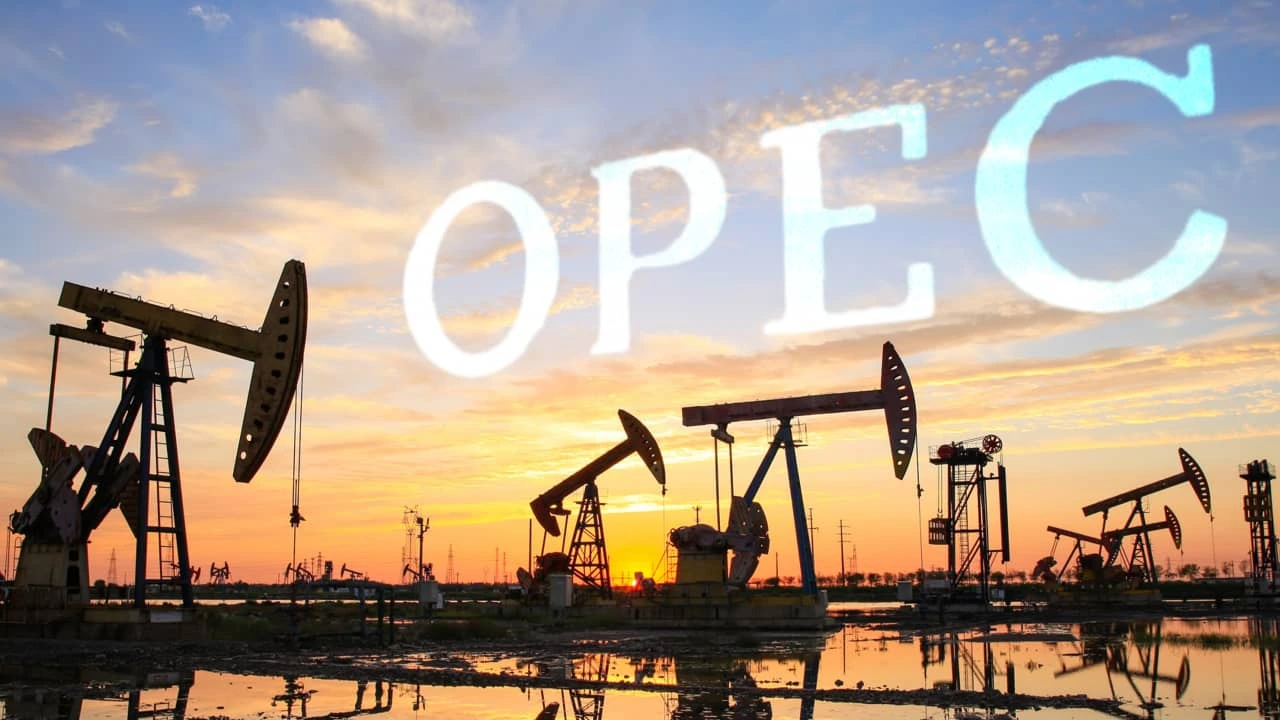
OPEC+ kept oil output unchanged Sunday after a brief online meeting, as the producer group moved to preserve market stability while avoiding discussion of mounting political turmoil among several of its members, including tensions in the Middle East and a sudden power shift in Venezuela.
KEY POINTS
- OPEC+ oil output remains unchanged despite sharp price declines and internal political strain.
- The group is prioritizing short term market stability over supply adjustments.
- Geopolitical shocks, not fundamentals, are increasingly shaping oil prices.
The decision to hold production steady underscores OPEC+’s effort to project cohesion at a time when oil markets are grappling with falling prices,
Rising geopolitical risk and deepening divisions among key producers.
Oil prices have fallen more than eighteen percent so far in 2025, the steepest annual drop since 2020, raising concerns about oversupply and weakening demand.
The meeting involved eight core OPEC+ members Saudi Arabia, Russia, the United Arab Emirates, Kazakhstan, Kuwait, Iraq, Algeria and Oman which together account for roughly half of global oil production.
These countries agreed late last year to pause planned output increases for January, February and March, citing seasonally lower demand during the Northern Hemisphere winter.
That pause follows a year in which the same group raised output targets by about two point nine million barrels per day.
Nearly three percent of global oil demand, as part of a strategy to regain market share lost to non OPEC producers.
Sunday’s meeting reaffirmed that policy without amendment, according to OPEC+.
The decision comes amid heightened political strain within the group.
Relations between Saudi Arabia and the UAE deteriorated last month after a UAE aligned faction seized territory from the Saudi backed government in Yemen.
Reopening a long running conflict and marking the most serious rift between the two allies in decades.
Compounding the uncertainty, the United States announced Saturday that it had captured Venezuelan President Nicolas Maduro.
President Donald Trump said Washington would assume control of the country until a political transition is achieved, without detailing how that process would unfold.
Analysts say OPEC+ is deliberately separating political crises from production policy, a strategy the group has used in past conflicts.
“Right now, oil markets are being driven less by supply demand fundamentals and more by political uncertainty.”
Said Jorge Leon, head of geopolitical analysis at Rystad Energy and a former OPEC official.
“OPEC+ is clearly prioritizing stability over action.” That approach reflects hard lessons from history.
OPEC maintained production coordination during the Iran Iraq War and other regional conflicts by focusing narrowly on market management.
Yet today’s environment is more complex, with multiple members facing sanctions, domestic unrest or direct foreign intervention.
Russia, a central player in OPEC+, is contending with declining oil exports due to US sanctions linked to its war in Ukraine.
Iran is facing renewed protests at home alongside US warnings of possible intervention.
Venezuela, despite holding the world’s largest proven oil reserves, remains largely sidelined by years of underinvestment and sanctions.
| Indicator | 2024 | 2025 (to date) |
|---|---|---|
| Brent crude price change | -3% | -18% |
| OPEC+ output target change | +1.3 mbpd | +2.9 mbpd |
| Share of global supply (OPEC+) | ~48% | ~50% |
| Northern Hemisphere demand trend | Stable | Weaker |
An OPEC+ delegate, speaking on condition of anonymity due to the sensitivity of internal discussions, said Venezuela was not addressed during Sunday’s meeting and described the session as “procedural.”
Energy economists say that even dramatic political change in Caracas would not quickly alter global supply.
“Venezuela’s production problems are structural,” said Francisco Monaldi, director of the Latin American Energy Program at Rice University.
“Even with foreign investment, meaningful output growth would take years, not months.”
A senior oil trading executive based in London said market participants are increasingly focused on headline risk rather than barrels.
“Prices are reacting to geopolitics first, fundamentals second,” the executive said. “That makes OPEC+ caution understandable.”
The eight OPEC+ members are scheduled to meet again on Feb. 1. Until then, traders are expected to watch developments in Venezuela.
The Middle East and Russia more closely than traditional indicators such as inventories or refinery demand.
Any shift in policy would likely depend on sustained price weakness or clear evidence that supply is significantly outpacing demand.
For now, officials appear intent on maintaining the current framework while monitoring external shocks.
By keeping OPEC+ oil output steady, the producer group signaled continuity amid a period of exceptional political volatility.
The decision reflects a long standing preference for market management over political debate, even as internal divisions and global tensions test the limits of that strategy.
Author’s Perspective Adnan Rasheed
In my analysis, OPEC+ is prioritizing stability over big moves, showing that political fractures matter more than short term price swings.
I predict OPEC+ will manage oil quietly through country level compliance rather than formal production changes, letting politics subtly steer the market.
Watch individual member exports closely real market signals will come from actions, not announcements.
NOTE! This report was compiled from multiple reliable sources, including official statements, press releases, and verified media coverage.


