
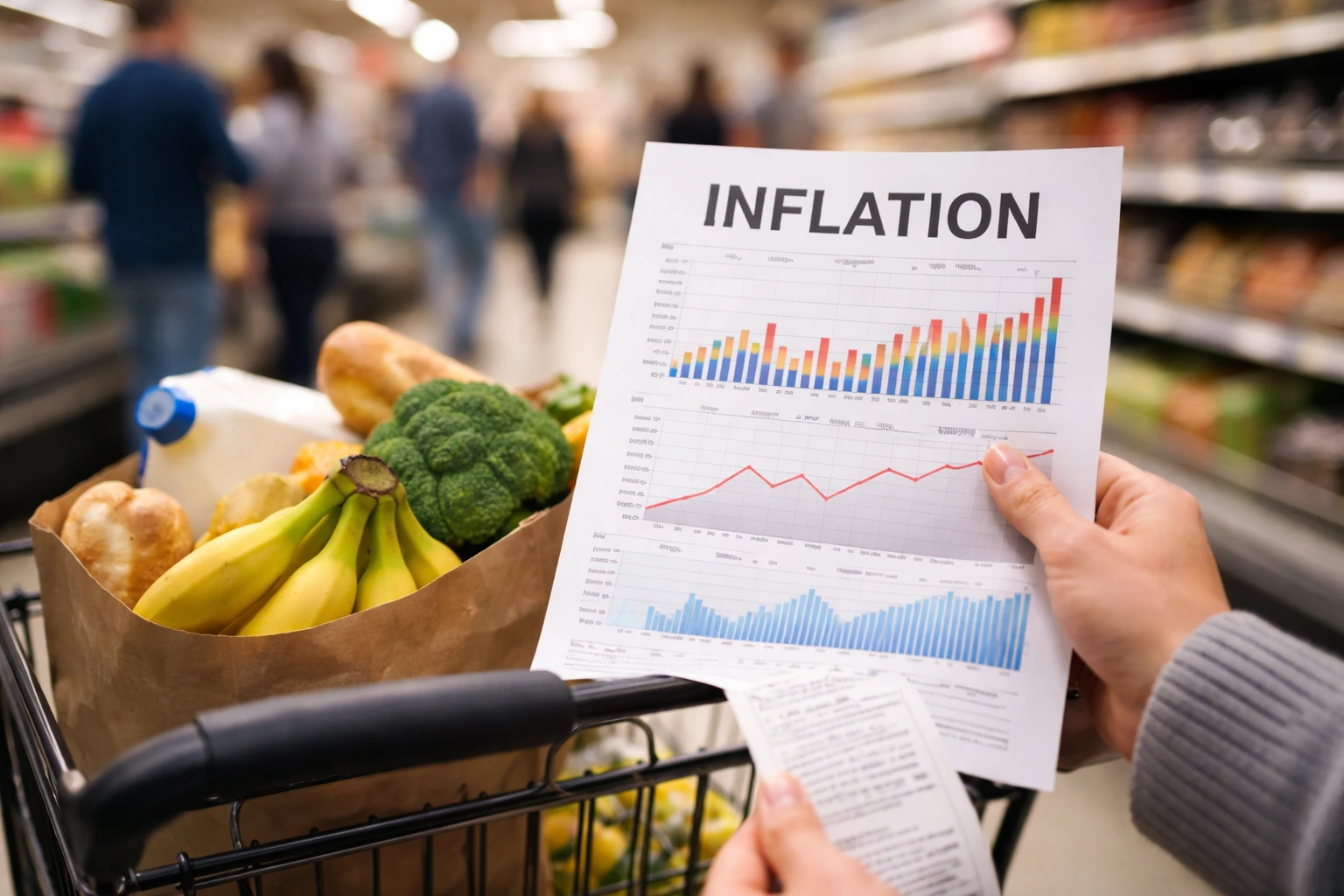
The latest November inflation report shows that price increases across consumer goods eased, partially offsetting continued pressure from categories such as gasoline and groceries, according to the Bureau of Labor Statistics.
Economists, however, urged caution, noting that data collection during the recent government shutdown was incomplete.
The consumer price index, a key measure of inflation, rose two point seven percent in November from a year earlier, the BLS reported Thursday.
That marked a slowdown from the three percent rate in September, the last month with full data, and fell below economists’ forecasts.
“Inflation fell quite sharply,” said Thomas Ryan, a North American economist at Capital Economics. “But we are slightly suspicious of some of these numbers. It was not a usual month.”
The November inflation report was the first CPI release since the record long government shutdown ended last month.
The shutdown, which lasted from Oct. one through Nov. twelve, prevented BLS from collecting inflation data in October and limited November data gathering to roughly half the month.
Because the report covers only mid- to late November, economists said the data may reflect seasonal discounts like Black Friday, rather than typical price trends.
“That timing matters,” Ryan said. “You may be capturing more promotional pricing than would normally appear in a full month.”
Before the shutdown, inflation had been gradually rising since April, when the annual rate was two point three percent.
Core goods inflation, which excludes food and energy, slowed to one point four percent in November from one point five percent in September, according to the November inflation report.
Some economists had expected tariff related price pressures to keep goods prices elevated.
“I think we should take these results with a grain of salt,” said Tom Porcelli, chief economist at Wells Fargo. “It is a very messy report given the technical issues.”
Trump administration tariffs had been expected to push prices higher, particularly for imported consumer goods. Limited data collection may have temporarily masked these effects.
Taken at face value, the November inflation report suggests a slowdown after several months of gradual increases. However, missing October data makes it difficult to assess inflation momentum accurately.
Despite the easing in the inflation rate, prices continue to rise. Inflation measures the pace of price growth, not whether prices are falling.
Consumer sentiment reflects ongoing concerns. A University of Michigan survey in November showed that 47 percent of respondents said high prices were negatively affecting their finances, up from 34 percent in January 2025.
“While the rate of change has slowed, the price level continues to advance,” Porcelli said.
Food remains a key concern for many households. Beef prices surged as the national cattle supply fell to its lowest level since the early 1950s, with uncooked beef roasts up 21 percent from a year earlier.
“At the grocery store, it still feels expensive every week,” said Maria Thompson, a mother of two in Columbus, Ohio. “Even if inflation is slowing, our bills are not.”
Coffee prices rose roughly 19 percent due to extreme weather and tariffs on Brazilian imports, while banana prices climbed about seven percent. “Food is where people notice inflation the most,” Porcelli said.
Some economists said the November inflation report could give the Federal Reserve more flexibility next year. Slower inflation may allow policymakers to consider interest rate cuts if the labor market softens further.
Fed officials appear focused on employment trends, not inflation alone, said Joe Seydl, senior markets economist at J.P. Morgan Private Bank. Slower wage growth could reduce pressure on service sector prices.
President Donald Trump recently exempted certain agricultural imports, including beef, coffee, cocoa and bananas, from tariffs. Economists said it is unclear when, or if, these exemptions will ease grocery prices for consumers.
The November inflation report shows a slowdown in price increases, but economists caution that incomplete data and unusual timing limit firm conclusions.
Prices continue to rise, particularly for food and essentials, and households remain sensitive to high costs. More complete data in the coming months will clarify whether the slowdown is temporary or a sustained trend.


