
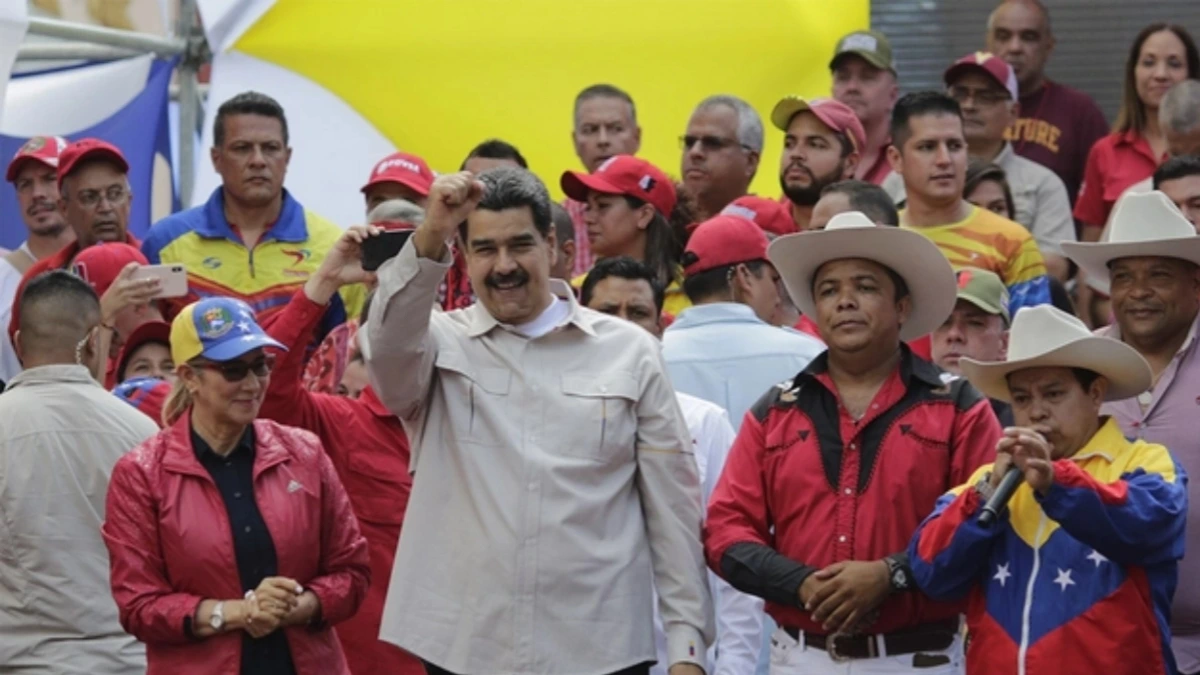
MIAMI — President Donald Trump’s escalating military threats against Venezuela have highlighted deep divisions among his supporters in South Florida, pitting long standing Miami Republicans eager for regime change against a growing faction of “America First” conservatives opposed to foreign intervention.
The rift has exposed tensions in a key political base where anti communist sentiment and pragmatic isolationism collide, creating challenges for the Republican Party as it navigates both domestic and international priorities.
Venezuela, once one of Latin America’s wealthiest countries, has endured a decade of economic collapse, political turmoil, and mass migration under the rule of President Nicolás Maduro.
The United States has imposed sanctions and recognized opposition leader Juan Guaidó as interim president, but Trump’s recent rhetoric including threats of possible military action has intensified debate among US lawmakers and voters.
Miami, home to a large Venezuelan and Cuban diaspora, has long been a hub for Republicans advocating a hard line against leftist regimes in Latin America. Local leaders emphasize the human rights crisis and economic suffering in Venezuela as justification for assertive US policies.
“People here have family and friends suffering under Maduro’s dictatorship,” said Ana Castillo, a Miami political organizer. “Many of us believe strong US action is necessary to bring change, even if it involves risks.”
At the same time, Trump’s “America First” wing prominent among some GOP voters nationwide has increasingly criticized interventions abroad, arguing that US military engagement often fails to achieve strategic objectives and drains domestic resources.
Political analysts say the divide in Miami reflects broader tensions in the Republican Party between interventionist and non interventionist factions. “Trump has always straddled these two worlds,” said Dr. Miguel Torres, a political science professor at the University of Miami.
“His Miami supporters tend to prioritize a moral and personal connection to Venezuela, whereas the America First faction prioritizes limiting foreign entanglements, regardless of the country in question.”
Experts note that the Miami faction’s advocacy for regime change is also influenced by the city’s demographics. The influx of Venezuelan and Cuban immigrants, many of whom fled authoritarian governments, has created a voter base sensitive to perceived threats from leftist regimes.
“History shapes political preferences,” Torres said. “These voters see the US as having a responsibility to oppose oppressive governments, and they expect their representatives to act accordingly.” Recent polling suggests the divide is pronounced but not absolute.
A survey by the Miami Political Institute found that 62 percent of Cuban and Venezuelan Americans supported strong US action against Maduro, while 48 percent of broader Republican respondents nationwide endorsed a more restrained, non-interventionist approach.
This split mirrors trends in Congress, where some GOP lawmakers from Florida have championed sanctions and military preparedness, while Trump aligned figures from other states have urged a focus on domestic priorities and reduced foreign commitments.
Local activists and voters describe the policy debate as deeply personal.
“I don’t want US troops fighting, but I also can’t stay silent while my family suffers,” said Jorge Ramirez, a Miami resident who fled Venezuela a decade ago. “It’s a tough balance, and the Trump administration’s rhetoric makes it feel urgent.”
Conversely, South Florida resident and conservative activist Linda Greene said, “We need to put America first. Engaging militarily in Venezuela could drag us into a conflict with no clear outcome, and our resources are limited.”
These conflicting perspectives have fueled heated town hall discussions and increasingly sharp rhetoric in local media, highlighting the challenges the party faces in reconciling diverse viewpoints within a politically active constituency.
Observers say the Miami faction will continue pushing for strong U.S. action, including sanctions and potential military readiness, while America First Republicans may seek to temper escalation.
Analysts predict that any future Republican presidential campaign could see intensified debates over foreign policy, particularly in swing states with sizable immigrant populations.
“Expect this issue to remain a flashpoint,” said Torres. “Miami Republicans may pressure national leaders to act, but broader party cohesion may depend on finding a middle ground that addresses humanitarian concerns without committing to large scale intervention.”
As Trump’s rhetoric on Venezuela continues to draw attention, the split among his supporters in Miami underscores the broader challenge for the Republican Party balancing a strong stance on foreign oppression with a growing isolationist sentiment.
The debate highlights the interplay of local demographics, personal experience, and national strategy, suggesting that Venezuela will remain a key point of contention within GOP politics in the months ahead.


