
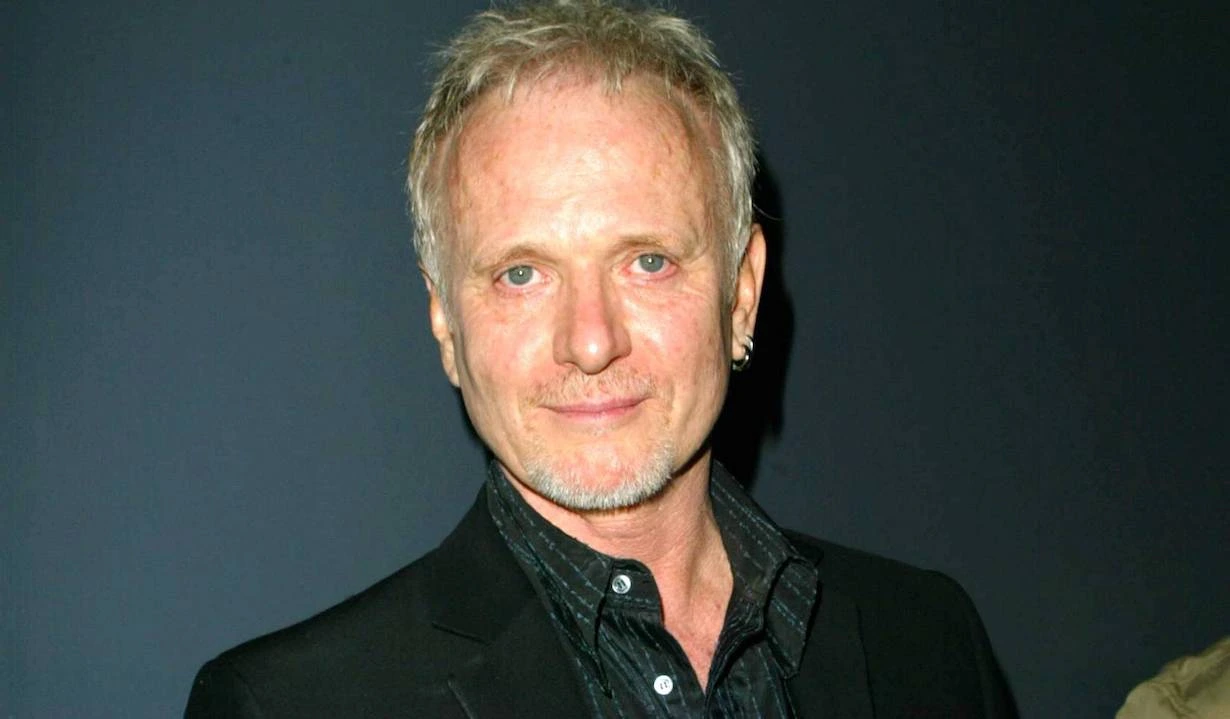
LOS ANGELES — The Luke Spencer actor dies at the age of 78, Anthony Geary, who was celebrated for his portrayal of the iconic character on General Hospital, passed away on December 14 following complications from a scheduled operation three days earlier, his family confirmed.
Geary’s death marks the end of a career that spanned more than five decades and left a lasting imprint on daytime television.
In his final weeks, Geary was reportedly delighted to watch former costar Genie Francis on Maurice Benard’s State of Mind podcast, a moment shared by his husband, Claudio Gama.
“It really made Tony very happy,” Gama said. “He told me, ‘those are two lovely and talented people, great friends, and I miss them.’”
Born May 29, 1947, in Coalville, Utah, Geary grew up in a Mormon household with three sisters, Dana, DeAnn, and Jana. His father ran a construction company, and his mother was a homemaker.
Although his mother hoped he would pursue teaching, Geary discovered a passion for acting at an early age.
While studying at the University of Utah, his talent caught the attention of Jack Albertson of Chico and the Man fame.
Albertson cast Geary in a touring production of The Subject Was Roses, a turning point that launched his professional career in theater.
Geary appeared in more than 50 stage productions over the years while building a strong television resume.
In the late 1960s, Geary moved to Los Angeles, appearing in popular series such as The Partridge Family, The Mod Squad, and All in the Family.
His early soap opera roles included David Lockhart on Bright Promise and the controversial George Curtis on The Young and the Restless.
Geary’s breakthrough came in 1978 when producer Gloria Monty cast him as Luke Spencer on General Hospital. Paired with Genie Francis as Laura Webber, the duo’s chemistry helped the series achieve unprecedented ratings.
Their on the run storyline in 1980 turned Luke and Laura into a cultural phenomenon. In 1981, the pair appeared on the cover of Newsweek, a rare distinction for daytime actors.
Their wedding episode later that year, featuring Elizabeth Taylor as Helena Cassadine, drew an estimated 30 million viewers. Geary, Francis, and Taylor also appeared together on the cover of People magazine.
After Francis briefly left the series in 1982, Geary continued to anchor General Hospital with co-stars Demi Moore and Emma Samms. He later played Luke’s lookalike cousin, Bill Eckert, from 1991 to 1993, before returning once more as Luke Spencer.
Television historian Dr. Melissa Carter said, “Anthony Geary’s work as Luke Spencer redefined daytime drama. His performance brought nuance and depth to a genre often dismissed as melodramatic.”
Media analyst Mark Reynolds noted, “The Luke and Laura storylines were more than entertainment; they became cultural touchstones that drew millions of viewers and influenced how soap operas were written and produced.”
Fans around the world reacted to the news of the Luke Spencer actor dies, expressing admiration for Geary’s performances and his impact on television.
Sandra Kim, president of a General Hospital fan club, said, “Anthony Geary allowed us to feel the joys and sorrows of Luke Spencer. His work is unforgettable.”
Social media tributes highlighted the strong emotional connection audiences maintained with Geary and his character, emphasizing the lasting influence of his work on daytime television and popular culture.
Geary won eight Daytime Emmy Awards for his performances, setting a record for excellence in daytime drama.
Actors including Jonathan Jackson have credited Geary with shaping their approach to acting.
Film and television professor David Huang said, Geary’s dedication to both stage and screen provides an exemplary model for aspiring performers balancing craft with commercial success.
The Luke Spencer actor dies at 78, leaving behind a legacy that reshaped American daytime television.
Anthony Geary’s portrayal of Luke Spencer remains an enduring cultural touchstone, influencing both audiences and generations of performers. His work continues to be celebrated as a benchmark in soap opera history.


