
SUMMARY
- Jesse Jackson dies at 84 after decades of civil rights leadership and political activism
- He expanded the movement beyond the South into national electoral politics
- Jackson’s Rainbow PUSH Coalition continues to advocate for voting rights and economic justice
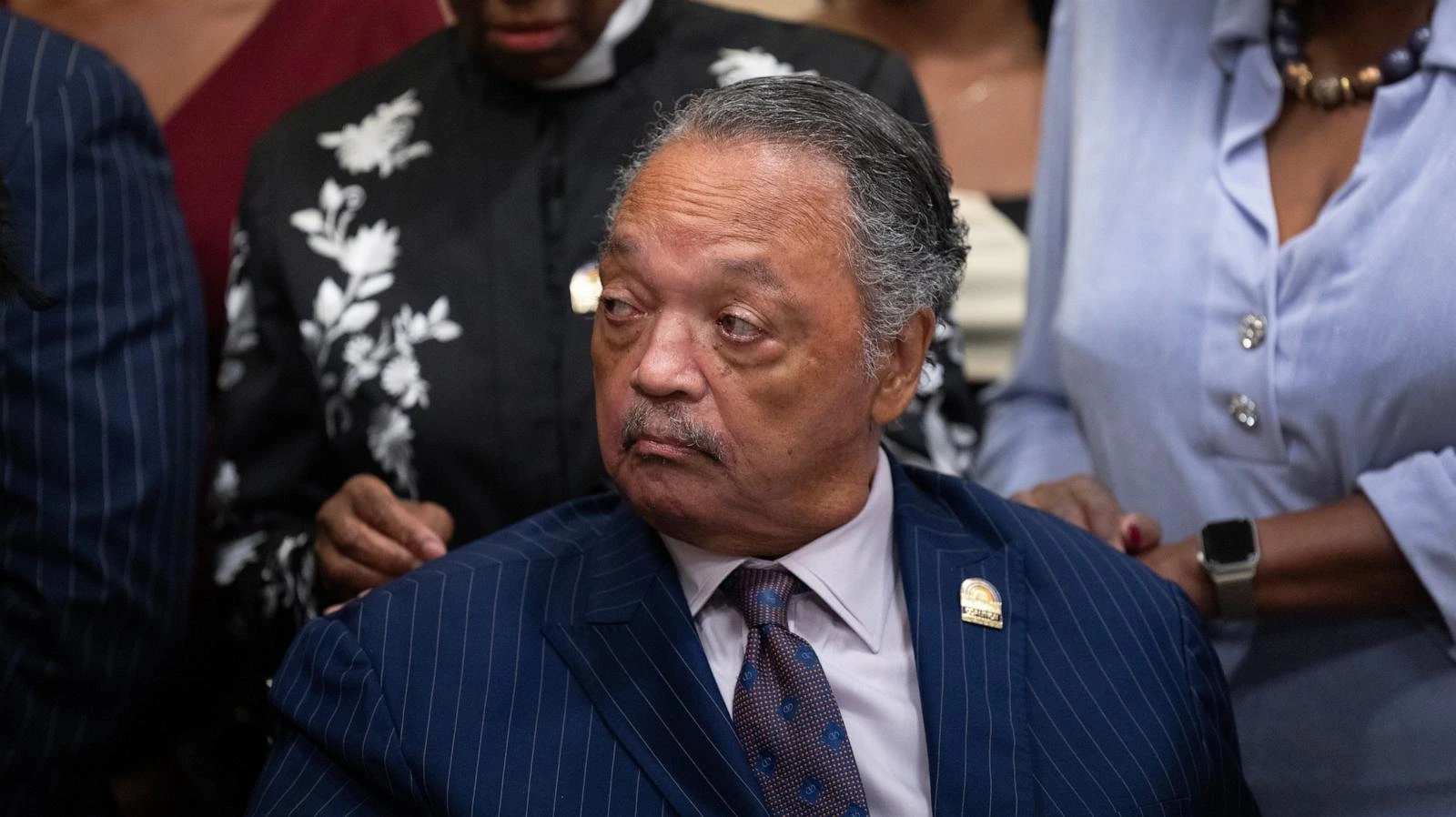
The Rev. Jesse Jackson, a towering figure in the American civil rights movement and two time Democratic presidential candidate, died Tuesday at age 84, his family said.
Jackson died peacefully surrounded by relatives, according to a statement released by the Rainbow PUSH Coalition. A cause of death was not immediately disclosed.
Jackson’s death closes a chapter in modern American political history. A close associate of the Rev. Martin Luther King Jr., Jackson helped transform the civil rights struggle into a national political force.
Pushing issues such as voting rights, economic equity and coalition building onto the Democratic Party’s agenda during the 1980s.
Family members described him as a “servant leader” committed to justice and equality.
The Rainbow PUSH Coalition confirmed he had lived for more than a decade with progressive supranuclear palsy, a neurological disorder affecting balance and movement. Jackson disclosed a Parkinson’s diagnosis in 2017.
Born in Greenville, South Carolina, Jackson rose to prominence in the 1960s as an organizer with the Southern Christian Leadership Conference.
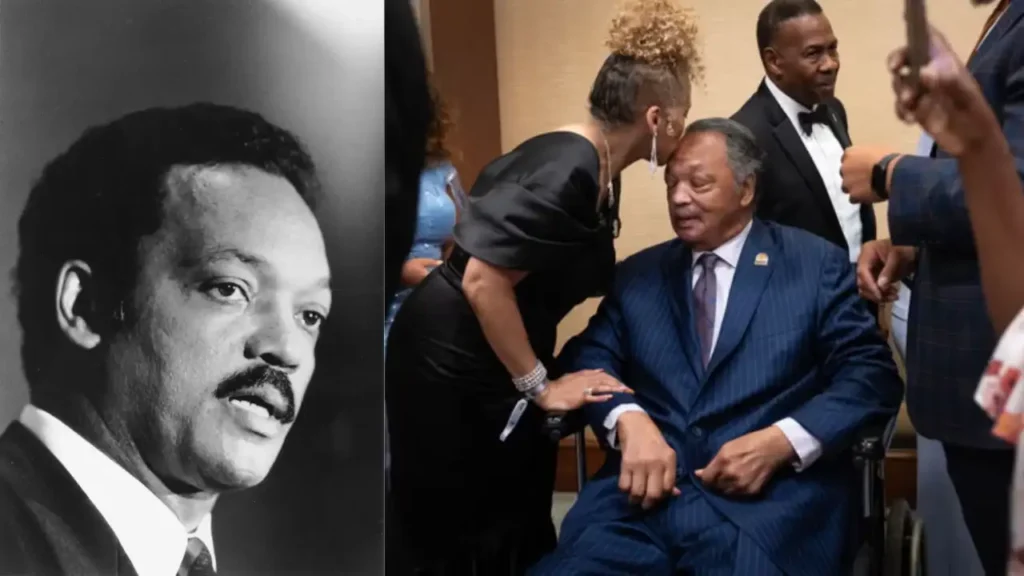
He worked closely with King, particularly on Operation Breadbasket, an economic empowerment initiative aimed at increasing employment opportunities for Black Americans.
Following King’s assassination in 1968, Jackson founded People United to Save Humanity in 1971, later launching the National Rainbow Coalition.
His 1984 and 1988 bids for the Democratic presidential nomination marked watershed moments in US politics. In 1984, he won more than 18 percent of the primary vote.
Four years later, he won 11 primaries and caucuses, building a multiracial coalition that influenced party platforms on social welfare, trade and voting rights.
In 1996, the Rainbow Coalition merged with PUSH to form the Rainbow PUSH Coalition, which remains active in advocacy and voter mobilization.
Historians say Jackson redefined the boundaries of presidential politics for Black candidates decades before the election of Barack Obama.
“Jackson demonstrated that a national coalition rooted in civil rights principles could compete in mainstream party politics,” said Peniel E. Joseph, professor of public affairs and history at the University of Texas at Austin.
“He expanded the electoral map for future candidates of color.” Andra Gillespie, associate professor of political science at Emory University, said Jackson’s campaigns reshaped Democratic Party strategy.
“His emphasis on voter registration, grassroots organizing and issue based coalitions created a blueprint that later campaigns refined,” she said.
Jackson’s activism extended beyond domestic politics. He negotiated the release of detained Americans abroad, including US soldiers in Yugoslavia in 1999. In 2000, President Bill Clinton awarded him the Presidential Medal of Freedom for his humanitarian efforts.
The Rev. Al Sharpton, founder of the National Action Network, said Jackson “cemented the civil rights movement as a national political force.”
Sharpton noted that Jackson’s advocacy extended into Northern cities, broadening its geographic reach.
Former US Rep. Jesse Jackson Jr., his son, said in a written statement that his father believed “democracy requires participation at every level.” The family requested that supporters honor his legacy through civic engagement.
Political leaders across party lines acknowledged Jackson’s influence on debates over affirmative action, voting rights and economic policy.
The Rainbow PUSH Coalition said it will continue its policy initiatives focused on economic justice and ballot access. Leadership transition details were not immediately announced.
Civil rights organizations indicated they plan commemorative events in Chicago and Washington in the coming weeks.
Jesse Jackson’s death marks the passing of one of the most recognizable civil rights leaders of the late twentieth century.
His presidential campaigns and grassroots activism helped integrate social justice priorities into national politics, shaping debates that continue to influence American public life.
NOTE! This article was generated with the support of AI and compiled by professionals from multiple reliable sources, including official statements, press releases, and verified media coverage. For more information, please see our T&C.


