
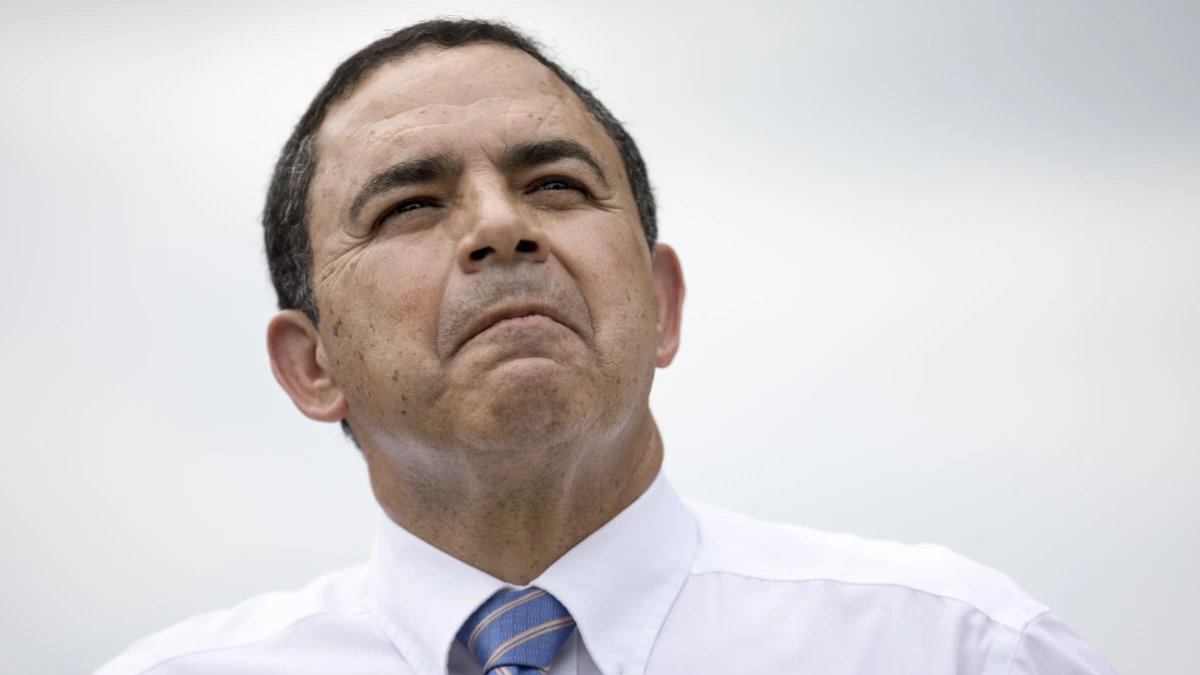
Washington, DC — President Donald Trump on Wednesday granted a full pardon to Rep. Henry Cuellar, D-Texas, who, along with his wife, was charged last year with accepting $600,000 in bribes from foreign entities. Trump framed the move as a response to what he called political targeting by the Biden administration.
“Sleepy Joe went after the Congressman, and even the Congressman’s wonderful wife, Imelda, simply for speaking the truth,” Trump wrote on his social media platform, Truth Social. “It is unAmerican and, as I previously stated, the Radical Left Democrats are a complete and total threat to democracy.”
Cuellar, a moderate Democrat representing South Texas’ 28th Congressional District, was reelected in November despite the bribery allegations. In a statement posted on X shortly after the pardon, Cuellar thanked Trump for his intervention.
“I want to thank President Trump for his tremendous leadership and for taking the time to look at the facts,” Cuellar wrote. “This decision clears the air and lets us move forward for South Texas.”
Cuellar and his wife, Imelda, were indicted in 2024 for allegedly accepting bribes totaling $600,000 from foreign actors, part of a broader federal investigation into corruption involving members of Congress.
The charges had drawn national attention, as Cuellar had previously been a vocal critic of President Joe Biden’s immigration policies and other initiatives. The pardon comes at a politically sensitive time in Texas.
Republicans, leveraging mid decade redistricting, have sought to flip Cuellar’s seat. Webb County Judge Tano Tijerina, a former Democrat who switched parties last year, officially announced his candidacy as a Republican on Tuesday, positioning himself against Cuellar in the next election cycle.
Legal experts note that presidential pardons in such politically charged cases are rare and often draw scrutiny. “Presidential clemency has long been a tool of both justice and political calculus,” said Ellen Weiss, a constitutional law professor at Georgetown University.
“When a pardon is granted to a sitting member of Congress, it inevitably raises questions about timing, motivation, and precedent.”
Political analysts see the pardon as an example of Trump’s ongoing influence in GOP politics and his willingness to intervene in high profile legal matters.
“This is part of a broader pattern where Trump has exercised clemency in ways that intersect with both domestic politics and international considerations,” said Marcus Delaney, a political science professor at the University of Texas.
Cuellar’s position as a moderate Democrat made him a rare target for both parties. He had previously supported bipartisan measures on border security and immigration reform, which drew criticism from progressive Democrats while keeping him in contention with conservative voters.
“Cuellar has walked a fine line between parties for years, which makes him both a lightning rod and a crucial figure in South Texas politics,” Delaney said. Critics of the pardon argue that it could set a precedent for political intervention in federal legal processes.
“While the president has the constitutional authority to pardon, doing so in cases involving political allies or opponents raises ethical concerns,” said Laura Kent, a former federal prosecutor. “It can undermine public trust in the impartiality of the justice system.”
Since retaking office, Trump has issued multiple pardons, including former Honduran President Juan Orlando Hernández, who faced a 45 year sentence on drug trafficking charges, and New York City Mayor Eric Adams, whose bribery case was dismissed earlier this year.
According to the Congressional Research Service, presidential pardons historically have targeted both high profile political figures and ordinary citizens, but pardons of sitting members of Congress remain uncommon.
Cuellar’s case stands out for its intersection of politics, immigration policy, and legal accountability. In 2023, he publicly criticized Biden for being overly influenced by the Democratic Party’s progressive wing on immigration issues.
They will attack, rob, lie, cheat, destroy, and decimate anyone who dares to oppose their far left agenda, Trump wrote in the Truth Social post accompanying the pardon.
Locals in Laredo, part of Cuellar’s district, expressed mixed reactions. Maria Gonzalez, a small business owner, said the pardon may help restore trust in local leadership.
“Rep. Cuellar has been visible in our community for years. If he was wrongly accused, then this helps put those doubts to rest,” she said.
Others were more cautious. Javier Torres, a community organizer in Webb County, said, “It doesn’t erase the questions surrounding the original indictment. We need transparency and accountability, especially when large sums of money and foreign interests are involved.”
Cuellar’s children also publicly supported the pardon, sending a letter describing their parents as “good, decent people who have spent their lives giving more than they’ve taken.” The letter expressed concern that their father’s independence may have contributed to the federal investigation.
Cuellar’s political future remains uncertain. With the upcoming midterm elections and Tijerina’s candidacy, the district is expected to see intense campaigning.
Analysts say Cuellar’s moderate stance and recent exoneration through the pardon could strengthen his reelection bid, but the surrounding controversy may also energize Republican opposition.
“The pardon removes legal uncertainty but introduces a political flashpoint,” said Delaney. “Voters in the 28th District will likely weigh both the pardon and Cuellar’s past positions on immigration and local issues in their decision making.”
President Trump’s pardon of Rep. Henry Cuellar marks another instance of the administration’s active use of clemency powers, particularly in politically sensitive cases.
While the decision clears Cuellar of criminal liability, it underscores the continuing interplay of law, politics, and public perception in the United States.
Observers note that both the legal and electoral ramifications will unfold in the coming months as South Texas voters prepare for the next congressional election.


