
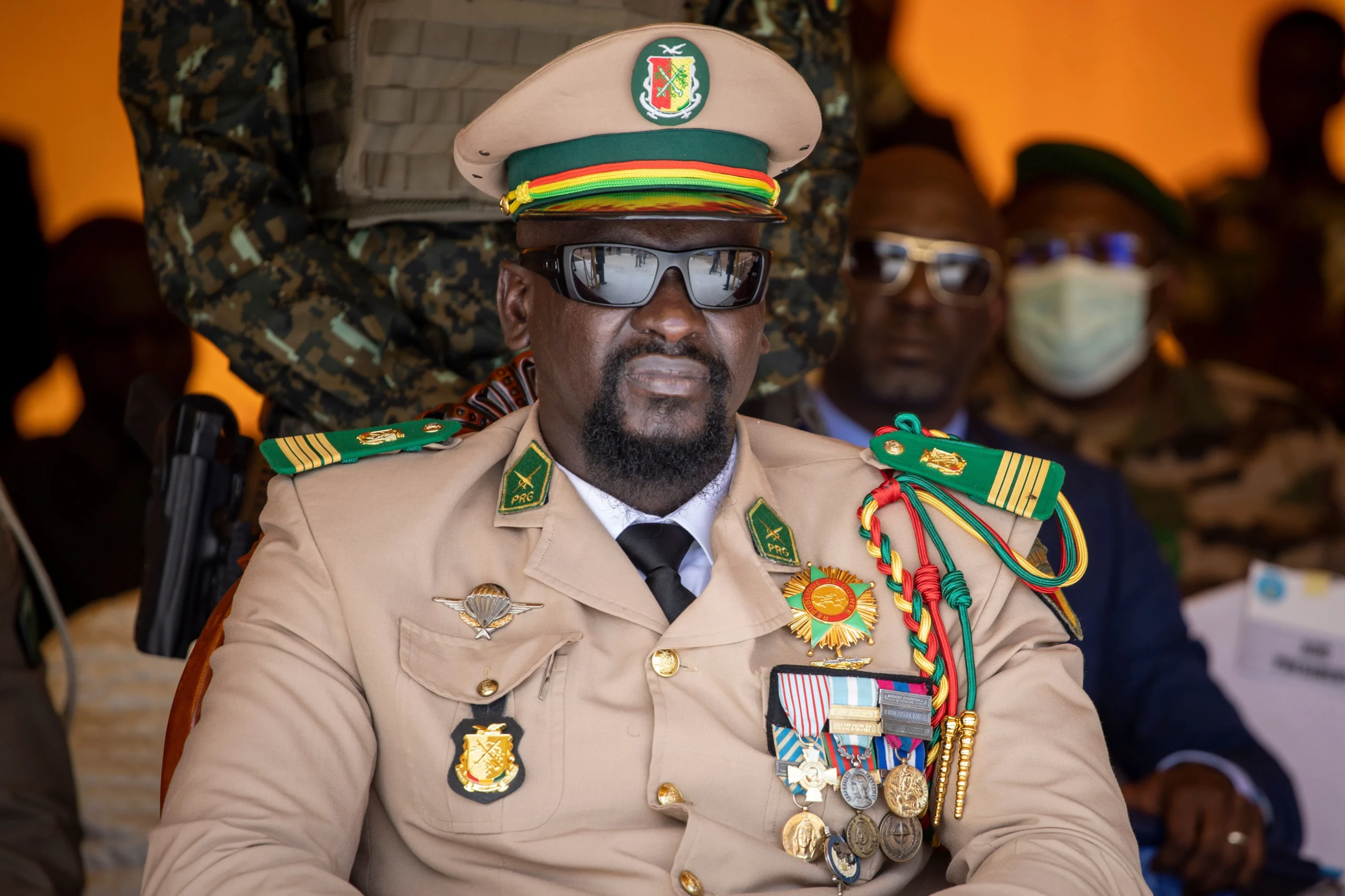
Guinea’s junta chief elected president after an opposition boycott, according to official results released this week, marking a pivotal moment for the west African nation four years after a military coup upended civilian rule.
Mamady Doumbouya, the army colonel who seized power in September 2021, secured an overwhelming first round victory in a vote criticized by opposition groups as neither free nor fair.
The outcome cements the military’s hold on power in a country rich in minerals but burdened by persistent poverty and political instability.
Doumbouya, forty-one, led a coup that removed President Alpha Condé, Guinea’s first democratically elected leader, citing corruption and constitutional abuses.
At the time, Doumbouya pledged that neither he nor other junta members would seek elected office and promised a return to civilian rule by the end of twenty twenty four.
That pledge unraveled after a constitutional referendum in September allowed junta leaders to run for office and extended presidential terms from five to seven years.
The national electoral commission said Doumbouya won eighty six point seven two percent of the vote, avoiding a runoff. Voter turnout was reported at eighty point nine five percent.
The main opposition leaders were barred from standing under new constitutional provisions and called for a boycott, arguing the process was designed to legitimize continued military rule.
Analysts said the election reflects a broader regional trend in which military leaders seek electoral legitimacy after seizing power.
“What we are seeing is a transition from de facto military control to de jure authority through managed elections,” said Aissatou Camara, a political scientist at the University of Conakry.
She said the vote raised concerns about democratic norms even as it provided a veneer of constitutional order. International observers were limited, and Guinea’s authorities did not invite large scale monitoring missions.
A senior West African diplomat, speaking on condition of anonymity, said regional governments were likely to respond cautiously, balancing concerns about democratic backsliding with the need for stability.
Guinea joins a growing list of African countries where coup leaders later contested elections.
In Mali and Burkina Faso, military rulers have delayed elections altogether, while in Chad, the junta leader won a presidential vote after a contested transition.
Guinea’s turnout figures contrast sharply with past elections, where participation often hovered near sixty percent, according to regional election data.
The country holds the world’s largest reserves of bauxite, a key ingredient in aluminum, making political stability a matter of international economic interest.
In Conakry, reactions were mixed. “People voted because they want calm and jobs, not endless transitions,” said Mamadou Keita, a shop owner in the capital. Others expressed skepticism.
“Many stayed home because they felt the result was already decided,” said Mariama Diallo, a civil society activist, referring to the opposition boycott.
Opposition candidate Abdoulaye Yero Balde cited serious irregularities, while another contender, Faya Millimono, alleged pressure on voters. The government has denied wrongdoing.
Doumbouya is expected to be sworn in under the new constitution, beginning a seven year term. His government faces pressure to ease restrictions on civil liberties, release political detainees and reengage with international partners.
Economic reforms and security challenges will test whether electoral legitimacy translates into broader acceptance. The announcement that the Guinea junta chief elected president underscores a decisive shift in the country’s post-coup trajectory.
While authorities frame the vote as a return to constitutional order, opposition groups and analysts question its credibility, highlighting the enduring tension between stability and democratic governance in Guinea.


