
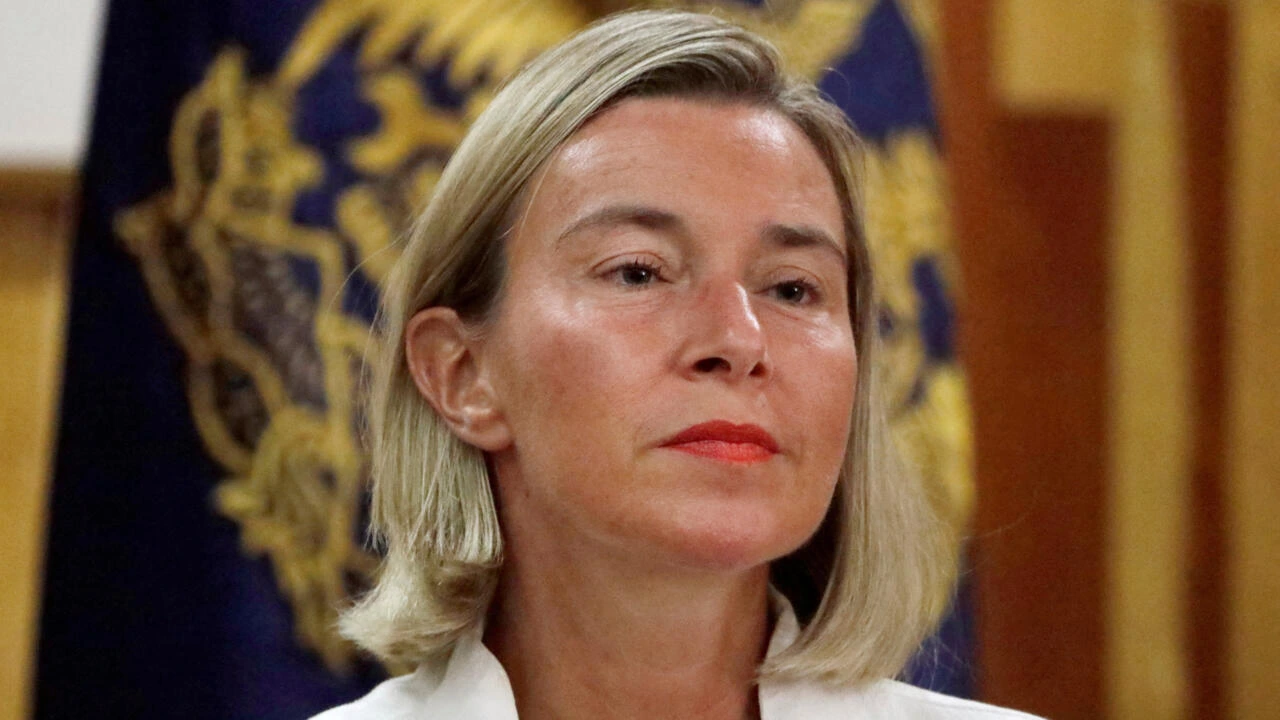
BRUSSELS — Former European Union foreign policy chief Federica Mogherini and two other senior figures have been formally accused of procurement fraud, corruption, conflict of interest and violation of professional secrecy, European authorities said Wednesday.
Their brief detention earlier this week has raised concerns across Brussels’ diplomatic and academic communities. Belgian authorities detained Mogherini on Tuesday along with a senior European Union diplomat and a College of Europe staff member during raids at EU offices and the school’s campus in Bruges.
Prosecutors said all three were released shortly after questioning as they are not considered a flight risk. The accusations stem from alleged irregularities in an EU funded training program for junior diplomats. The European Public Prosecutor’s Office (EPPO) said the investigation is ongoing.
Mogherini, an Italian national, served as the EU’s High Representative for Foreign Affairs and Security Policy from 2014 to 2019, leading the bloc’s diplomatic service. In 2020 she became rector of the College of Europe, a prestigious graduate school known for educating future EU officials.
The EPPO investigation centers on a contract awarded for the training of young EU diplomats. Authorities suspect confidential information may have been shared improperly during the tender process, potentially constituting procurement fraud and a breach of professional duties.
The other detainees include a senior official from the European Commission and a senior staff member from the College of Europe. One of the suspects is reportedly Stefano Sannino, a veteran EU diplomat and former colleague of Mogherini.
Legal experts in Brussels said the case is unusual given the seniority of the figures involved. “It is rare for former top diplomats to face formal accusations of fraud,” said a Brussels based EU governance analyst. “The implications could extend beyond this case, potentially affecting perceptions of integrity in EU institutions.”
A professor of European law noted the investigation will likely focus on whether proper procedures were followed in awarding the contract. “If inside information influenced the tender outcome, it undermines trust in EU procurement systems,” the professor said.
While authorities have not disclosed the full financial details, the contract under investigation reportedly involved several hundred thousand euros.
For context, most EU funded diplomatic training programs at elite institutions like the College of Europe typically range from €500,000 to €1 million annually, depending on scope.
Few previous cases have involved allegations of this nature against officials of such high rank, blending diplomacy, education and EU funding oversight. Experts suggest this could prompt increased scrutiny of contracts across EU institutions.
Brussels’ diplomatic community reacted with a mixture of surprise and concern. “It is alarming,” said one long time diplomat who asked not to be named. “We trust that EU processes are transparent. Cases like this challenge that perception.”
Former students of the Diplomatic Academy expressed disappointment. “We joined these programs expecting fairness and transparency,” said a recent alumnus. “If these allegations are substantiated, it could cast doubt on the integrity of the system.”
Representatives of the College of Europe said the institution will cooperate fully with authorities and reaffirmed its commitment to compliance and transparency.
Belgian prosecutors and EPPO investigators now have the task of reviewing documentation, communications and contracts to determine if charges are warranted.
Should the case proceed to trial, it is expected to attract significant public and political attention across the EU. The investigation may also lead to internal reforms in how training programs and procurement contracts are managed, particularly to prevent conflicts of interest involving former senior officials.
The accusations against Federica Mogherini and other senior figures highlight the EU’s ongoing efforts to monitor the use of its funds and uphold accountability in both its diplomatic and academic institutions.
The outcome of this investigation will test the mechanisms in place to ensure transparency and fairness in EU funded projects while signaling the potential consequences for breaches of protocol by high ranking officials.


