
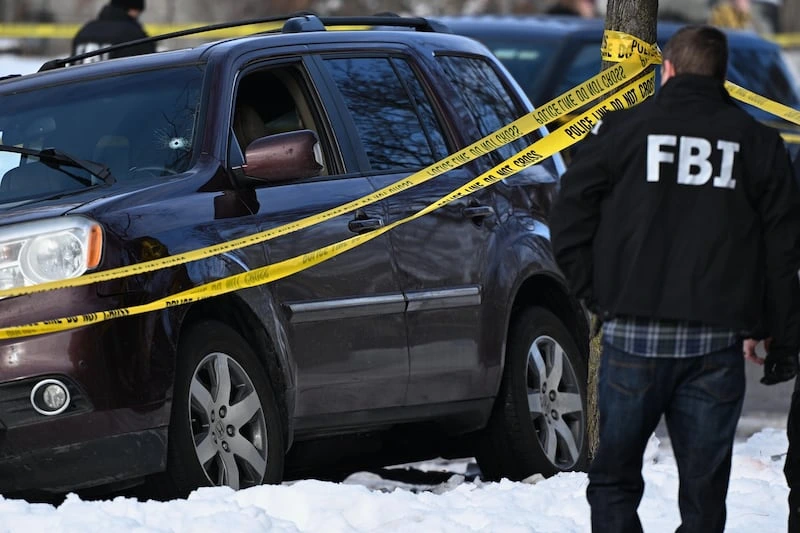
A fatal ICE shooting in Minneapolis on Wednesday, in which a federal immigration agent shot and killed a thirty seven year old woman during an enforcement operation.
Has ignited a sharp political clash over President Donald Trump’s deportation strategy and the expanding role of federal agents in Democratic led cities, according to federal and state officials.
KEY POINTS
- A fatal ICE shooting in Minneapolis during a federal operation has triggered parallel state and federal investigations.
- Trump administration officials and Minnesota Democrats offer sharply conflicting accounts of the incident.
- The case has renewed scrutiny of federal immigration enforcement tactics and use of force standards
The shooting occurred as Immigration and Customs Enforcement carried out what officials described as its largest ever enforcement operation in Minnesota.
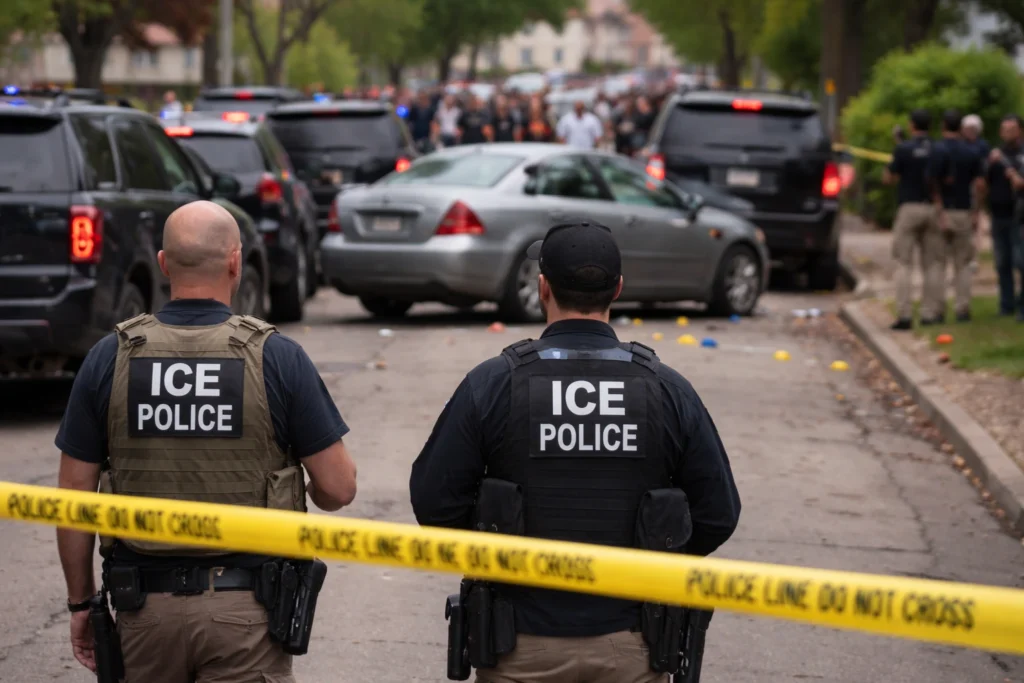
Within hours, the incident became a national flashpoint, drawing statements from the White House, state leaders and members of Congress.
The fatal ICE shooting in Minneapolis now sits at the intersection of immigration enforcement, public safety and federal state relations, with implications extending beyond the city.
According to the Department of Homeland Security, ICE agents attempted to stop a vehicle in south Minneapolis as part of a targeted operation linked to federal immigration and fraud investigations.
DHS officials said the driver used her vehicle in a manner that endangered officers, prompting one agent to fire a weapon.
Minnesota officials and Democratic lawmakers disputed that characterization.
The Minnesota Star Tribune identified the woman killed as Renee Nicole Good, an American citizen.
Local leaders said preliminary video footage does not show an imminent threat to officers, a claim that has intensified calls for independent review.
The incident unfolded amid an aggressive expansion of federal immigration enforcement under Trump, who has directed thousands of ICE agents to operate in cities governed by Democrats.
Minneapolis, home to one of the largest Somali American communities in the United States, has been a focal point of that strategy.
Tensions between federal immigration authorities and Minneapolis officials predate the shooting.
The city has previously limited cooperation with ICE, while federal officials argue such policies obstruct enforcement of immigration law.
Legal and law enforcement experts said the fatal ICE shooting in Minneapolis underscores unresolved questions about jurisdiction.
Accountability and the use of force by federal agents operating in civilian neighborhoods.
Former federal prosecutor Michael German said federal agents are governed by the same constitutional standards as local police when using deadly force.
“The key issue is whether the officer reasonably perceived an immediate threat,” he said.
“That determination typically requires an independent investigation, particularly when facts are disputed.”
Civil rights scholars note parallels with earlier federal interventions in cities following civil unrest.
Minneapolis remains under a federal consent decree stemming from the killing of George Floyd in 2020, an agreement the Trump administration previously sought to roll back.
Political analysts said the episode illustrates how immigration enforcement has become a proxy battleground in national politics.
“These operations are no longer viewed solely through a law enforcement lens,” said University of Minnesota political scientist Larry Jacobs. “They are interpreted as symbols of federal power and partisan identity.”
Federal Immigration Enforcement in Minnesota
| Indicator | 2020 | 2025 |
|---|---|---|
| ICE agents deployed statewide | About 300 | About 2,000 |
| Large-scale ICE operations | Limited | Expanded |
| State-local cooperation agreements | Minimal | Minimal |
Sources: DHS statements, Minnesota state officials
Minneapolis Mayor Jacob Frey said the shooting reflected a broader breakdown in trust between residents and federal authorities.
“There is deep anger in this city,” Frey said at a news conference, calling for ICE to suspend operations pending investigation.
Minnesota Attorney General Keith Ellison said his office would conduct a state-level inquiry alongside federal reviews. “If anyone broke the law, they will be held accountable,” Ellison said.
House Minority Leader Hakeem Jeffries of New York said Congress would monitor the case closely.
“There is no evidence so far that deadly force was justified,” he said in a television interview.
DHS Secretary Kristi Noem defended the agents involved, saying the department views the encounter as a security incident requiring further federal review. ICE declined to release the name of the agent pending investigation.
Multiple investigations are expected to determine whether the use of force complied with federal standards.
State officials said video evidence and forensic analysis will be central to those reviews.
Congressional Democrats have signaled possible oversight hearings, while the Trump administration has indicated no immediate change to its enforcement strategy.
The fatal ICE shooting in Minneapolis may also influence pending legal challenges to federal immigration operations in sanctuary jurisdictions, as courts weigh questions of authority and accountability.
The shooting has placed Minneapolis once again at the center of a national reckoning over law enforcement, federal power and immigration policy.
As investigations proceed, the case is likely to shape how immigration operations are conducted and scrutinized in cities across the United States, reinforcing the long term significance of federal actions at the local level.
Author’s Perspective
In my analysis, the fatal ICE shooting in Minneapolis highlights how aggressive, highly visible federal enforcement in urban areas increases the risk of deadly confrontations.
I believe the incident exposes a growing gap between federal authority and local public safety realities that neither side has effectively addressed.
I predict that courts will impose clearer limits on large scale ICE street operations in major cities as constitutional challenges over use of force and jurisdiction continue to mount.
Watch court rulings and independent investigations closely, as they often shape enforcement policy long before political leaders acknowledge change.
NOTE! This report was compiled from multiple reliable sources, including official statements, press releases, and verified media coverage.


