
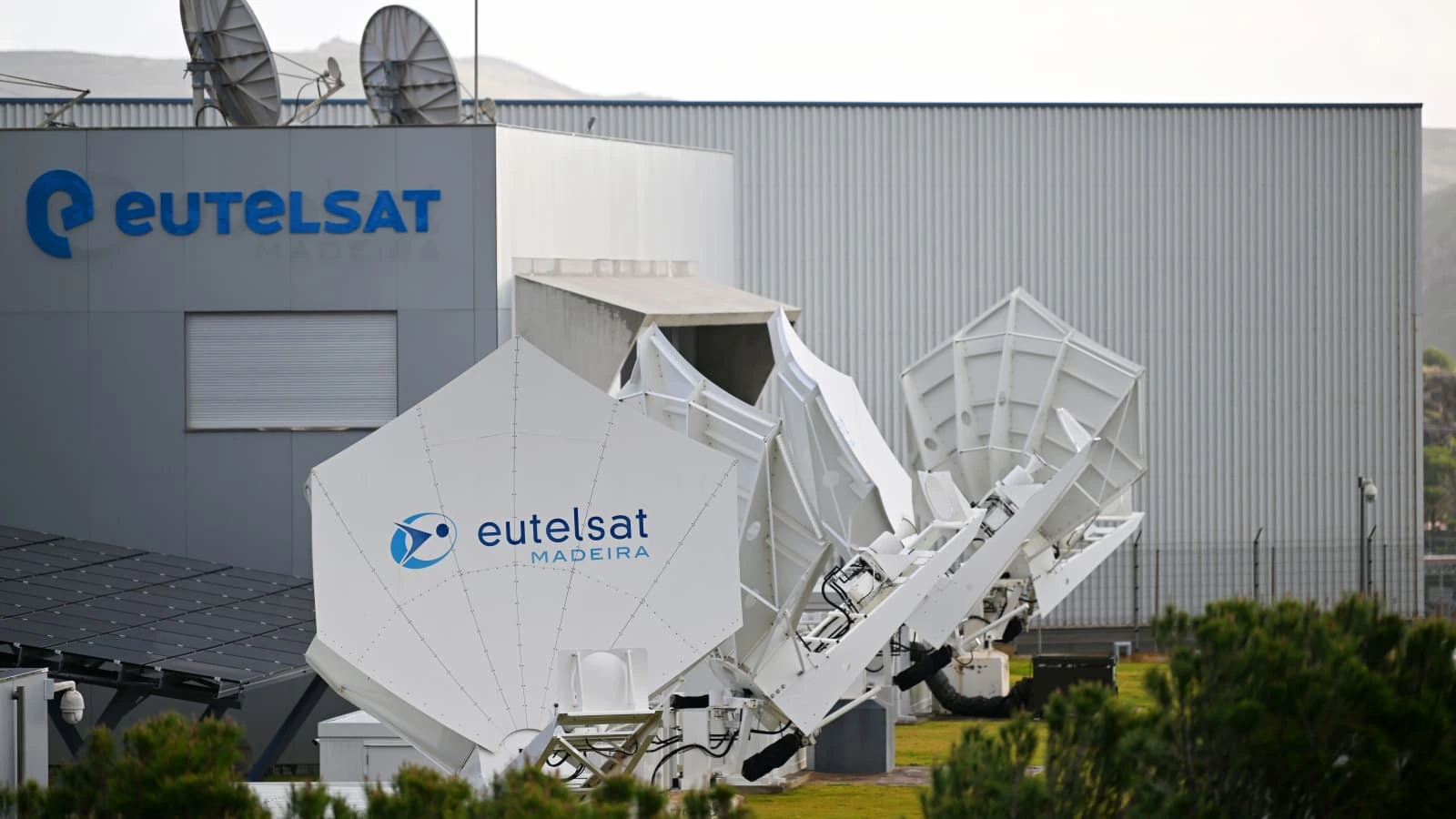
Eutelsat shares dropped sharply Wednesday after a report that SoftBank reduced its holdings in the French satellite operator, underscoring growing uncertainty around Europe’s efforts to compete with Elon Musk’s Starlink in the fast expanding satellite broadband market.
The Reuters report indicated SoftBank sold thirty six million rights, equal to about twenty six million shares, leaving the Tokyo based conglomerate with roughly half its previous stake.
The decline in Eutelsat shares comes at a pivotal moment for the French company, which completed a merger with the satellite provider OneWeb in 2023.
The deal was framed by European policymakers as a critical step toward maintaining technological sovereignty, particularly as global reliance on space based communication systems grows.
Eutelsat controls a fleet of more than six hundred satellites, a substantial footprint but still overshadowed by Starlink’s more than 6,750 low orbit satellites.
That gap has made Eutelsat’s challenge increasingly difficult, even as European institutions invest heavily in broader space infrastructure.
In June the French state led a 1.35 billion euro recapitalization, boosting its ownership to about 30 percent and positioning the company as a central pillar of Europe’s long term digital infrastructure plans.
Yet despite the government support, Eutelsat shares have been volatile. After soaring more than six hundred percent earlier this year during a surge in European space investment, the stock has lost over seventy percent of its value.
Analysts said SoftBank’s move fits a broader pattern within the company’s strategy. “SoftBank has been aggressively monetizing assets as it frees up capital for artificial intelligence investments,” said Luke Kehoe, a senior analyst at the network intelligence firm Ookla.
“Its decision to trim Eutelsat reflects a portfolio wide recalibration rather than a direct judgment on the company’s operational outlook.”
Masayoshi Son, SoftBank’s founder, has emphasized this shift in recent public appearances. On Monday he said the company would not have sold holdings, including its complete exit from Nvidia earlier this year, if it did not need liquidity for new AI focused projects.
European industry experts noted that the drop in Eutelsat shares also reflects pressure on the continent’s broader space strategy. “The challenge is scale,” said Clara Duval, a satellite communications researcher at the University of Toulouse.
“Eutelsat is developing strong government and enterprise offerings, but Starlink remains dominant in retail broadband. Europe faces the question of whether it can sustain the long term funding required to close that gap.”
Others pointed to the structural differences in business models. “Eutelsat’s pivot toward B2B segments government, aviation and backhaul positions it in higher value markets, but those returns take time,” said Paris based telecom analyst Hervé Lemoine.
Starlink’s consumer scale allows it to move faster, and that contrast is shaping investor sentiment. The competition between the two operators is often framed in terms of raw satellite numbers, but analysts argue the wider context is more complex.
Satellite fleet size, Starlink’s more than 6,750 satellites dwarf Eutelsat’s six hundred plus units. Starlink dominates global consumer broadband, with millions of residential subscribers. Eutelsat has a stronger presence in government and enterprise contracts through OneWeb.
The French government holds roughly 30 percent of Eutelsat after its June investment, while Starlink remains part of Musk’s privately controlled SpaceX.
Europe’s recapitalization efforts highlight the scale of investment required to build competitive satellite networks, particularly in low Earth orbit.
Eutelsat shares remain under pressure as investors weigh whether the company can translate strategic partnerships and public backing into long term financial stability. In Paris, employees and local business partners expressed mixed reactions to SoftBank’s exit.
“There’s concern, of course, but also a belief that this is part of the company’s evolution,” said Julien Armand, who runs a logistics firm that collaborates with Eutelsat on launch support operations. “Government backing gives the company stability even when global investors shift direction.”
Some workers said uncertainty is not new in the satellite sector. “This industry is cyclical,” said a technician at Eutelsat’s Rambouillet ground station, who requested anonymity due to company policy.
What matters is maintaining long term contracts. The technology is advancing fast, and Europe wants to stay competitive. Outside the aerospace sector, small business owners were more cautious.
“Any time a major investor steps back, it shakes confidence,” said Nora Bouteille, who runs a café frequented by Eutelsat employees. “People are talking about it, but they’ve also seen the company bounce back before.”
Industry observers said the future of Eutelsat shares will depend on how effectively the company executes its long term strategy and how strongly European institutions continue supporting satellite infrastructure.
Kehoe, the Ookla analyst, said Eutelsat’s shift away from consumer markets could ultimately benefit the company if it solidifies its position in government and enterprise segments.
The open question is whether that higher value positioning will deliver returns once current capital expenditures ease, he said. Analysts also noted that Europe’s political commitment will play a decisive role.
With geopolitical tensions reshaping global communications systems, European governments have signaled they want more autonomy in space based connectivity.
Whether they are willing to make sustained investments at the scale required to compete with Starlink remains uncertain. For now, the market reaction suggests investors remain cautious.
Eutelsat shares may stabilize as more details emerge about SoftBank’s stake reduction, but long term confidence will likely hinge on the company’s ability to grow its enterprise business and close the technology gap with its American rival.
The drop in Eutelsat shares reflects a mix of market recalibration, strategic shifts within SoftBank and broader questions about Europe’s space ambitions.
While Eutelsat continues to position itself as a key player in government and enterprise connectivity, the company faces an uphill battle against Starlink’s scale and speed.
As European governments deepen their involvement in satellite infrastructure, the coming year will test whether public support and strategic repositioning are enough to shore up long term investor confidence.


