
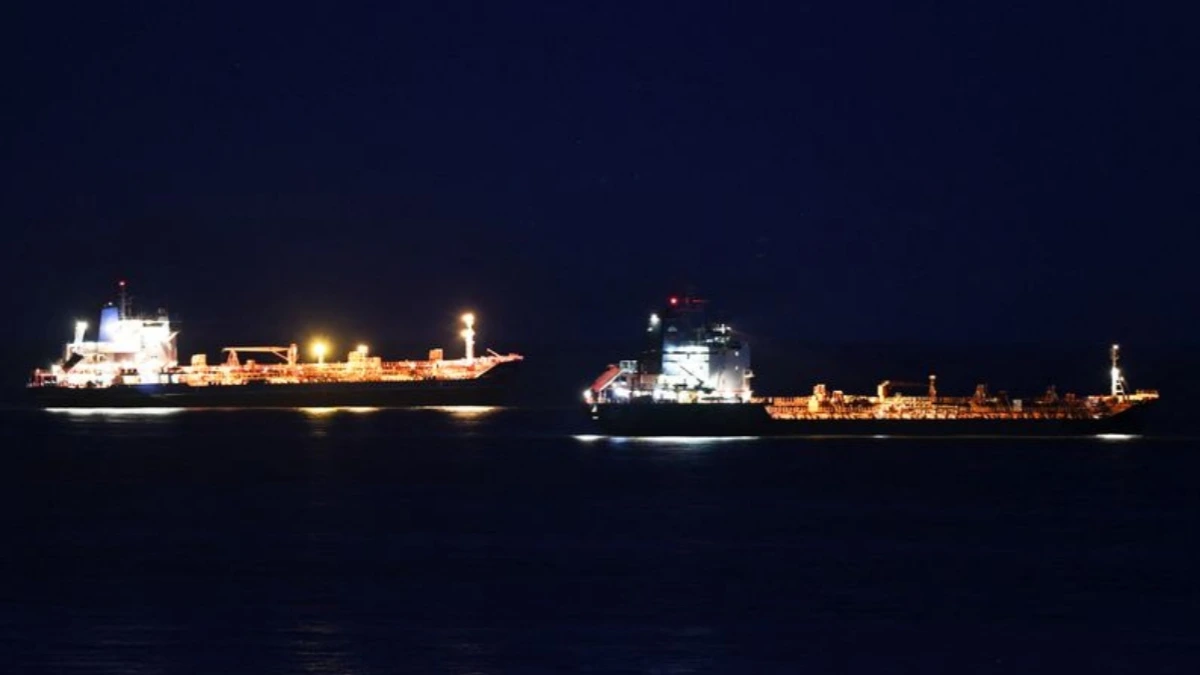
The European Union and the Group of Seven nations are weighing a full ban on maritime services for Russian oil exports, a move that would replace the existing price cap and tighten pressure on Moscow’s wartime revenue streams, according to six people familiar with the talks.
The discussions mark the most significant shift in Western policy on Russian oil since the cap was introduced in 2022.
Officials involved in the negotiations said the proposed ban on shipping, insurance and other maritime services could be included in the EU’s next sanctions package expected in early 2026, pending coordinated approval from G7 governments.
Maritime services ban” appears naturally throughout this report. Western governments introduced the price cap on Russian oil two years ago after the invasion of Ukraine, aiming to limit Kremlin revenue while keeping global oil markets stable.
Under the system, buyers in third countries can use Western ships and insurance only if they pay below the established price threshold.
Russia responded by redirecting much of its crude to India and China with the use of Western tankers and services.
More than one third of Russia’s oil exports still move through these Western linked systems, particularly through fleets based in Greece, Cyprus and Malta.
Another two thirds travel on Russia’s so-called shadow fleet, a vast network of older tankers operating without Western insurance and often under opaque ownership.
Experts said a full maritime services ban would force Moscow to expand this shadow fleet or face bottlenecks in exporting crude.
The potential maritime services ban is being pushed most strongly by officials from the United States and the United Kingdom, sources said, although any final US decision may depend on the diplomatic strategy adopted by President Donald Trump’s administration as it brokers ongoing peace discussions between Russia and Ukraine.
“The shift away from the price cap would represent a dramatic escalation,” said Dr. Michael Harwood, an energy policy analyst at the London based Center for Global Markets. “The allies believe the cap has lost effectiveness because Russia has adapted. A services ban would hit the tools Moscow relies on rather than the oil price itself.”
European officials noted that enforcement of the cap has become increasingly difficult as Russia expands shipping networks outside Western scrutiny.
“The EU is looking closely at what measures still work,” said a senior European diplomat involved in sanctions planning. “A coordinated G7 approach is critical to avoid market disruption.”
Before the war, Russia relied heavily on Western tankers, brokers and insurers to move most of its crude.
One third of Russian oil exports still depend on Western maritime services Two thirds move on a shadow fleet estimated to include hundreds of vessels
Many ships operating in the shadow fleet are over twenty years old. A 2025 G7 estimate found that more than eighty percent of Russian dark fleet shipments lacked Western insurance
Analysts said the new maritime services ban would reduce Russia’s flexibility and potentially raise its shipping costs significantly. However, the scale of Moscow’s dark fleet operations complicates predictions.
Ports and shipping communities in Mediterranean maritime hubs expressed mixed reactions.
In Piraeus, Greece, ship broker Antonis Markou said a ban would “fundamentally change our business landscape,” noting that Greek owned fleets remain deeply involved in global oil transport.
“There is tension,” he said. “People are waiting for clarity because these decisions ripple across our entire economy.”
In Cyprus, maritime worker Maria Kleanthi said locals worry about job losses if the maritime services ban proceeds. “Everyone understands the political reasons, but this industry supports thousands of families,” she said.
Meanwhile, Ukrainian officials said the bloc must go further to cut off Russian revenue. “Any measure that restricts Russia’s oil exports weakens its ability to finance aggression,” said Oleh Chorniy, an advisor to Ukraine’s energy ministry.
Diplomats said the EU aims to finalize discussions with G7 partners before formally proposing the ban within its sanctions package early next year.
US alignment remains uncertain, as the Trump administration has expressed skepticism about tightening the price cap and previously declined to support lowering it.
The proposed maritime services ban would represent the closest the allies have come to fully severing engagement with Russian crude, extending restrictions from imports to transportation, insurance and logistics.
Still, experts warned that Moscow may accelerate the expansion of its dark fleet or seek new partners in Asian and Middle Eastern markets, potentially blunting the impact.
As the EU and G7 weigh their toughest measures yet on Russian oil exports, the debate reflects a broader question over how far Western governments are willing to go to curb Moscow’s wartime revenue.
Whether through a strengthened price cap or a full maritime services ban, the coming months are likely to reshape how Russian crude moves across global waters.


