
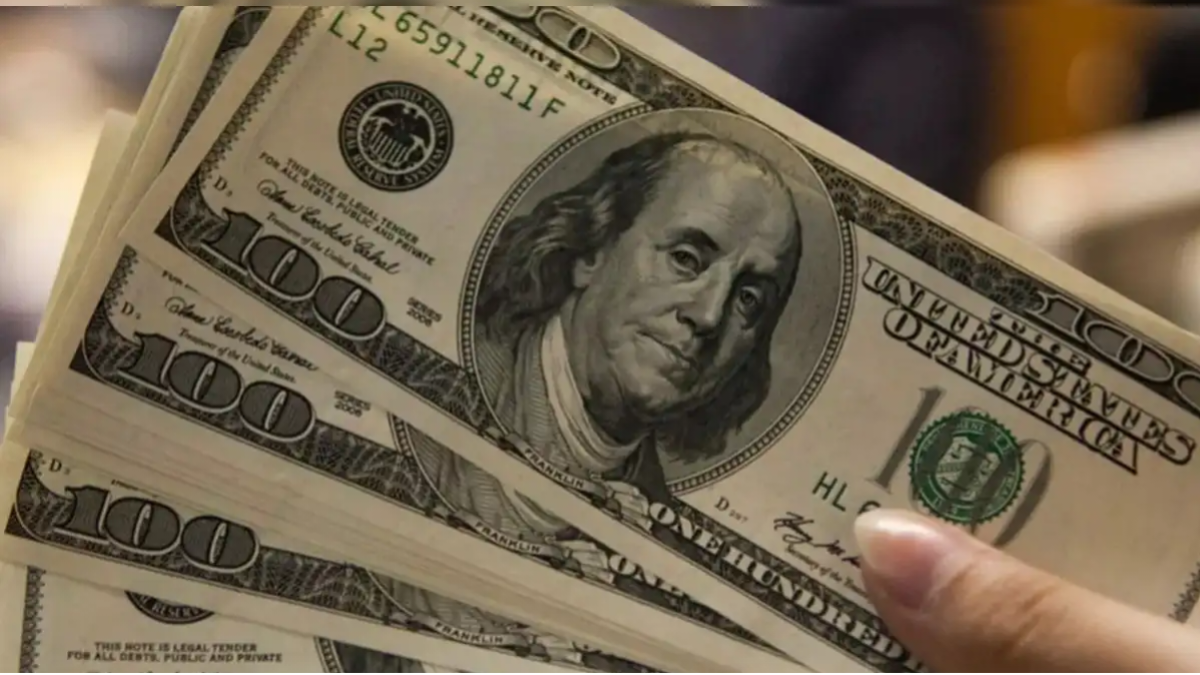
The dollar set for biggest weekly fall in four months on Thursday as expectations of further monetary easing in the United States deepened and political pressure on the Federal Reserve intensified.
Thin liquidity during the Thanksgiving holiday added to sharp swings across major currencies, with the Japanese yen edging higher and the euro drifting lower on renewed geopolitical concerns.
Traders and analysts said shifting views on US monetary policy and uncertainty over global conflict zones were shaping a cautious but volatile environment across global currency markets.
The US dollar index held near 99.58 after sliding from a six month peak last week. Despite a slight uptick during the session, it remained down roughly 0.60 percent on a weekly basis, putting the dollar set for biggest weekly fall since July.
The shift comes as President Donald Trump has increased pressure on the central bank to cut rates. Investors are also watching the potential appointment of White House economic adviser Kevin Hassett, a vocal advocate for rate cuts, as the next Fed chair.
The yen strengthened to 156.33 per dollar, supported by a firmer tone from Bank of Japan officials who signaled readiness to maintain a tight policy stance if inflationary pressures persist.
Meanwhile, European currencies fluctuated as negotiations over a possible Ukraine peace deal gained renewed attention.
“Markets are reacting to both the political backdrop in Washington and the broader expectation that the Fed is getting closer to the pivot point,” said Hana O’Donnell, a senior currency strategist at Horizon FX.
Analysts said the dollar set for biggest weekly fall reflects a combination of interest rate expectations and concerns about US economic resilience.
Mark Haefele, chief investment officer at UBS Global Wealth Management, advised investors to reevaluate currency allocations as the appeal of the greenback weakens.
“The dollar’s dominance is not guaranteed in the coming months,” Haefele said. “A softer rate path, along with political uncertainty heading into next year, favors selective exposure to currencies like the euro and Australian dollar.”
Some strategists, however, cautioned against assuming a rapid trend reversal. Themos Fiotakis, global head of forex strategy at Barclays, said recent months showed that US economic performance remains unexpectedly resilient.
“We’ve gone through a period where rate differentials clearly supported Europe over the US,” Fiotakis said. “But some of those assumptions are being challenged. The euro’s expensiveness is one reason, but the durability of US growth is another.”
Others highlighted the risk of foreign exchange intervention. Francesco Pesole, a strategist at ING, said thin liquidity during the US holiday could create an opening for Japanese authorities to act if volatility amplifies.
“Japanese officials remain sensitive to sharp movements,” Pesole said. “Intervening after a dollar negative data event remains the preferred approach, but current market conditions could still provide an opportunity.”
The US dollar index has shed nearly two thirds of a percent this week, its steepest decline in four months. The yen’s 0.10 percent rise, though modest, marks one of its stronger performances this month.
The euro slipped 0.05 percent to $1.1596 after reaching a one and a half week high of $1.1613 earlier in the session. Analysts said any progress in Ukraine peace discussions would likely lift the single currency, though fresh comments from Moscow have made the path uncertain.
Russia’s President Vladimir Putin signaled that a draft peace plan discussed between the United States and Ukraine could serve as a foundation for future negotiations, though he warned Russia would continue military operations if talks fail.
Comparatively, emerging market currencies remained mixed. Lower US yields offered some relief to countries with high external debt, but geopolitical tensions and fluctuating commodity prices kept some of those gains in check.
Currency traders in Asia and Europe reported light but jumpy trading conditions. With U.S. markets closed for Thanksgiving, liquidity declines often exacerbate intraday movements.
“Every small order is moving the market more than usual,” said Daniel Herrera, a Tokyo based forex dealer who has worked through several holiday cycles.
“The dollar set for biggest weekly fall has added a psychological layer because traders are now waiting for Friday’s close to confirm whether this trend holds.”
In Frankfurt, some investors said they were preparing for heightened volatility through December as central banks attempt to balance inflation control with economic risks.
“People on the ground feel the uncertainty,” said Julia Stein, a fund manager at Rhein Asset Partners. “We’re dealing with rate questions, geopolitical instability and year-end portfolio adjustments. None of it lends itself to calm trading.”
In Sydney, small business exporters welcomed signs of US dollar weakness as it eased cost pressures on imports priced in dollars.
“When the dollar softens, it gives us breathing room,” said Bradley Cooper, who manages a mid size logistics company. “Even a slight shift can make a real difference in our margins.”
With the dollar set for biggest weekly fall, analysts expect trading conditions to remain sensitive to incoming economic data and political signals.
Key indicators next week, including US inflation readings and employment figures, could influence expectations for the central bank’s January meeting.
Markets will also watch developments surrounding Ukraine peace discussions, which could sway European currencies.
Additionally, decisions from the Bank of Japan and Reserve Bank of Australia in coming weeks may contribute to broader recalibrations in global forex positioning.
“There is no single driver at play,” O’Donnell said. “We’re entering a phase where policy expectations, geopolitics and liquidity conditions will interact more forcefully than earlier this year.”
As investors brace for a pivotal end to the year, the dollar set for biggest weekly fall underscores how quickly sentiment can shift in global currency markets.
With monetary policy uncertainty, geopolitical negotiations and thin holiday trading all contributing to volatility, analysts say the path ahead remains fluid.
Market participants continue to monitor economic data and central bank signals as currencies adjust to a landscape defined by both caution and expectation.


