
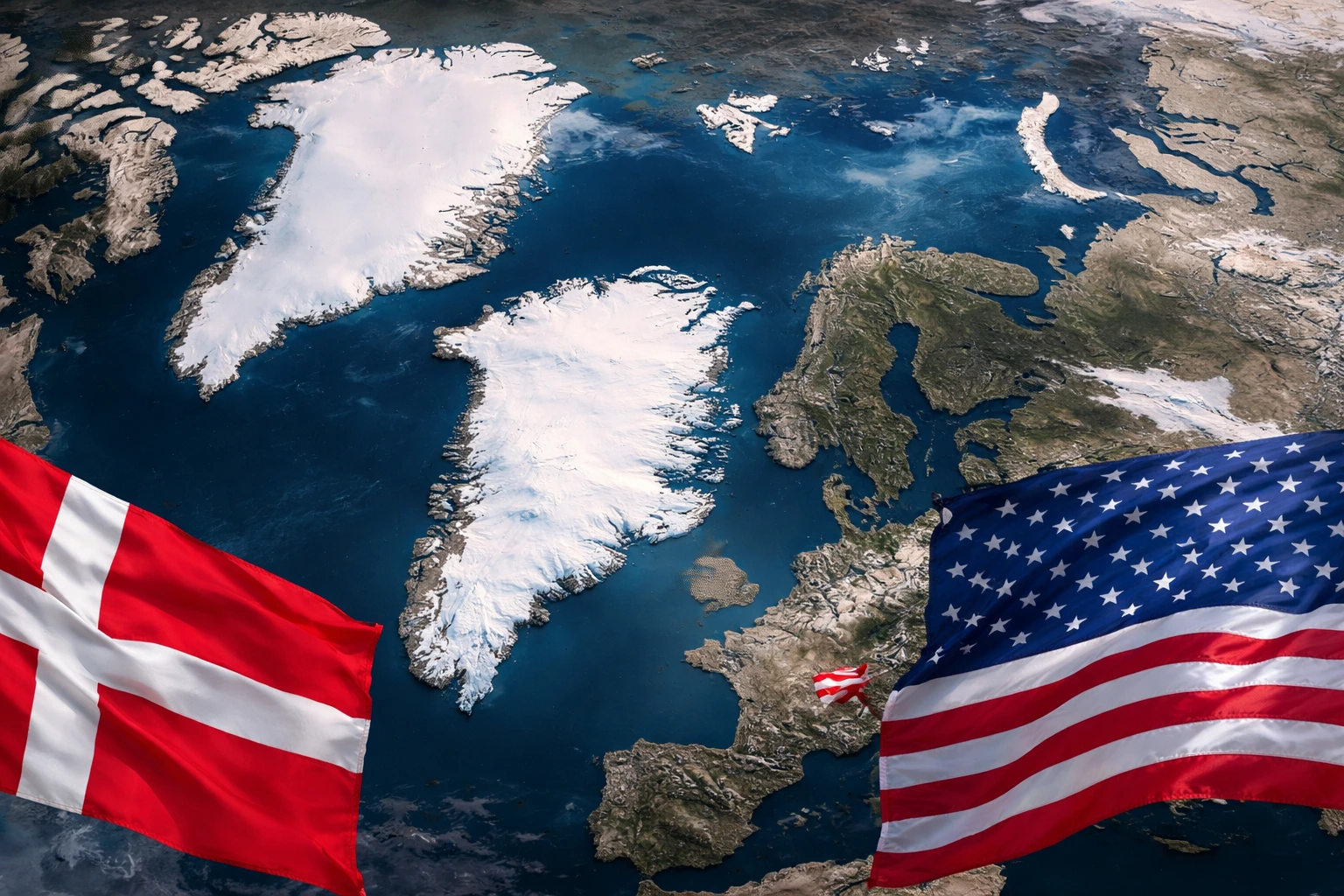
Denmark’s prime minister has warned President Donald Trump to stop what she called “threats” over Greenland, pushing back forcefully against renewed US rhetoric suggesting the Arctic territory could be taken over by Washington.
The comments, delivered this week by Prime Minister Mette Frederiksen, sharpen a diplomatic dispute involving NATO allies and revive long standing tensions over Greenland annexation threats tied to security, minerals and Arctic strategy.
KEY POINTS
- Denmark says the United States has no legal or political right to annex Greenland, a self governing territory within the Danish kingdom.
- Greenland annexation threats raise sensitive NATO and international law questions involving sovereignty and collective defense.
- The dispute highlights growing geopolitical competition in the Arctic driven by security access and critical minerals.
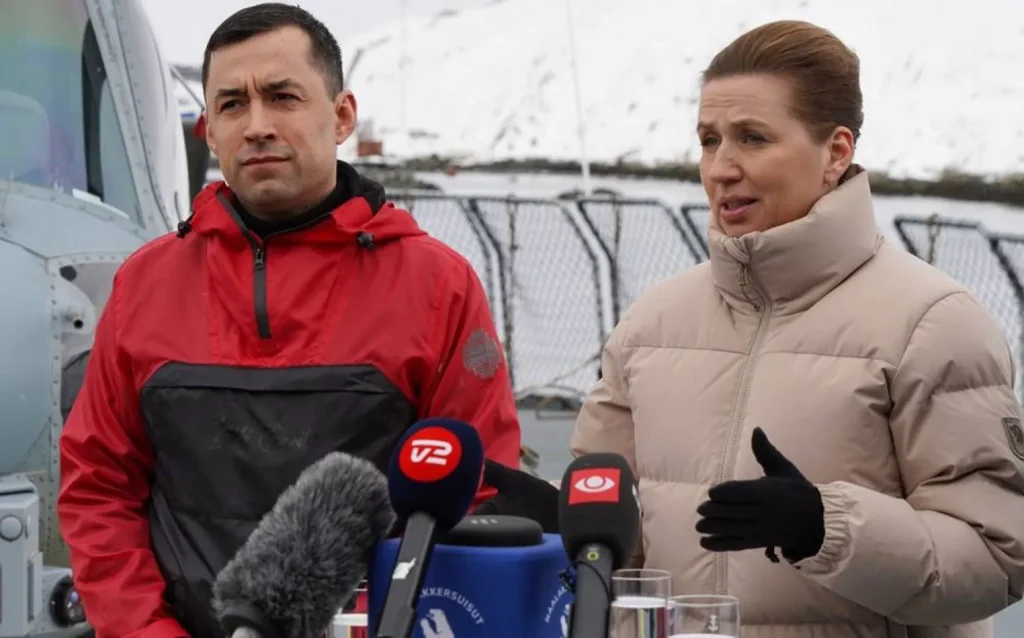
The public rebuke from Denmark’s leader marks one of the most direct challenges yet to Trump’s repeated assertions that Greenland should fall under US control.
Frederiksen’s remarks, posted on the Danish government’s official website, came amid heightened attention to Arctic security and followed a social media post by Katie Miller.
The wife of Trump adviser Stephen Miller, showing Greenland colored as a U.S. flag with the word “SOON.”
Denmark and the United States are long standing allies, bound by NATO obligations and decades of defense cooperation in the Arctic.
The escalation underscores how Greenland annexation threats are testing alliance unity at a time when polar regions are gaining global strategic importance.
Greenland, the world’s largest island, has been part of the Danish realm for centuries but gained extensive self government in nineteen seventy nine.
While Denmark retains control over defense and foreign policy, Greenland’s local government manages most domestic affairs.
Opinion polls in recent years show strong support for eventual independence from Denmark, coupled with overwhelming opposition to becoming part of the United States.
Trump first raised the idea of acquiring Greenland during his initial term, framing it as a strategic necessity due to its location between North America and Europe and its deposits of rare earth elements and other critical minerals.
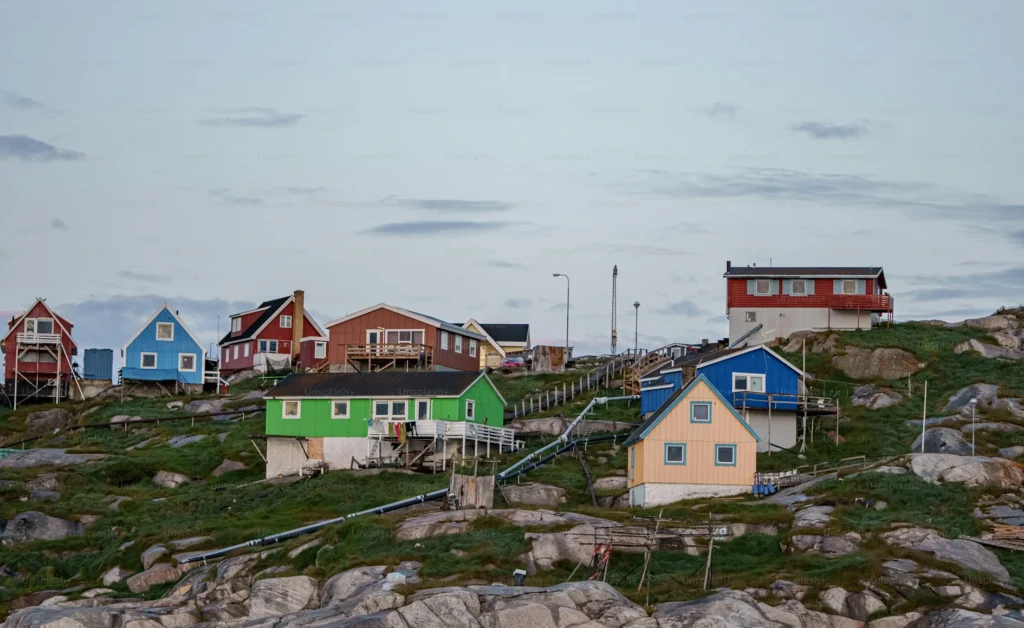
He has since declined to rule out the use of force to secure control of the territory, statements that have unsettled Copenhagen and Nuuk, Greenland’s capital.
Frederiksen said Denmark and Greenland are protected under NATO’s Article Five collective defense clause and already maintain.
A bilateral defense agreement granting the United States access to military facilities on the island.
She noted Denmark has increased Arctic defense spending in response to changing security conditions.
Legal scholars note that Greenland annexation threats collide with established principles of international law.
Particularly the prohibition against acquiring territory by force and the right of peoples to self determination.
NATO officials have also emphasized that alliance members are expected to respect one another’s territorial integrity.
Michael Byers, a professor of global politics at the University of British Columbia who studies Arctic governance, said repeated annexation rhetoric complicates cooperation.
“Security in the Arctic depends heavily on trust among allies,” Byers said. “Public suggestions of territorial takeover introduce uncertainty that adversaries can exploit.”
Strategically, Greenland hosts critical US and NATO infrastructure, including the Pituffik Space Base, formerly Thule Air Base, which supports missile warning and space surveillance.
Analysts say Washington already enjoys most of the military benefits it seeks without sovereignty changes.
Greenland at a Glance
| Category | Key Detail |
|---|---|
| Population | About 57,000 residents |
| Governance | Self-rule since 1979 under Danish sovereignty |
| NATO Status | Covered through Denmark’s NATO membership |
| Strategic Assets | Arctic location, space and missile monitoring |
| Resources | Rare earth elements, minerals, fisheries |
Frederiksen said Denmark was addressing the United States “very directly” and urged Washington to respect a “historically close ally.”
She added that Greenlanders have “very clearly said that they are not for sale.”
Denmark’s ambassador to the United States echoed that position, issuing what he called a friendly reminder. That the two countries are allies and that Copenhagen expects respect for its territorial integrity.
In Greenland, Sermitsiaq, one of the island’s leading newspapers, reported that local officials view renewed Greenland annexation threats as dismissive of the island’s political maturity and aspirations for self determination.
Diplomats expect Denmark to continue pressing the issue through NATO and bilateral channels, emphasizing existing defense cooperation rather than sovereignty debates.
US officials have not announced any formal policy steps toward Greenland, and no legislative action related to annexation is pending in Congress.
Arctic security discussions are likely to intensify as melting sea ice opens new shipping routes and access to resources, increasing the strategic value of Greenland without altering its legal status.
The latest exchange underscores how Greenland annexation threats reverberate far beyond rhetoric, touching alliance cohesion, international law and the evolving balance of power in the Arctic.
As strategic competition intensifies in the region, Denmark’s response signals a firm insistence that cooperation, not coercion, remains the foundation of transatlantic security.
Author’s Perspective Adnan Rasheed
In my analysis, Denmark’s firm reply shows that allies are serious about protecting Greenland’s sovereignty.
I believe Trump’s annexation talk is more about testing limits than a real plan.
I predict that Greenland will become a key NATO Arctic hub, with clearer rules to avoid unilateral pressure, rather than a flashpoint for annexation.
Keep an eye on NATO Arctic policies they reveal more than political headlines.
NOTE! This report was compiled from multiple reliable sources, including official statements, press releases, and verified media coverage.


