
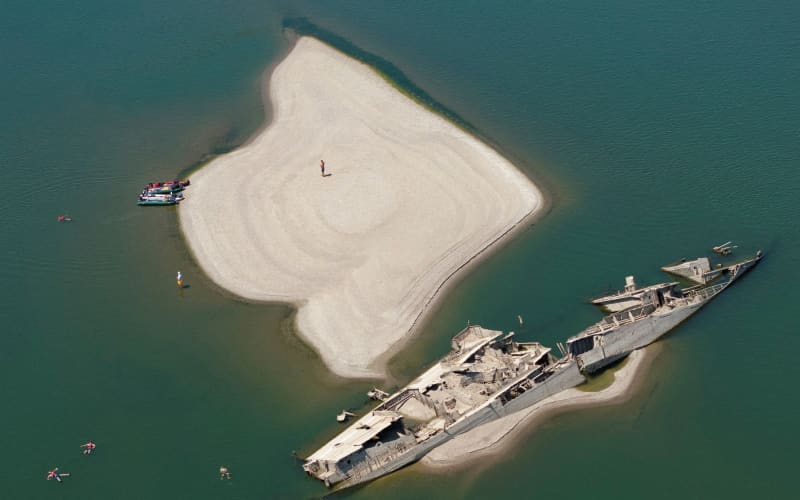
An extended period of extreme heat and limited rainfall has pushed water levels in the Danube River to historic lows, revealing long hidden remnants of both human and natural history.
Near the Serbian town of Prahovo, dozens of German military vessels that were deliberately scuttled during World War II have emerged from the riverbed.
The ships belonged to Nazi Germany’s Black Sea fleet and were intentionally sunk in September 1944 as German forces retreated from advancing Soviet troops.
Several of the vessels still contain unexploded ammunition and other hazardous materials, making them dangerous for river traffic and complicating recovery operations.
| Fact | Details |
|---|---|
| River | Danube River |
| Countries involved | Serbia and Bulgaria |
| WWII event | German fleet deliberately scuttled in September 1944 |
| Discovery | WWII shipwrecks and mammoth remains |
| Main concern | Navigation hazards and unexploded ordnance |
| Cause | Record-low water levels linked to prolonged drought and heat |
Authorities have previously undertaken removal efforts, but many wrecks remain beneath the Danube.
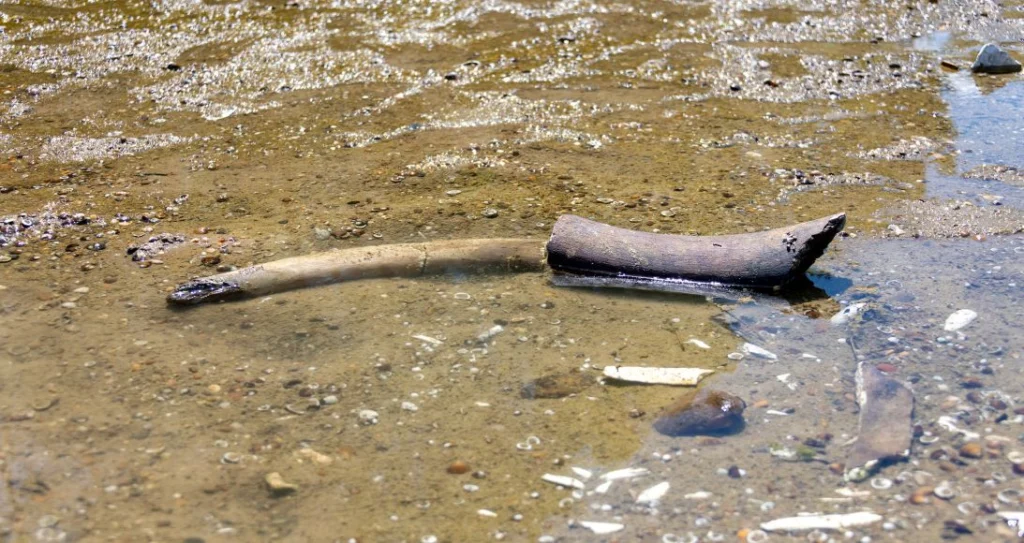
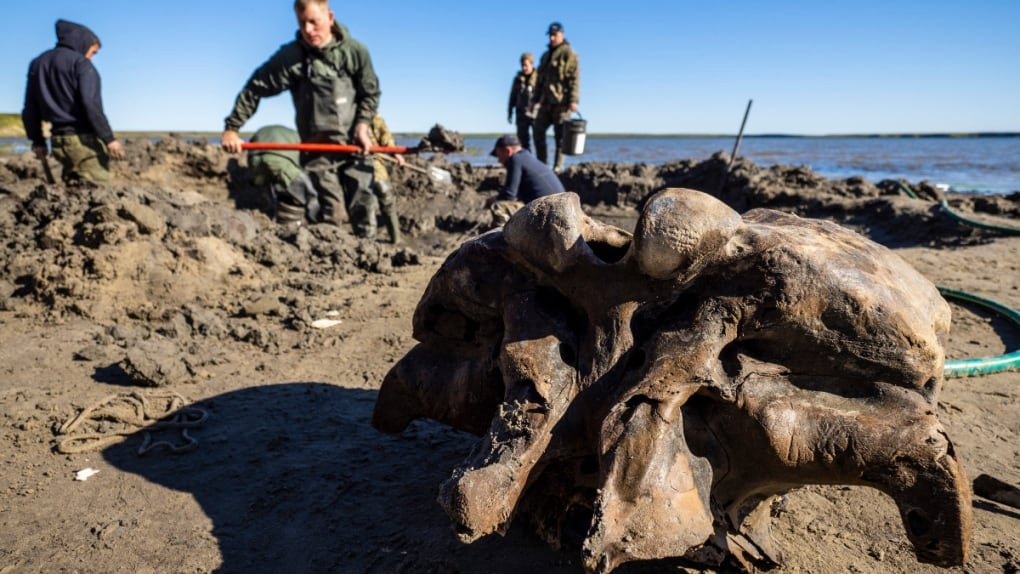
The unusually low river has also uncovered prehistoric discoveries. In northern Bulgaria, residents found mammoth remains including parts of a lower jaw, tusks and other bones on the exposed riverbed.
Museum experts have begun examining the fossils to determine their age and scientific significance.
The Danube is Europe’s second-longest river, flowing through 10 countries before reaching the Black Sea.
Its water levels naturally fluctuate throughout the year, but recent prolonged drought and repeated heat waves have driven levels to record lows in several locations.
Historians say German forces sank hundreds of vessels along sections of the Danube during their retreat in 1944 in an attempt to slow the Soviet advance. Many of those wrecks have remained submerged for decades.
The newly exposed shipwrecks have again highlighted navigation hazards along the river. Authorities continue monitoring conditions as low water levels restrict shipping and expose previously submerged obstacles.
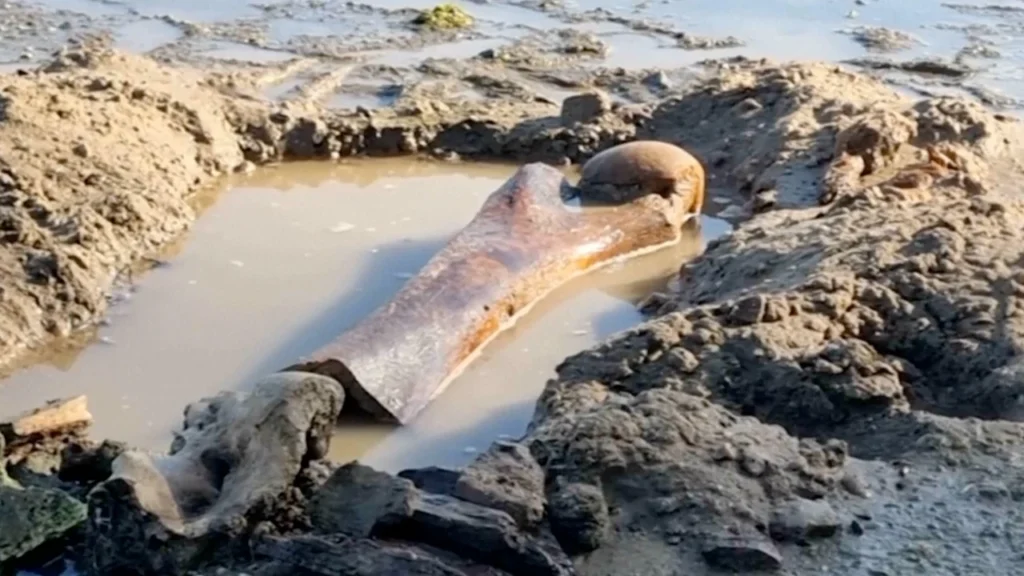
At the same time, archaeologists are evaluating the newly discovered mammoth remains in Bulgaria, where experts say further analysis will help determine the fossils’ history.
The discoveries illustrate how prolonged drought is reshaping Europe’s major waterways.
Beyond revealing historic artifacts, the falling water levels are disrupting commercial shipping, tourism and energy production while creating new safety challenges for vessels operating along the Danube.
The Danube’s declining water levels form part of a broader pattern affecting rivers across Central and Eastern Europe during an exceptionally hot and dry period.
Reduced river flow has limited cargo transport, affected tourism and contributed to operational challenges for some power facilities that rely on river water for cooling.
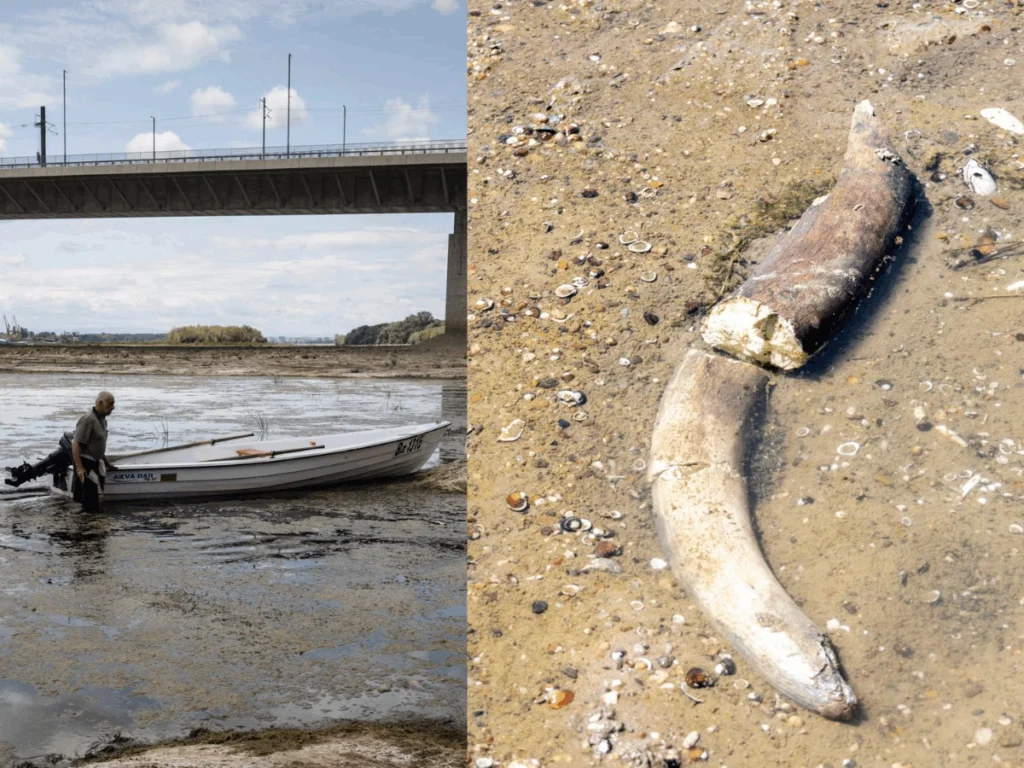
Museum officials in Bulgaria described the mammoth discovery as scientifically important and said specialists will conduct further analysis before drawing conclusions about its age and origin.
Authorities have also continued warning that unexploded ordnance aboard some of the wartime vessels presents ongoing safety risks.
Experts are expected to continue studying the mammoth remains, while authorities monitor river conditions and ongoing efforts related to hazardous WWII wrecks exposed by the Danube’s exceptionally low water levels.
Why are WWII shipwrecks appearing in the Danube River?
Because severe drought has lowered the river to unusually low levels, exposing vessels that have remained underwater since 1944.
Where were the mammoth bones found?
The remains were discovered on the exposed Danube riverbed near Ryahovo in northern Bulgaria.
Are the shipwrecks dangerous?
Yes. Officials say some vessels still contain unexploded munitions, creating hazards for navigation and recovery operations.
SOURCES:
Sky News


