
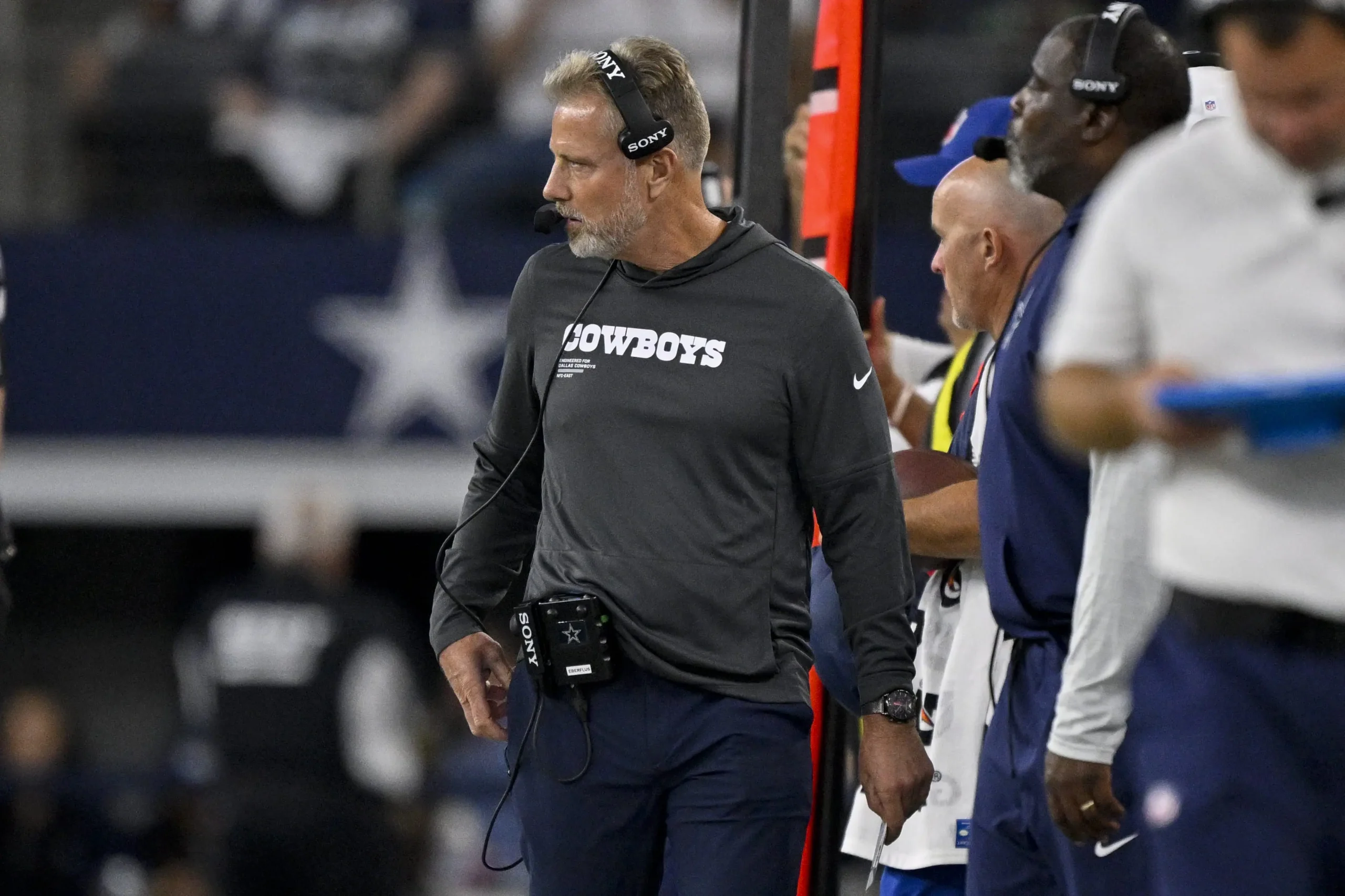
FRISCO, Texas — The Dallas Cowboys dismissed defensive coordinator Matt Eberflus on Tuesday after just one season, following a 7-9-1 campaign in which the team ranked last in scoring defense.
Sources told CBS Sports’ Jonathan Jones that Dallas will now seek its fourth different defensive coordinator in four seasons.
The move comes after the Cowboys allowed 30.1 points per game, the second most in the franchise’s 66 season history.
Dallas capped the season with a 34-17 loss to the New York Giants, highlighting persistent defensive struggles despite a productive offensive unit.
KEY POINTS
- Dallas Cowboys fire Matt Eberflus after a 7-9-1 season and the NFL’s worst scoring defense.
- Injuries, personnel changes, and internal disagreements contributed to defensive underperformance.
- Team leadership emphasizes need for structural and personnel improvements across all defensive levels.
The decision to relieve Matt Eberflus reflects deep concerns over the Cowboys’ defensive instability and long standing coaching turnover.
Eberflus, who assumed the role for the 2025 season, faced immediate challenges, including the pre-season trade of All Pro edge rusher Micah Parsons to the Green Bay Packers and multiple injuries across the secondary.
Despite accountability from the coaching staff, defensive inefficiency directly impacted the team’s overall performance, negating notable offensive accomplishments.
Quarterback Dak Prescott led the NFL with 4,552 passing yards, and wide receiver George Pickens ranked third in receiving yards, but the offense’s production was offset by consistent defensive lapses.
Dallas’ defensive struggles have historical roots. The Cowboys’ 30.1 points allowed per game in 2025 ranks second only to the 1960 inaugural team, which went 0-11-1.
Personnel instability has compounded these challenges. Injuries sidelined key cornerbacks DaRon Bland, Shavon Revel, and Caelen Carson.
While former Cowboy Trevon Diggs missed significant time due to knee and concussion issues.
Disagreements over coverage strategy between Eberflus and Diggs, combined with Parsons’ departure, placed the defensive coordinator in a high pressure environment.
Additions such as Pro Bowl defensive tackle Kenny Clark and Quinnen Williams bolstered run defense but could not offset weaknesses in pass coverage.
Sports analysts note that frequent turnover at the defensive coordinator position has disrupted continuity, limiting the Cowboys’ ability to implement long term strategies.
“Dallas has been unable to establish a consistent defensive identity,” said NFL analyst Dan Hanzus.
“When a team cycles through coordinators annually, it affects everything from player development to game planning, and it shows in the stats.”
Former Cowboys linebacker Sean Lee emphasized the impact on players’ morale and performance.
“When the system keeps changing, it’s tough for veterans and young players alike. Accountability matters, but execution depends on stability,” Lee said.
| Metric | 2025 Rank | 2024 Rank | League Comparison | Notes |
|---|---|---|---|---|
| Points Per Game Allowed | 30.1 | 28.4 | Last | Second-most in franchise history |
| Total Yards Per Game Allowed | 377.0 | 386.0 | 30th | Slight improvement in run defense |
| Yards Per Play Allowed | 6.1 | 6.2 | 31st | Reflects overall inefficiency |
| Passing Yards Per Game Allowed | 251.5 | 245.0 | Last | NFL worst in pass defense |
| Third Down Conversion Rate Allowed | 47.3% | 46.5% | Last | Key factor in sustaining drives |
| Red Zone TD Rate Allowed | 66.7% | 70.2% | 29th | Marginal improvement |
| Sack Total | 35 | 42 | 11th fewest | Drop linked to Parsons trade |
Eberflus took responsibility for the season’s defensive struggles. “Ownership and accountability is right with me,” he said. “I take full accountability.
We wanted to see more progress during the course of the year. It was just more up and down.”
Team leadership echoed the sentiment that improvement must come from multiple organizational levels.
Cowboys executive Jonathan Jones said, “That defense represents the personnel department, my department, everybody involved in contracts.
We all take it. We won’t just shuffle people around and expect a fix.” Offensive leaders also acknowledged the imbalance.
Prescott noted the frustration of individual performance not translating into team success.
“Being in a year where my play didn’t directly correlate to the record has been tough,” he said.
Wide receiver CeeDee Lamb added, “We have to get better collectively. The bar for ourselves needs to rise offensively and defensively.”
The Cowboys will now begin a search for a new defensive coordinator capable of establishing a long term vision while addressing depth, coverage schemes, and pass rush deficiencies.
Analysts suggest that success in 2026 will require significant roster investments, particularly at cornerback and edge rusher positions, as well as a consistent coaching framework.
The firing of Matt Eberflus underscores the Cowboys’ ongoing struggle to find defensive stability.
With key players lost to trades and injuries, and offensive stars performing at elite levels, Dallas faces a critical period of restructuring.
The team’s next coordinator will need to balance strategic planning, player development, and personnel acquisition to prevent a repeat of 2025’s historically poor defensive performance.
Author’s Perspective
In my analysis, Dallas’ defensive struggles in 2025 stemmed from a combination of injuries, roster turnover, and inconsistent schemes.
I believe long term success will depend on aligning coaching strategy with player acquisitions.
I predict the Cowboys will emphasize a faster, more versatile secondary to counter pass heavy offenses rather than relying on a single star edge rusher.
Follow their 2026 draft and free-agent decisions closely early alignment of scheme and personnel often drives measurable mid season improvement.
NOTE! This report was compiled from multiple reliable sources, including official statements, press releases, and verified media coverage.


