
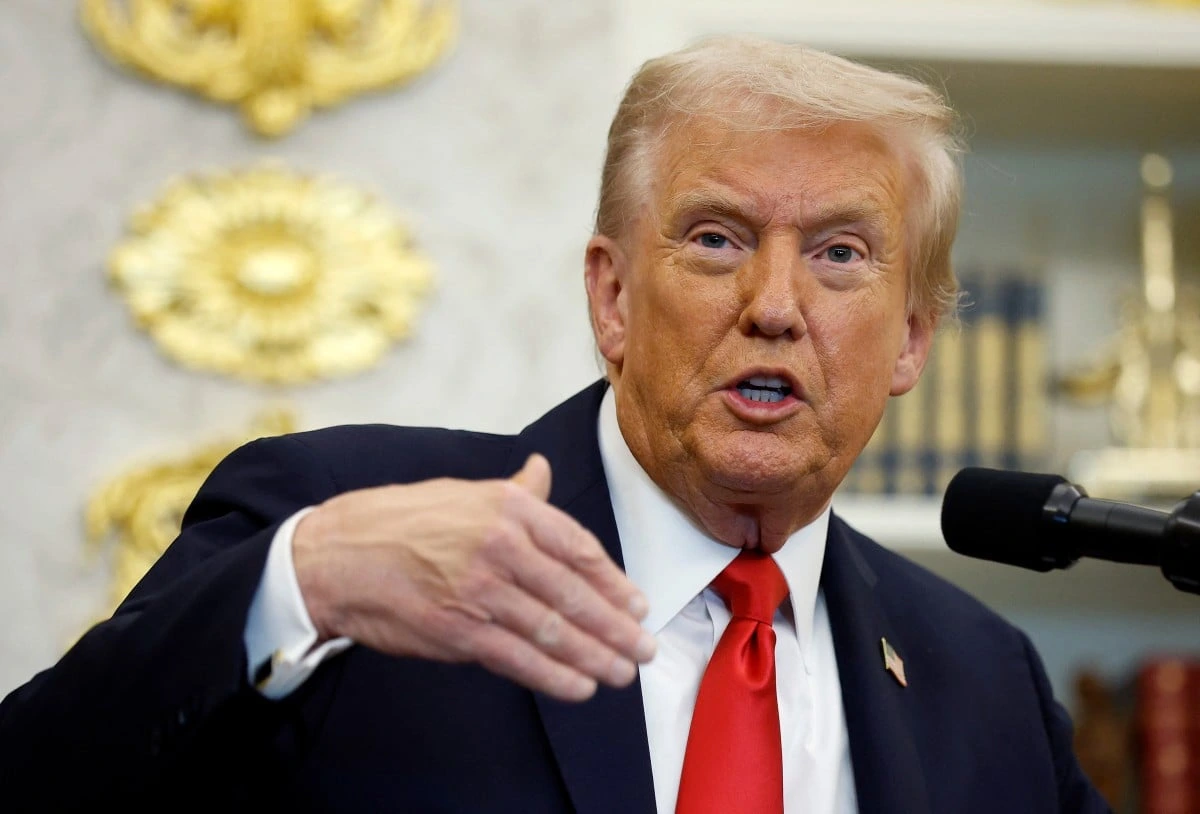
The Trump administration said Tuesday night it is freezing $10 billion in federal child care and family assistance funding for five states.
Citing what it described as serious concerns about widespread fraud in state administered programs overseen by the US Department of Health and Human Services.
KEY POINTS
- The Trump administration froze $10 billion in child and family aid to five Democratic led states over alleged fraud concerns.
- The funding freeze affects child care, welfare and social services programs relied on by millions of families.
- The action raises operational and legal questions for states administering federal safety net programs.
The decision to halt funding represents one of the largest single freezes of federal social assistance dollars in recent years.
Immediately affecting programs that support low income families, child care providers and social service agencies.
The move applies to California, Colorado, Illinois, Minnesota and New York, all governed by Democrats.
And targets three major grant programs administered through the Health and Human Services Department’s Administration for Children and Families.
In a statement, Deputy Health and Human Services Secretary Jim O’Neill said families deserve confidence that public funds are used lawfully and as intended.
He said the freeze reflects the administration’s commitment to program integrity, fiscal responsibility and compliance with federal requirements.
The funding freeze applies to the Child Care and Development Fund, Temporary Assistance for Needy Families and the Social Services Block Grant.
Together, these programs form a core part of the federal safety net, providing child care subsidies, cash assistance, employment services and support for vulnerable populations including children, seniors and people with disabilities.
According to the administration, more than $7.3 billion in TANF funds were frozen, along with nearly $2.4 billion in CCDF funds and about $840 million in Social Services Block Grant funding.
These grants are typically allocated annually and distributed to states, which then administer benefits through local agencies and nonprofit partners.
Federal oversight of these programs has long relied on audits, reporting requirements and compliance reviews.
Past administrations have flagged misuse of TANF funds in some states, including spending on non core services, but a freeze of this scale is rare and can have immediate operational effects.
States generally budget assuming federal disbursements will continue unless formally reduced by Congress or through regulatory action.
Policy experts said the move underscores longstanding tensions between federal oversight and state discretion in administering social programs.
While federal law sets broad parameters, states have significant latitude in how funds are spent, particularly under TANF, which was restructured in the nineteen nineties to give states more flexibility.
“This action highlights the fragile balance between accountability and continuity,” said Pamela Herd, a public policy professor at Georgetown University who studies social welfare administration.
“A sudden freeze can disrupt services even before any formal findings of wrongdoing are resolved.”
Former HHS officials noted that fraud investigations typically lead to corrective action plans or targeted penalties rather than across the board funding halts.
They said a freeze can pressure states to cooperate quickly but also risks interrupting payments to providers and beneficiaries who are not implicated in any alleged misconduct.
The political dimension is also notable. All five states affected are led by Democrats, which may intensify partisan scrutiny even as the administration frames the move as purely administrative.
The White House did not provide details on the specific fraud allegations or whether similar reviews are underway in Republican Led states.
Funding Breakdown by Program
| Program | Frozen Amount | Primary Purpose |
|---|---|---|
| Temporary Assistance for Needy Families | $7.3 billion | Cash aid, work support for low-income families |
| Child Care and Development Fund | $2.4 billion | Child care subsidies for working families |
| Social Services Block Grant | $840 million | Social services for children, seniors, disabled |
State officials reacted cautiously, emphasizing that the funding supports essential services.
A senior official in California’s Department of Social Services, speaking on background, said the freeze could delay payments to child care providers and strain county level agencies that operate on thin margins.
“Any interruption in federal funds creates uncertainty for families and providers who depend on timely reimbursements,” the official said.
Advocacy groups also raised concerns about downstream effects.
The National Women’s Law Center said in a statement that CCDF funds help millions of parents remain in the workforce by paying for child care, adding that disruptions could ripple through local economies.
At the same time, watchdog organizations stressed the importance of oversight.
The Government Accountability Project said allegations of fraud should be fully investigated but called for transparency about the scope and evidence behind the administration’s claims.
HHS has not specified how long the funding freeze will remain in place or what conditions states must meet for funds to be released.
Historically, such actions can be followed by formal audits, negotiated compliance agreements or, in some cases, litigation challenging the federal government’s authority to withhold congressionally appropriated funds.
States may seek emergency relief in federal court if they argue the freeze violates statutory requirements or administrative procedures.
Congress could also intervene through oversight hearings or legislative clarification, particularly if service disruptions become widespread.
The Trump administration’s decision to freeze $10 billion in child and family aid marks a significant escalation in federal oversight of state run social programs.
As investigations proceed, the outcome will shape not only the affected states’ budgets but also broader debates over accountability, federal authority and the stability of the nation’s social safety net.
Author’s Perspective
In my analysis, freezing $10 billion in child and family aid highlights the tension between federal oversight and state program delivery.
I predict states will build stronger independent monitoring systems to protect both compliance and services.
Monitor state program updates closely, as funding freezes can affect eligibility and access to support.
NOTE! This report was compiled from multiple reliable sources, including official statements, press releases, and verified media coverage.


