
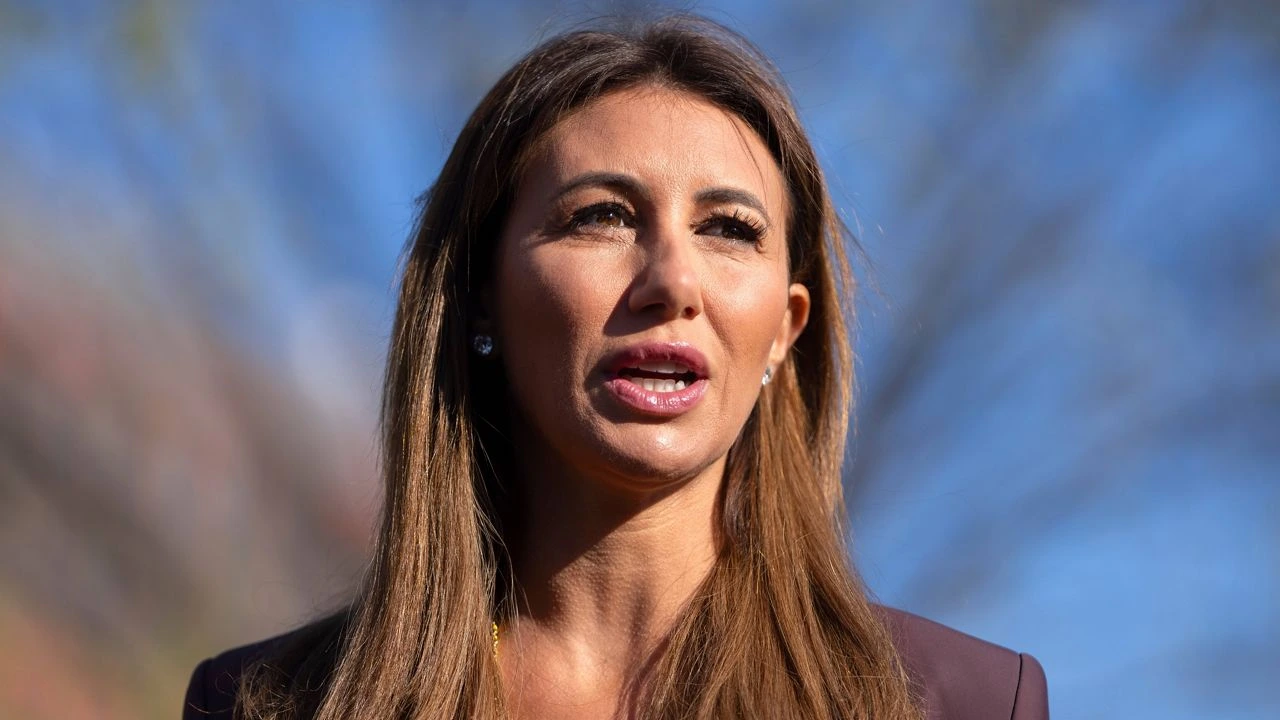
A federal appeals court on Monday upheld the Alina Habba disqualification, ruling that former President Donald Trump’s nominee cannot serve as New Jersey’s top federal prosecutor in either an acting or permanent capacity.
The decision by the US Court of Appeals for the Third Circuit affirmed a lower court’s finding that the administration improperly attempted to install Habba, one of Trump’s former personal attorneys, through an unusual series of legal maneuvers.
The three-judge panel unanimously ruled that the Justice Department’s actions violated federal vacancy rules and created instability within the US Attorney’s Office for the District of New Jersey.
The case traces back to late summer, when the administration moved swiftly to position Habba as acting US attorney after failing to secure Senate confirmation for its preferred candidates. A federal district judge in August ruled that the appointment was unlawful, prompting the Department of Justice to appeal.
Circuit Judge D. Michael Fisher, writing for the panel, said the procedures used to advance Habba “strained the limits” of federal appointment law and risked bypassing well established norms intended to ensure independence in the nation’s prosecutor corps.
It is apparent that the current administration has been frustrated by some of the legal and political barriers to getting its appointees in place,” Fisher wrote in the thirty two page opinion. “Yet the citizens of New Jersey and the loyal employees in the US Attorney’s Office deserve some clarity and stability.”
The ruling intensifies scrutiny of the administration’s broader pattern of aggressive personnel placements in federal law enforcement roles.
It also underscores long standing tensions between the executive branch and Congress over the scope of authority in filling top Justice Department posts.
Legal analysts said the Alina Habba disqualification ruling reflects the courts’ ongoing willingness to police federal appointment processes, especially when political urgency appears to override statutory limits.
“This decision sends a clear message that even during administrative turnover, shortcuts are not permitted,” said Marla Benton, a professor of constitutional law at Rutgers University.
“The court examined the vacancy procedures closely and concluded that the Justice Department attempted to circumvent the checks built into the system.”
Benton noted that the opinion echoed several recent rulings in which courts rejected what they viewed as overly expansive interpretations of the Federal Vacancies Reform Act.
Former DOJ officials also said the situation illustrates internal pressures faced by agencies during rapid political transitions.
“There is a huge desire to fill these roles quickly, especially in politically sensitive districts like New Jersey,” said David Morales, a former senior DOJ administrator.
“But the law requires a very specific process. If the administration deviates from it, even slightly, courts will step in.” Administrative turnover in US attorney positions has historically been contentious.
According to data from the Congressional Research Service, at least six major court battles over interim US attorney appointments have occurred since 2006, each involving disputes over vacancy rules or bypassed confirmation processes.
New Jersey has been a particularly active jurisdiction. Over the last two decades, the district has seen five contested or short term appointments, reflecting its strategic importance in cases involving organized crime, political corruption and financial regulations.
The Alina Habba disqualification fits within this pattern, experts said, though the legal maneuvering in this instance was considered unusually direct.
“The difference here is the rapid sequence of administrative steps, each designed to position a politically aligned nominee,” said Anita Singh, a former assistant US attorney now working in legal ethics. “Courts look carefully at intent in these cases, and the sequence raised red flags.”
Inside the Newark based US Attorney’s Office, employees expressed relief that the prolonged uncertainty may now settle.
“Morale has been challenged because no one knew who would ultimately lead the office,” said one career prosecutor, who spoke on condition of anonymity because they were not authorized to comment publicly.
The ruling at least gives us clarity, which is critical in ongoing investigations. Local officials also reacted cautiously, emphasizing the need for stability.
“New Jersey’s federal law enforcement apparatus must function without political turbulence,” said Camden Mayor Victor Delgado. “The court’s decision reflects the importance of adhering to longstanding appointment norms.”
Members of the public who follow high profile political cases in the state shared a mix of views. “I’m not opposed to the administration choosing its own prosecutors,” said Somerville resident Karina Lewis.
“But the process should be legal and transparent.” Others said the episode underscored why federal appointments require bipartisan oversight. “Senate confirmation exists for a reason,” said Atlantic City business owner Tom Harris. “It protects all of us.”
The Justice Department is expected to review the ruling before deciding whether to pursue additional steps. Legal experts said an appeal to the Supreme Court is possible but not guaranteed.
“The administration may weigh the political value of continuing this fight versus nominating a different candidate,” Benton said. “Pushing forward risks another high profile courtroom defeat.”
Meanwhile, the district continues to be led by a career official serving as acting U.S. attorney under long standing internal succession rules.
That arrangement, analysts said, is likely to remain in place until the White House identifies a nominee who can secure Senate support.
For New Jersey residents, the implications of the Alina Habba disqualification extend beyond political headlines. The district’s office oversees major investigations into public corruption, drug trafficking and financial crimes, all of which rely on steady leadership.
“There’s a real need for continuity,” Singh said. “Every delay in appointing a permanent US attorney has ripple effects.”
The Third Circuit’s decision to uphold the Alina Habba disqualification marks another significant judicial check on the administration’s appointment strategies.
While the ruling closes one chapter in a monthsblong dispute, it also highlights broader challenges inherent in federal personnel transitions.
With political pressures mounting and complex investigations underway, New Jersey’s US Attorney’s Office now awaits a permanent leader who can navigate both legal responsibility and public expectation.
The court’s opinion reaffirmed that the path to such leadership must adhere strictly to federal law, regardless of political urgency.


