
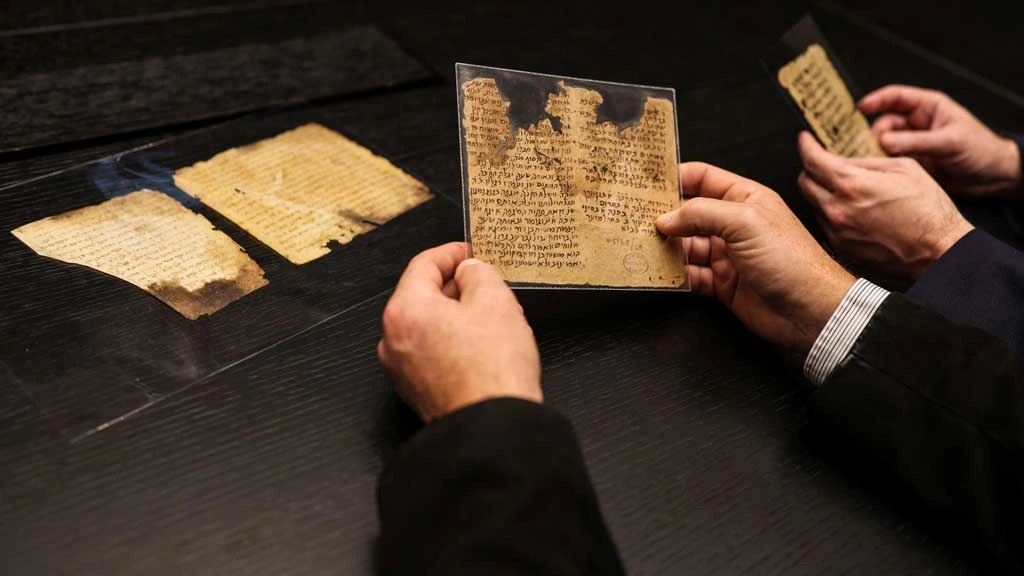
JERUSALEM — Researchers in Israel are deploying artificial intelligence to transcribe and analyze a massive collection of medieval Jewish manuscripts from the Cairo Geniza, hoping to shed new light on a thousand years of Jewish history.
The project aims to make accessible documents that have been largely untouched since their discovery more than a century ago.
The Cairo Geniza, housed at the Ben Ezra synagogue in historic Cairo, contains over 400,000 documents spanning a range of languages, including Hebrew, Arabic, Aramaic, and Yiddish.
Despite being digitized and partially available online, only a fraction of these manuscripts have been fully cataloged or transcribed.
Researchers hope AI will dramatically accelerate the process of studying the documents, many of which survive only as fragmented manuscripts.
A Geniza is traditionally a repository for synagogue documents that are eventually buried for ritual reasons.
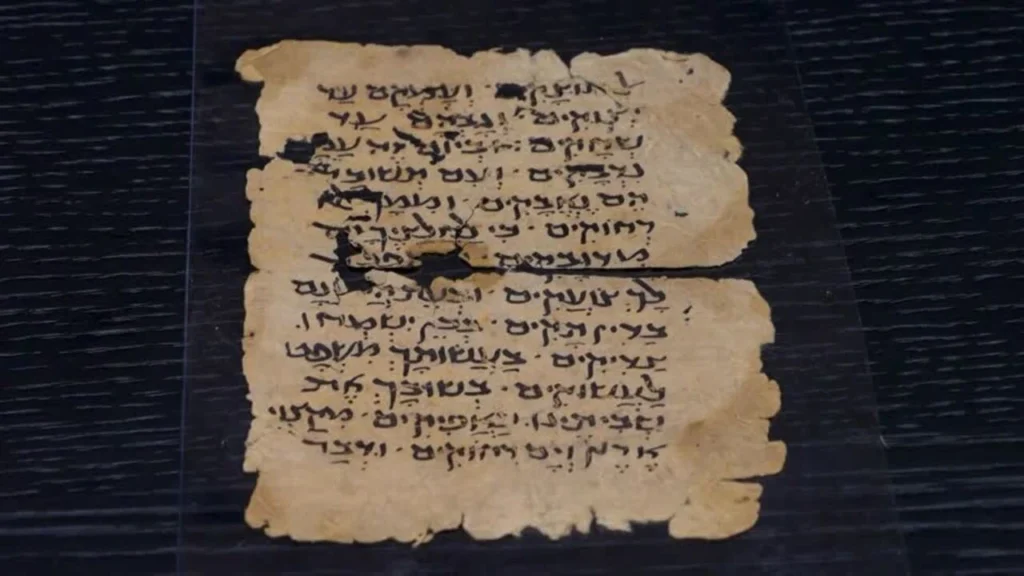
The Cairo Geniza benefited from the dry climate of Egypt, preserving an extraordinary variety of writings ranging from rabbinical rulings to personal letters and civic records.
During the Middle Ages, Cairo was a leading center of trade, learning, and culture in the Middle East. It was home to a thriving Jewish community, which expanded further as refugees fled newly Christian Spain.
Among the city’s notable residents was the philosopher and physician Maimonides, who served the family of Saladin, the Muslim leader who expelled crusaders from Jerusalem, and worshipped at the Ben Ezra synagogue.
“The Cairo Geniza offers a window into daily life, commerce, and scholarship from a millennium ago,” said Daniel Stokl Ben Ezra of the Ecole Pratique des Hautes Etudes in Paris, one of the principal researchers in the MiDRASH transcription project.
“With AI, we can now piece together documents that were previously too fragmented or complex to study in depth.” The MiDRASH project leverages a machine learning model trained to read and transcribe centuries old handwritten texts.
The AI can identify scripts, convert them into readable text, and cross reference names, dates, and terms across the collection.
Researchers review more challenging manuscripts to ensure accuracy, simultaneously improving the AI’s learning model.
One transcribed document is a 16th-century letter in Yiddish from a Jerusalem widow to her son in Egypt, alongside his marginal notes describing efforts to survive a plague in Cairo.
Projects like this provide context for historical events and personal experiences often lost in broader chronicles.
“Modern translation capabilities, combined with AI transcription, make these texts far more accessible not only to scholars but to anyone interested in Jewish history,” Stokl Ben Ezra said.
Professor Miriam Abulafia, a historian of medieval Jewish culture at Tel Aviv University, emphasized the potential of AI in historical research.
“Previously, even well funded teams could only scratch the surface of the Geniza’s holdings,” she said. “AI allows us to search for patterns, trace family lineages, and reconstruct trade networks in ways that would have taken decades by hand.”
Comparatively, only about 10 percent of the Geniza’s documents had been transcribed before this AI initiative.
Scholars anticipate that the new system could potentially cover the entire collection within a few years, creating an unparalleled digital repository of Jewish life in the medieval Middle East.
Local archivists and librarians expressed cautious optimism about the project. Yael Cohen, an archivist at the National Library of Israel, said, “Even small fragments can reveal rich stories about trade, religion, and daily routines.
AI allows us to see connections that were impossible to trace manually.” Similarly, researchers in Paris and Jerusalem noted that the ability to instantly cross reference terms across hundreds of thousands of manuscripts may revolutionize historical scholarship.
We are effectively reconstructing a social network of the past,” said Ben Ezra, “a kind of Facebook of the Middle Ages.
Funded by the European Research Council, the MiDRASH project is expected to expand collaboration between international scholars and digital humanities experts.
The digitized and AI transcribed texts could also serve as a resource for educators, genealogists, and cultural historians.
Despite progress, challenges remain. Manuscripts damaged by age or exposure, as well as unusual or inconsistent handwriting styles, still require human oversight.
Yet, the combination of AI speed and expert verification promises to unlock previously inaccessible insights into Jewish history, commerce, and daily life in medieval Cairo.
The application of AI to the Cairo Geniza represents a significant advancement in historical research, bridging the gap between digital technology and ancient manuscripts.
By enabling faster transcription, analysis, and cross referencing, the project is poised to provide an unprecedented view into a millennium of Jewish life, scholarship, and culture.


