
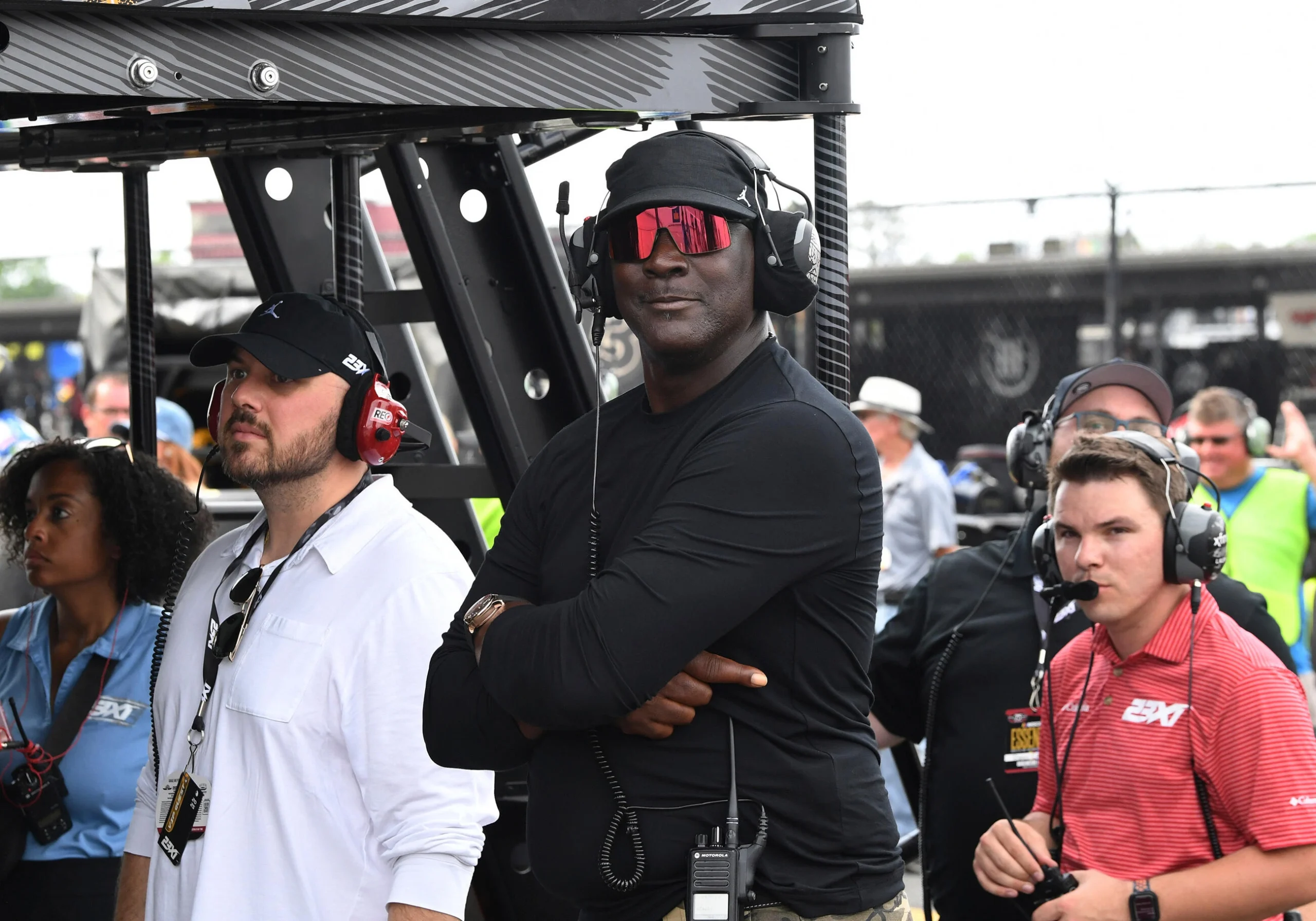
SUMMARY
- Antitrust settlement delivers permanent charters, stabilizing team valuations and revenue streams.
- Jordan’s involvement accelerates governance scrutiny in privately controlled sports leagues.
- Competitive pressure rises as mid-tier teams gain financial predictability and leverage.
Michael Jordan NASCAR impact intensified in March 2026 as the basketball icon leveraged a landmark antitrust settlement to push structural reforms, altering team economics and competitive balance across the US based racing series.
The Michael Jordan NASCAR impact extends beyond branding into governance and economics at a time when global sports investors are demanding transparency and predictable returns.
With Formula One expanding globally and private equity entering motorsports, NASCAR’s revised charter system positions it to retain relevance in a shifting marketplace.
Jordan co-founded 23XI Racing in 2020 with driver Denny Hamlin, entering a sport historically dominated by family ownership structures.
NASCAR introduced its charter system in 2016, guaranteeing race entry for 36 teams while limiting new entrants.
By October 2024, Jordan’s team joined Front Row Motorsports in an antitrust lawsuit challenging what they described as restrictive practices.
In December 2025, NASCAR reached a settlement granting “evergreen” charters with improved financial terms, marking the first major structural shift since the system’s creation.
The Michael Jordan NASCAR impact reflects a broader shift in athlete-led ownership influencing league governance.
John Vrooman, a sports economist at Vanderbilt University, said stable franchise like systems increase asset valuation but require transparency to sustain investor confidence.
“Permanent charters reduce risk exposure, making teams more attractive to institutional capital,” Vrooman said.
Amy Trask, former CEO of the Oakland Raiders and CBS Sports analyst, noted that Jordan’s approach mirrors governance challenges seen in other leagues.
“When high-profile owners challenge centralized control, it forces leagues to modernize faster than internal processes allow,” Trask said.
Economically, the settlement could reshape revenue distribution. NASCAR’s centralized control over media rights and sponsorship structures has historically limited team-level negotiation power.
The revised charter model may allow teams to secure longer term sponsorship deals, aligning them more closely with franchise systems seen in the NFL and NBA.
Politically, the case underscores growing scrutiny of privately governed sports entities in the United States.
Legal analysts at Georgetown University Law Center have pointed to increasing antitrust attention across sports leagues, particularly where entry barriers restrict competition.
Tyler Reddick, a driver for 23XI Racing, said Jordan’s leadership has changed team culture and expectations.
“You feel the urgency every week. There’s no comfort in just competing,” Reddick said.
Denny Hamlin emphasized the operational impact of financial stability.
“Knowing your charter is secure changes how you hire, invest and plan long-term,” Hamlin said.
Jim France, NASCAR chairman and CEO, said the agreement ensures continuity for fans while improving team operations.
“This structure supports competitive racing and long term growth across the series,” France said in a statement.
Over the next six to twelve months, the Michael Jordan NASCAR impact is expected to drive increased investment from private equity groups and corporate sponsors seeking stable assets.
Analysts at Deloitte’s Sports Business Group project that franchise style valuation models could raise team values by up to 20 percent if revenue sharing terms improve.
Competition on track may also tighten as mid-tier teams reinvest in technology and driver development. Meanwhile, governance pressure is likely to persist, particularly around media rights distribution and cost controls.
The Michael Jordan NASCAR impact signals a turning point for stock car racing, aligning it more closely with global franchise based sports systems.
The settlement establishes a framework balancing centralized control with team level financial security, redefining the sport’s competitive and economic trajectory.
NOTE! This article was generated with the support of AI and compiled by professionals from multiple reliable sources, including official statements, press releases, and verified media coverage. For more information, please see our T&C.


