
SUMMARY
- Russia blocks WhatsApp, citing legal noncompliance and data storage concerns.
- Authorities are promoting the state backed Max app as a national messenger alternative.
- The move deepens internet restrictions imposed since the invasion of Ukraine.
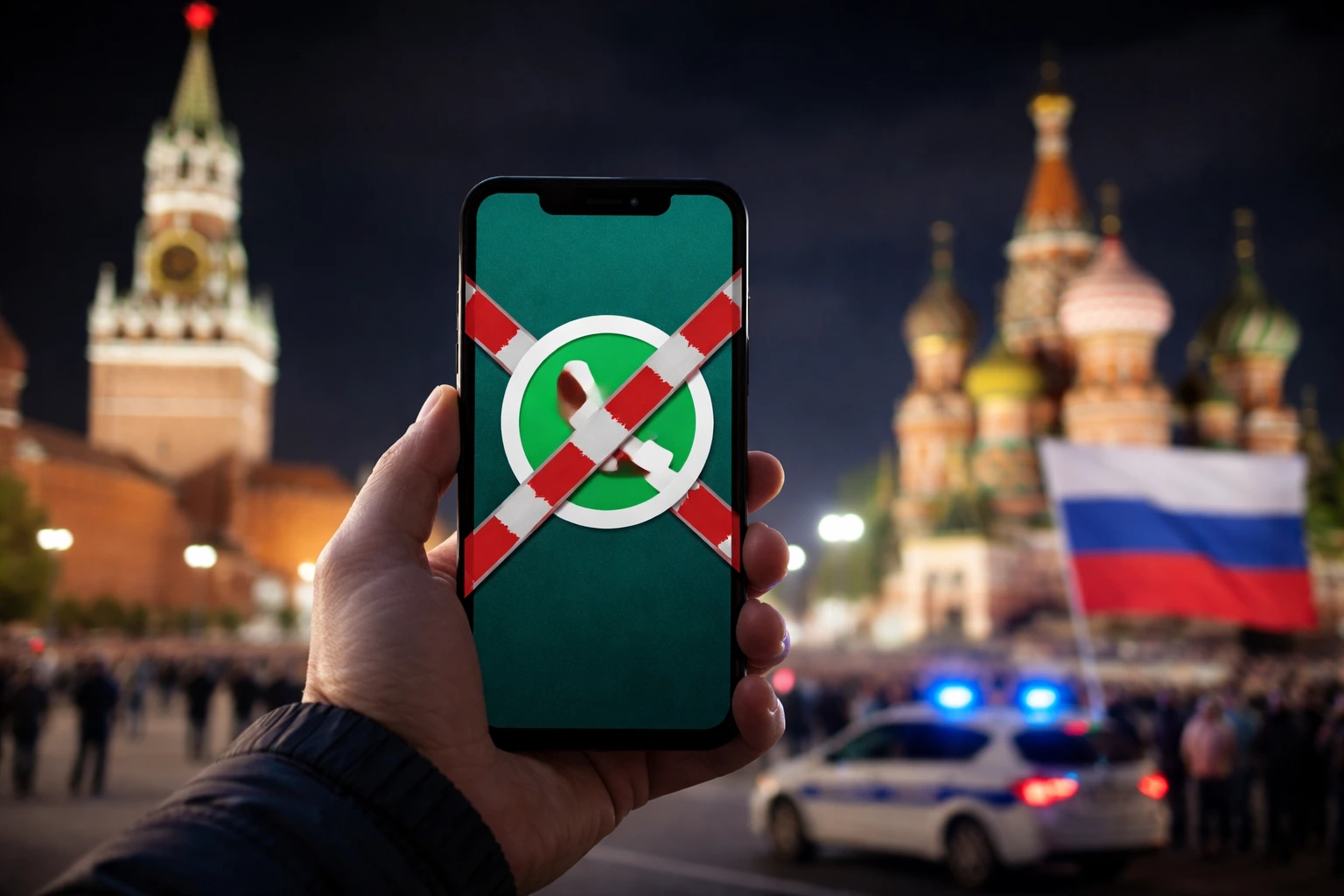
Russia has ordered a nationwide block on WhatsApp, intensifying restrictions on foreign messaging apps as authorities promote a state developed alternative known as Max.
The decision, confirmed this week by Kremlin spokesman Dmitry Peskov, affects more than 100 million users and marks one of Moscow’s most significant digital control measures since labeling Meta an extremist organization in 2022.
The blocking of WhatsApp represents a major shift in Russia’s digital landscape, where global platforms have faced mounting pressure under data localization and security laws.
Meta, the parent company of WhatsApp, said the action aims to force users onto a “state owned surveillance app,” an allegation Russian officials deny.
Roskomnadzor, Russia’s internet regulator, also announced tighter limits on Telegram, citing security risks.
Tensions between Moscow and Western technology firms intensified after Russia’s full-scale invasion of Ukraine in 2022.
Meta’s Facebook and Instagram were blocked that year, though Russians could still access them via virtual private networks.
Russia requires foreign companies to store citizens’ data domestically. Officials argue that WhatsApp and Telegram have failed to fully comply.
Authorities also allege WhatsApp has been used for fraud and extortion schemes targeting Russian users.
Since 2025, Max has been pre-installed on all new devices sold in Russia. State media have promoted it as a secure national alternative, comparing it to China’s WeChat, which integrates messaging and government services.
Messaging Platform Landscape in Russia
| Platform | Status in Russia (2026) | Estimated Users Before Restrictions |
|---|---|---|
| Blocked nationwide | 100+ million | |
| Telegram | Access restricted | 70+ million |
| Blocked since 2022 | 50+ million | |
| Max | State-promoted, pre-installed | Rapidly growing |
Andrei Soldatov, a Russian investigative journalist and co-founder of Agentura.ru, said the WhatsApp block reflects a broader strategy to consolidate digital infrastructure under state oversight.
“The government has been building technical capacity for years to control routing and domain name systems,” Soldatov said.
Eva Galperin, director of cybersecurity at the Electronic Frontier Foundation, said replacing encrypted global apps with domestic platforms may increase surveillance risks.
“If end to end encryption is weakened or absent, users have fewer guarantees of privacy,” she said.
Peskov told the BBC that Meta could resume operations if it complies with Russian law and enters dialogue with regulators.
Pavel Durov, chief executive of Telegram, said online that authorities were restricting access to independent platforms to push citizens toward state-controlled services.
“Restricting citizens’ freedom is never the right answer,” Durov wrote. Digital rights group Na Svyazi reported that at least 13 major online resources.
Including WhatsApp Web and YouTube, have been removed from Russia’s National System of Domain Names, limiting access without VPNs.
Maria Snegovaya, senior fellow at the Center for Strategic and International Studies, said the move aligns with Russia’s long term goal of “digital sovereignty,” reducing dependence on Western infrastructure.
State news agency Tass has reported that WhatsApp may face a permanent block in 2026.
Officials have indicated foreign platforms could return if they comply with domestic laws. Telegram remains operational but under growing scrutiny.
Russia’s decision to block WhatsApp underscores an accelerating shift toward state managed digital ecosystems.
As authorities expand controls over data storage, encryption standards and domain systems, the country’s online environment is increasingly shaped by domestic platforms and regulatory mandates.
NOTE! This article was generated with the support of AI and compiled by professionals from multiple reliable sources, including official statements, press releases, and verified media coverage. For more information, please see our T&C.


