
SUMMARY
- Japan dominates big air with gold and silver medals, demonstrating depth in the discipline.
- Kira Kimura scores 179.50, including a career highlight run under high pressure.
- US teen Ollie Martin finishes fourth, narrowly missing a historic Olympic medal.
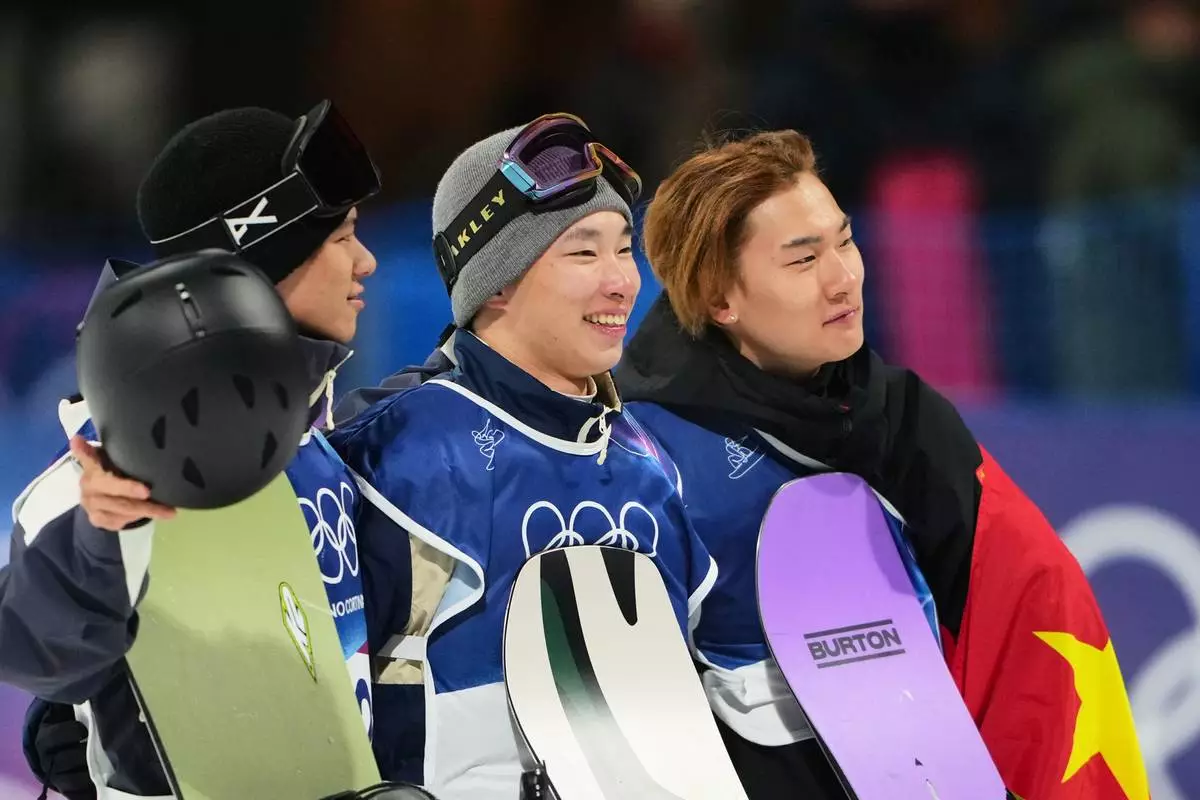
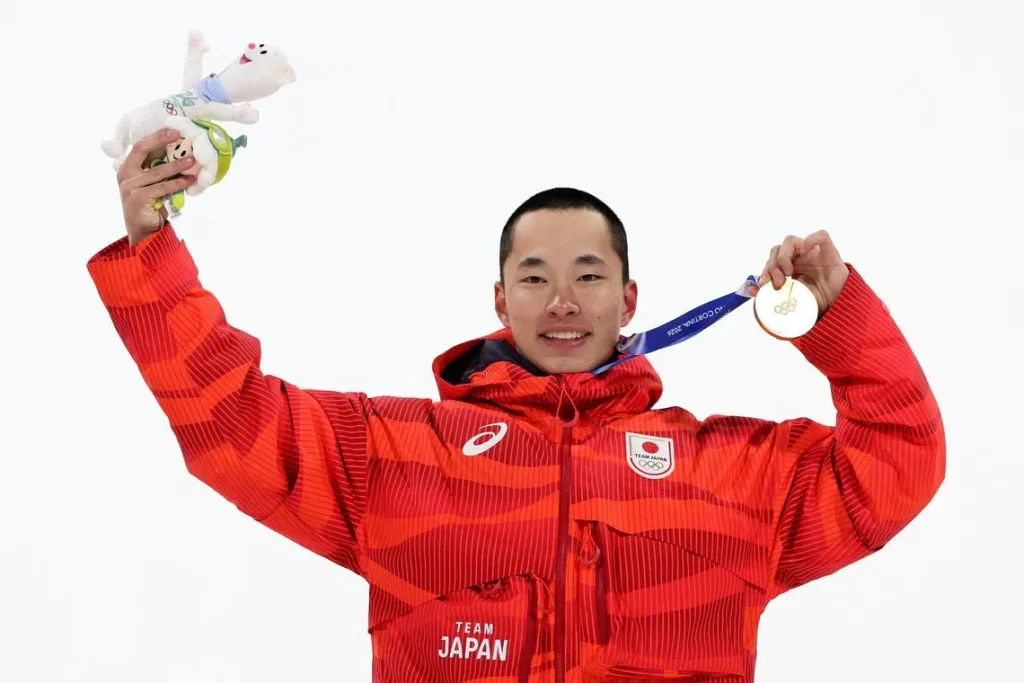
LIVIGNO, Italy — Japan’s Kira Kimura captured gold in the men’s snowboard big air on Friday, delivering a standout performance that underscored Japan’s growing dominance in the discipline.
The 21 year old’s final run of a switchback backside 19 earned him the highest score of the night, edging compatriot Ryoma Kimata to silver.
Defending champion Yiming Su of China settled for bronze, while 17 year old American Ollie Martin finished just outside the podium in fourth place.
The men’s snowboard big air final at Snow Park in Livigno offered a dramatic showcase of athleticism, technical skill, and high stakes precision.
Kimura, representing Okayama, Japan, solidified his status as one of the sport’s rising stars with a total score of 179.50.
His performance highlighted both individual talent and the broader emergence of Japan as a powerhouse in snowboarding events at the 2026 Winter Olympics.
Snowboard big air, introduced to the Winter Olympics in 2018, combines technical tricks with aerial difficulty, requiring competitors to execute jumps with both style and precision.
Japan has increasingly invested in snowboarding programs, producing multiple world class athletes including Kimata, Ogiwara, and Hasegawa, all of whom reached the 2026 finals.
Friday’s event was the first Olympic big air final following the 2026 X Games, where Kimura earned bronze, signaling his rapid rise.
“The performance level we saw tonight is indicative of a new era in big air snowboarding,” said Dr. Haruto Sakamoto, sports performance analyst at Tokyo University.
“Kimura’s consistency under pressure, particularly on his final run, reflects both physical skill and mental resilience.”
American coach Liam O’Connor, who trains the US national team, noted, “Ollie Martin showed extraordinary promise for a 17 year old.
Landing a frontside 18-mute in such high pressure conditions is remarkable. He is one to watch in future Olympic cycles.”
The results also highlight the strategic depth of Japanese snowboarding, with multiple athletes capable of podium finishes.
Echoing patterns seen in Japan’s previous Winter Games performances where national investment in snowboarding talent translated into competitive dominance.
Kimura said after his win, “I knew I had to deliver my best on the final jump. All the training and preparation paid off, and I’m proud to bring gold back to Japan.”
Ollie Martin reflected on his near podium finish: “It’s tough to finish fourth, but I feel proud. I pushed myself to the limit, and it’s a great learning experience for the future.”
Ryoma Kimata added, “Competing alongside Kimura is motivating. Japan’s team is very strong, and every jump counts in a final this tight.”
| Athlete | Country | Total Score | Notable Jump |
|---|---|---|---|
| Kira Kimura | Japan | 179.50 | Switchback backside 19 |
| Ryoma Kimata | Japan | 171.50 | Big air world champion tricks |
| Yiming Su | China | 168.50 | High-difficulty final jump |
| Ollie Martin | USA | 163.00 | Frontside 18-mute |
| Ian Matteoli | Italy | 162.50 | Final jump 82.25 |
| Valentino Guselli | Australia | 103.25 | Halfpipe specialist debut |
Japan’s dominance suggests continued investment in snowboarding infrastructure and training, likely impacting international competition in future Winter Olympics.
Meanwhile, Martin’s strong showing as a teenager positions him as a leading prospect for Team USA.
Analysts predict that countries with emerging talent pipelines, like Australia, could continue to challenge traditional podium powers in big air snowboarding.
Kira Kimura’s gold medal marks a milestone for Japan in Olympic snowboard big air, combining personal triumph with national achievement.
The event underscored both the rising global competitiveness of young athletes and the strategic depth of Japan’s snowboarding program, setting the stage for future Winter Games and world championships.
NOTE! This article was generated with the support of AI and compiled by professionals from multiple reliable sources, including official statements, press releases, and verified media coverage. For more information, please see our T&C.


