
KEY POINTS
- Microsoft earnings beat estimates even as AI hardware spending reached a quarterly record.
- Cloud and AI demand drove double digit revenue growth across core segments.
- Investors remain focused on when AI investments will deliver durable margins.
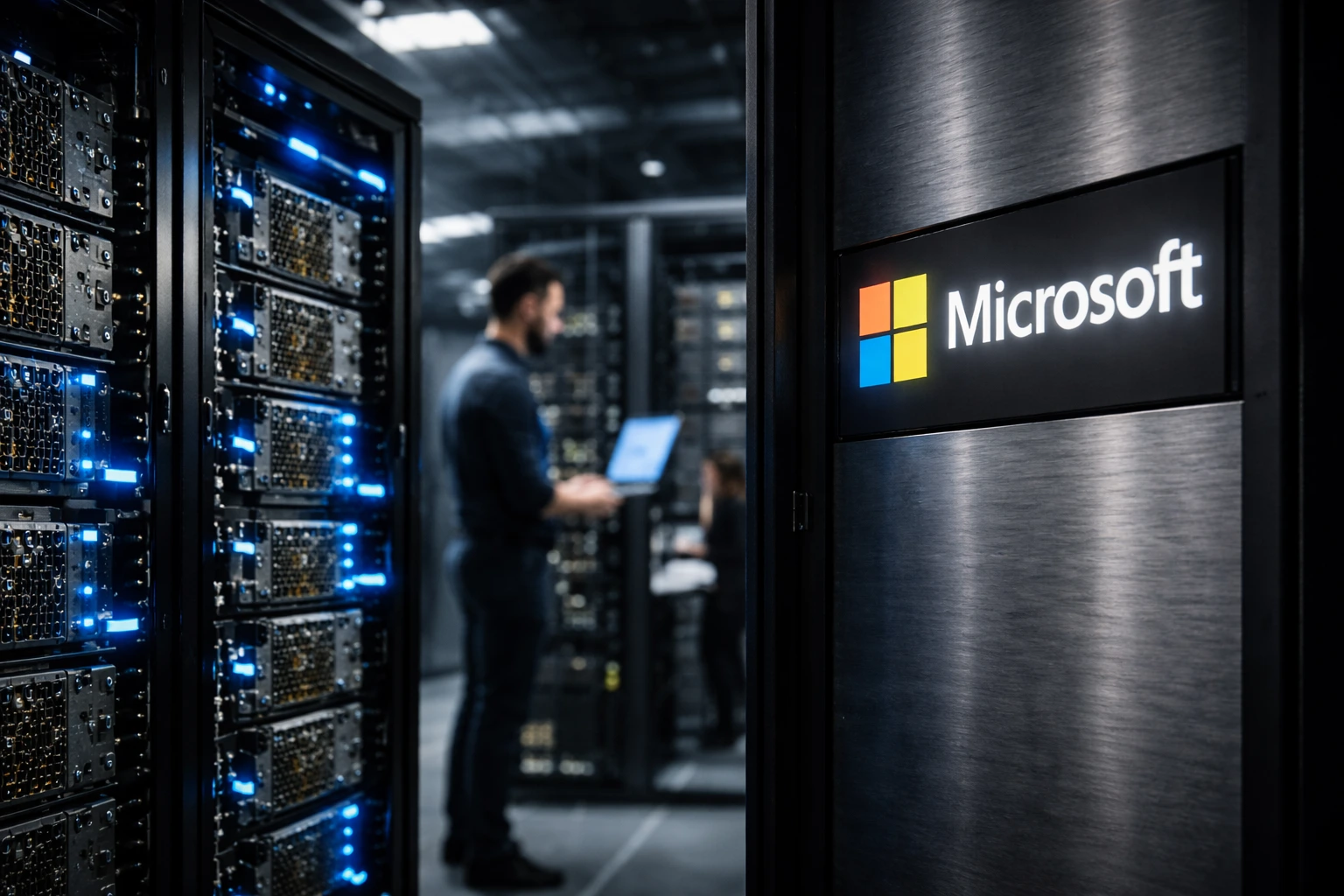
Microsoft reported stronger than expected quarterly earnings late Wednesday while revealing record spending on artificial intelligence hardware.
Underscoring the scale and cost of its global AI expansion as investors question how quickly those investments will translate into sustained profit growth.
The results, released Jan. 29, showed Microsoft continuing to outpace much of Big Tech on revenue growth while dramatically increasing capital expenditures tied to artificial intelligence.
The performance highlighted a central tension facing technology leaders: balancing rapid infrastructure buildouts against near term financial discipline.
Microsoft has positioned itself as a leading infrastructure provider for generative AI, embedding advanced models into Azure, Microsoft 365 and developer platforms.
Since deepening its partnership with OpenAI in recent years, the company has accelerated spending on data centers, specialized chips and power capacity to meet surging enterprise demand.
That strategy has helped Microsoft gain market share in cloud services but has also pushed capital intensity to historic levels.
For the quarter, Microsoft posted revenue of $81.3 billion, up seventeen percent from a year earlier.
Non-GAAP earnings reached $4.14 per share, exceeding analyst expectations, according to company filings. Azure revenue grew 39%, reflecting continued demand for cloud based AI workloads.
Despite those gains, Microsoft shares fell in after hours trading as investors reacted to the scale of spending.
The company reported $29.9 billion in additions to property and equipment during the quarter, nearly double the year-earlier level.
“The numbers show Microsoft is building capacity ahead of demand, not reacting to it,” said Anurag Rana, managing director and senior analyst at Bloomberg Intelligence.
“The question markets are asking is not whether AI demand exists, but how long it will take for margins to catch up to the investment curve.”
Satya Nadella, Microsoft’s chief executive officer, said the company is still early in the adoption cycle.
“We are only at the beginning phases of AI diffusion,” Nadella said in a statement, adding that Microsoft’s AI business already exceeds some long standing product franchises.
Amy Hood, Microsoft’s chief financial officer, emphasized scale and cash generation, noting that Microsoft Cloud revenue surpassed $50 billion in the quarter. “That level of growth gives us confidence to invest through the cycle,” Hood said.
| Metric | Latest Quarter | Year Earlier |
|---|---|---|
| Revenue | $81.3B | $69.6B |
| Non-GAAP EPS | $4.14 | $3.35 |
| Azure Growth | 39% | 30% |
| Capital Expenditures | $29.9B | $15.5B |
Brad Sills, chief investment officer at Slocum, Gordon & Co., said the spending reflects a structural shift.
“AI infrastructure is becoming as essential as cloud was a decade ago. Microsoft is treating it as core, not optional,” he said.
Karen Panetta, a fellow at the Institute of Electrical and Electronics Engineers, said the physical scale of AI often surprises investors.
“These systems require power, cooling and real estate. Software margins alone do not tell the full story,” she said.
A senior enterprise technology buyer at a European bank, who spoke on condition of anonymity due to vendor agreements, said Microsoft’s investments have reduced deployment bottlenecks.
“Capacity availability has improved markedly over the past year,” the executive said.
Microsoft said it expects elevated capital spending to continue as long as customer demand remains strong.
Executives cautioned that operating leverage from AI services will emerge over time rather than immediately, reflecting long asset lives and depreciation schedules.
The quarter reinforced Microsoft’s ability to grow revenue while investing aggressively in AI infrastructure.
As spending climbs, the company’s challenge will be demonstrating that its expanding physical footprint can deliver sustained returns that match the scale of its ambition.
Author’s perspective
In my analysis, Microsoft’s AI hardware spend reflects a structural shift where compute capacity, power access, and supply chain control now define competitive advantage, not just software margins.
I predict hyperscalers will standardize multiyear AI capacity contracts, locking enterprises into long term cloud commitments to stabilize returns on capital. For businesses, this means higher AI reliability but reduced pricing flexibility.
NOTE! This report was compiled from multiple reliable sources, including official statements, press releases, and verified media coverage.


