
KEY POINTS
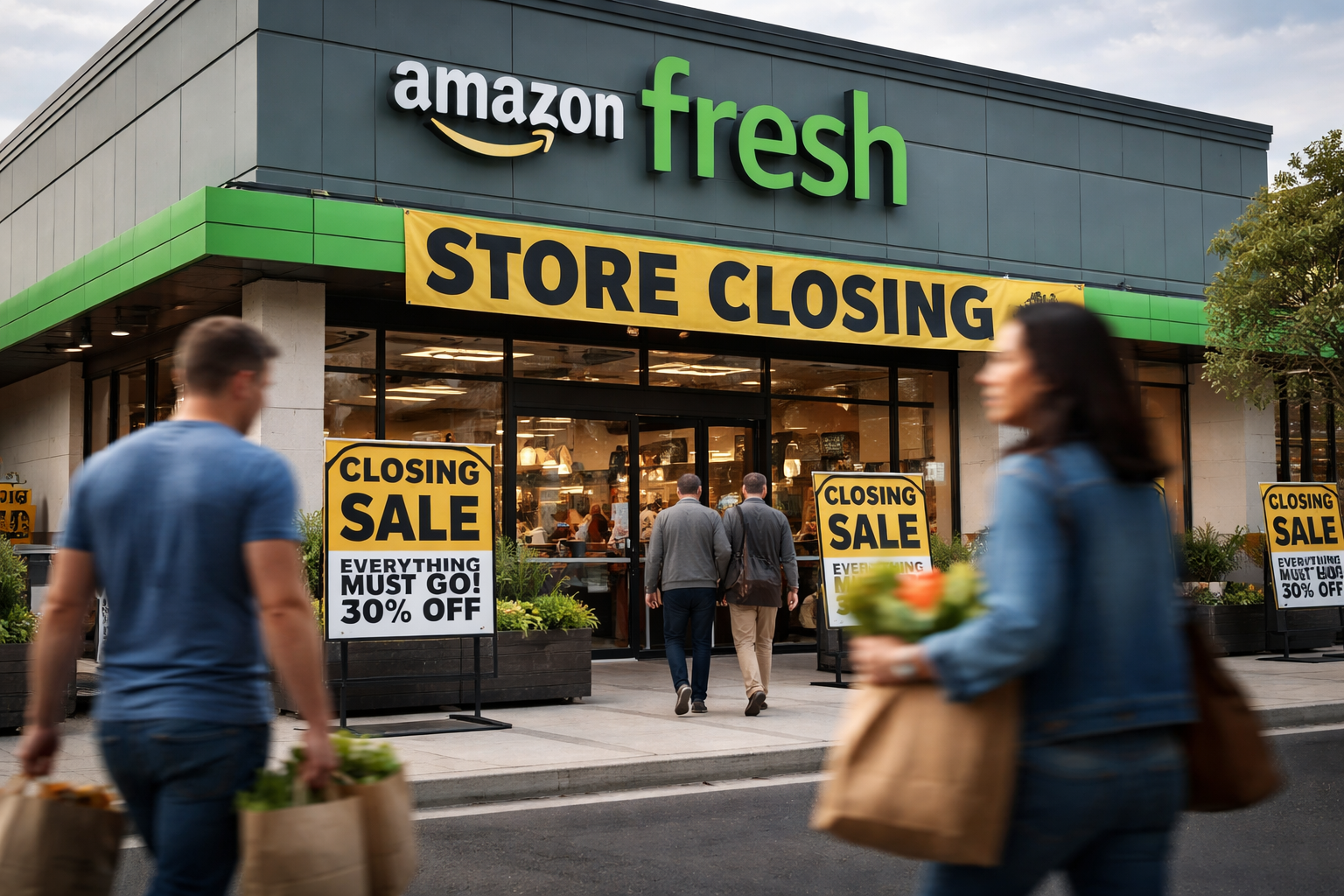
- Amazon plans to shut all Amazon Fresh and Amazon Go stores nationwide, including four in New Jersey.
- The company may convert some former Fresh locations into Whole Foods Markets.
- Amazon Fresh New Jersey stores have struggled to achieve sustainable sales, according to analysts.
Amazon said Tuesday it will close its Amazon Fresh and Amazon Go brick and mortar grocery stores across the United States.
A move that directly affects four Amazon Fresh locations in New Jersey but leaves unanswered which, if any, will be converted into Whole Foods Market stores.
The decision marks a significant shift in Amazon’s physical retail strategy and underscores the company’s renewed focus on Whole Foods Market, the upscale grocery chain it acquired in 2017.
In New Jersey, where Amazon operates four Amazon Fresh stores, the announcement raises immediate questions for workers, customers and local commercial landlords about what comes next.
Amazon operates Amazon Fresh stores in Lodi, Paramus, Woodland Park and Eatontown.
The Lodi and Woodland Park locations both opened in 2024, reflecting Amazon’s recent push to expand its grocery footprint in the densely populated North Jersey market.
The Paramus store occupies the former Fairway Market site, while the Eatontown location serves Monmouth County.
Nationally, the four New Jersey stores are part of a network of fifty seven Amazon Fresh locations and fifteen Amazon Go stores.
Amazon Go locations, designed around cashierless “just walk out” technology, were once seen as a bold experiment in frictionless retail.
Amazon Fresh stores, by contrast, closely resemble traditional supermarkets with an emphasis on online ordering and same-day delivery.
In a blog post Tuesday, Amazon said it made the decision after “a careful evaluation of the business and how we can best serve customers,” adding that while there were “encouraging signals,” the company had not yet developed an economic model that could scale.
Neil Saunders, managing director of GlobalData, said the closures reflect a mismatch between concept and consumer behavior.
“Fresh was too similar to mainstream supermarkets,” Saunders said. “Go was differentiated around just walk out technology, which is not something consumers really care about.”
Saunders added that neither concept generated the sales volume needed to justify long term investment, particularly as grocery margins remain thin and operating costs continue to rise.
Amazon said it remains committed to physical retail through Whole Foods Market, which it described as a “strong and differentiated” brand. The company did not provide a timeline for closures or conversions.
| Amazon Grocery Footprint | Count |
|---|---|
| Amazon Fresh stores (U.S.) | 57 |
| Amazon Go stores (U.S.) | 15 |
| Amazon Fresh stores (New Jersey) | 4 |
| Year Amazon acquired Whole Foods | 2017 |
Saunders said New Jersey remains attractive despite the closures. “It is a lucrative market with dense populations and higher household incomes,” he said. “Whole Foods has historically performed well in that type of environment.”
An Amazon spokesperson said in a statement that employees at affected locations will be offered support and, where possible, opportunities at other Amazon businesses.
The spokesperson declined to specify which New Jersey stores might close or convert. Amazon said it plans to open additional Whole Foods Market locations over time, including in high growth suburban markets.
Analysts said conversions, if they occur, would likely depend on store size, lease terms and proximity to existing Whole Foods locations.
For now, Amazon Fresh New Jersey stores remain open, though their long-term future is uncertain as Amazon reshapes its grocery ambitions.
Amazon’s decision to exit the Fresh and Go formats highlights the challenges of scaling new grocery concepts in a competitive industry.
For New Jersey communities hosting Amazon Fresh stores, the announcement brings both disruption and the possibility of new investment through Whole Foods, reinforcing Amazon’s evolving approach to brick and mortar retail.
Author’s perspective
In my analysis, Amazon’s exit from Fresh and Go reflects a reset in physical retail economics, where capital efficiency and brand differentiation outweigh experimental tech.
I predict Amazon will consolidate grocery under Whole Foods, accelerating private label expansion and assortments. For shoppers and suppliers, this means fewer formats but stronger pricing power.
NOTE! This report was compiled from multiple reliable sources, including official statements, press releases, and verified media coverage.


