
KEY POINTS
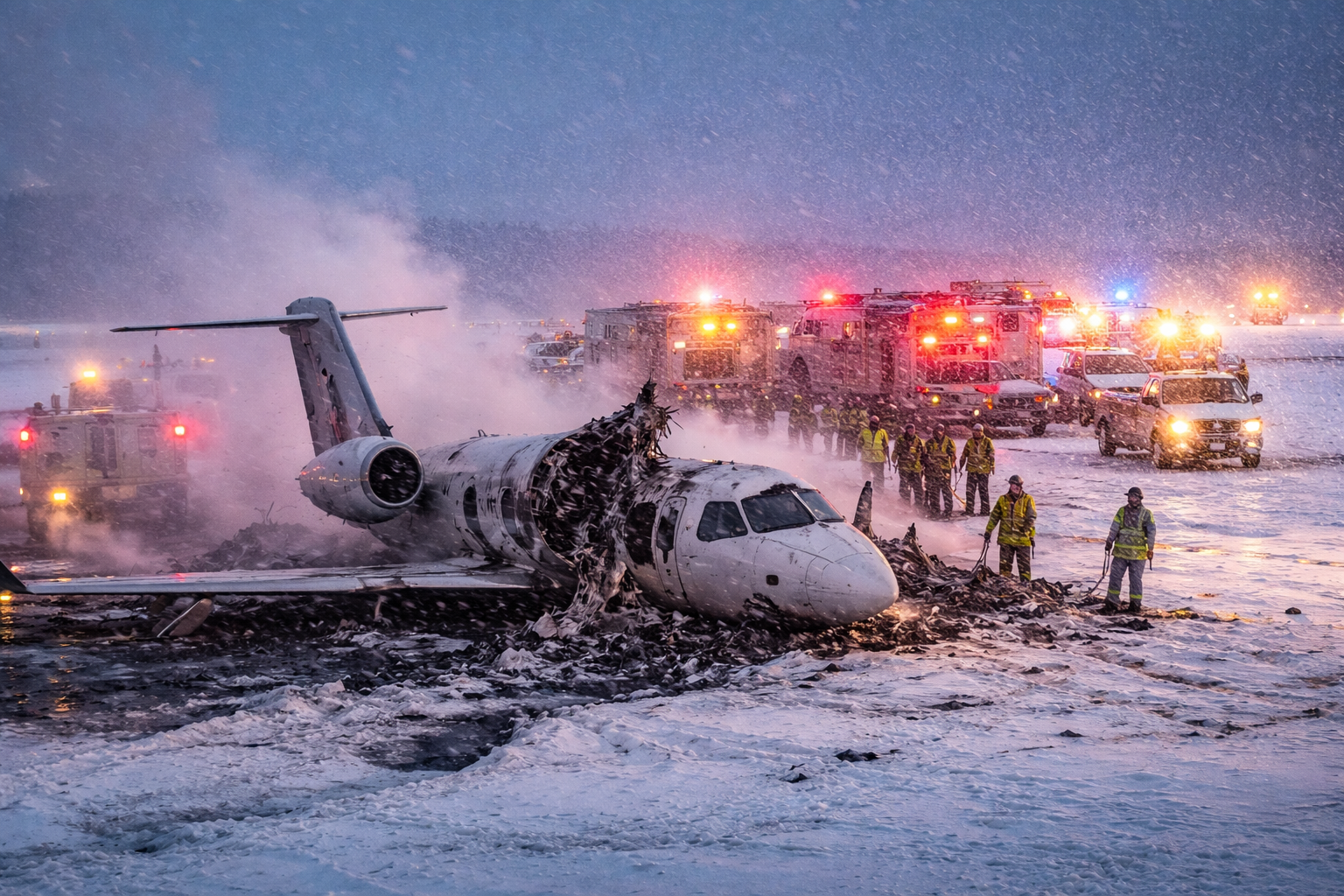
- Eight passengers were aboard a Bombardier Challenger 600 when it crashed during takeoff at Bangor International Airport.
- Emergency crews responded to the scene, and the airport remains closed as authorities investigate.
- Winter Storm Fern produced severe snow and hazardous conditions across Maine, complicating travel and rescue efforts.
BANGOR, Maine — A Bombardier Challenger 600 business jet carrying eight people crashed Sunday evening while attempting to take off from Bangor International Airport, authorities said.
The incident occurred as Winter Storm Fern brought heavy snow and low visibility to the region. The crash underscores the risks private aviation faces during severe winter weather.
Bangor International Airport, a hub for both commercial and private flights, experienced heavy snowfall and icy conditions as Winter Storm Fern moved through New England on Sunday.

The Federal Aviation Administration (FAA) confirmed the crash occurred shortly after 7:45 PM local time.
Bangor International Airport has a history of winter weather challenges, with snow and ice occasionally affecting takeoffs and landings.
Winter Storm Fern has impacted multiple northeastern states, disrupting roads, air travel, and public services.
The jet involved in the incident is registered to a Houston based limited liability company, according to preliminary reports.
Dr. Karen Hensley, associate professor of aerospace safety at Embry Riddle Aeronautical University, explained that winter storms can create multiple hazards for pilots.
Including reduced visibility, icy runways, and unpredictable wind patterns. “Takeoff during heavy snowfall can significantly affect aircraft lift and runway performance,” Hensley said.
Capt. Robert Meyers, a retired commercial pilot and safety consultant, emphasized the additional responsibility on private flight crews.
“Private flights often operate under Part 91 regulations, giving pilots more discretion but also more responsibility to evaluate rapidly changing weather conditions,” he said.
- Aircraft type: Bombardier Challenger 600
- Passengers aboard: Eight
- Time of incident: Approximately 7:45 p.m. EST Sunday
- Airport status: Closed as emergency crews respond
- Weather conditions: Heavy snow, low visibility, and icy runways
Airport authorities advised the public to stay away from the site as emergency personnel secured the area. “First responders are actively assessing the scene.
Safety is our top priority,” said Sgt. Linda Carver of the Maine State Police. Local responders coordinated with FAA investigators to begin an initial assessment.
The National Transportation Safety Board (NTSB) will lead the investigation into the crash, examining flight recorders, air traffic communications, and weather data.
Preliminary findings may be released in the coming weeks, but final reports typically take up to a year.
Winter Storm Fern is expected to continue affecting the region, with travel advisories and storm warnings remaining in place.
The Bangor jet crash highlights the ongoing challenges of operating private flights during severe winter conditions.
Federal investigators will determine the cause, while aviation authorities continue monitoring weather-related risks in the region.
FAQs
Where did the plane crash occur?
A: The crash happened at Bangor International Airport in Bangor, Maine.
What type of aircraft was involved?
A: A Bombardier Challenger 650 business jet was involved in the crash.
How many people were on board?
A: The jet was carrying eight passengers at the time of the crash.
Why did the crash happen?
A: Authorities say the crash occurred amid heavy snowfall from Winter Storm Fern, and investigations are ongoing.
Author’s perspective
In my analysis, the Bangor jet crash underscores vulnerabilities in private aviation during extreme weather and rising climate volatility.
I predict stricter FAA regulations will mandate advanced ice detection and automated runway surface monitoring for corporate jets.
For travelers and operators, this means safer winter operations. Monitor FAA rule updates and invest in weather adaptive flight planning.
NOTE! This report was compiled from multiple reliable sources, including official statements, press releases, and verified media coverage.


