
KEY POINTS
- William Shatner Kellogg’s Raisin Bran Super Bowl campaign blends celebrity nostalgia with unconventional visuals.
- Kellogg’s is using earned media moments to extend reach before the Super Bowl broadcast.
- The campaign reflects a broader shift toward hybrid advertising strategies around major live events.
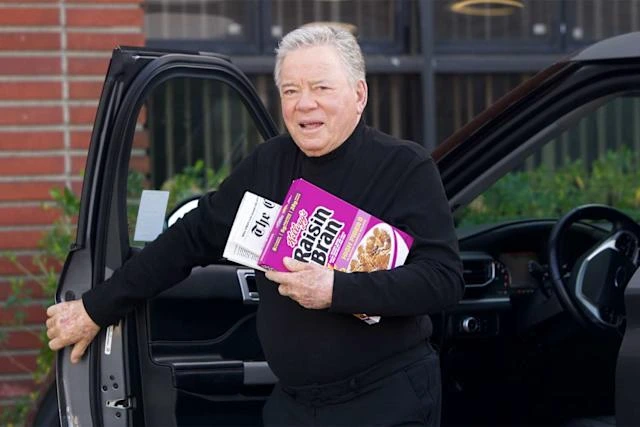
William Shatner has joined a Kellogg’s Raisin Bran marketing campaign tied to the Super Bowl, using staged paparazzi style moments to promote the cereal ahead of one of television’s largest advertising events, the company confirmed this week.
The William Shatner Kellogg’s Raisin Bran Super Bowl campaign places the ninety four year old actor at the center of a carefully choreographed publicity effort designed to stand out in a crowded advertising market.
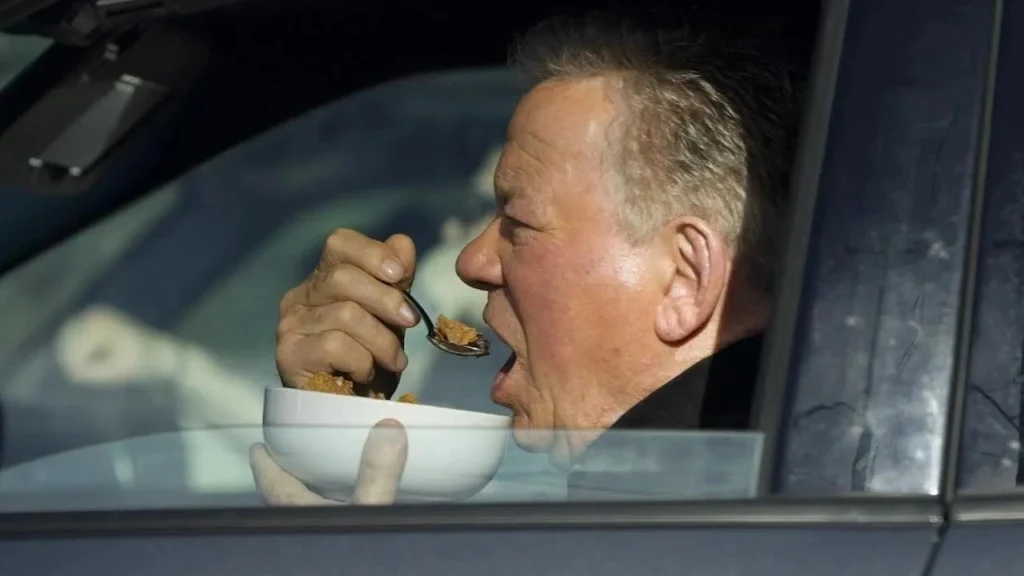
Photos of Shatner eating cereal in a car or carrying a Raisin Bran box into a studio circulated widely online before Kellogg’s confirmed they were part of a planned promotion.
Super Bowl advertising remains the most expensive and visible platform in American television.
According to Ad Age, thirty second ad slots now routinely exceed seven million dollars, pushing brands to build awareness before game day.
Kellogg’s strategy echoes past pre-game campaigns that rely on viral moments rather than surprise alone.
Shatner, best known for playing Captain James T. Kirk in Star Trek, has become a familiar pitchman in recent years, often leaning into self-aware humor and longevity.
“This approach lowers risk while maximizing recognition,” said Tim Calkins, a clinical professor of marketing at Northwestern University’s Kellogg School of Management.
“By the time the Super Bowl ad runs, audiences already feel in on the joke.”
A Kellogg’s spokesperson said the William Shatner Kellogg’s Raisin Bran Super Bowl campaign aims to connect “multi generational fans through a shared pop culture figure.”
“Shatner carries credibility across age groups,” said Rebecca Brooks, senior analyst at Morning Consult. “That matters when cereal brands compete for habitual, not impulse, buyers.”
Entertainment Weekly confirmed the photos were staged, citing a Kellogg’s representative.
Shatner previously addressed health rumors on social media, saying tabloid reports and artificial intelligence sources were unreliable.
Industry analysts expect more brands to mix traditional Super Bowl ads with low-cost digital moments, particularly as viewership fragments globally.
The William Shatner Kellogg’s Raisin Bran Super Bowl campaign may serve as a model.
As Kellogg’s prepares its Super Bowl showing, the campaign highlights how legacy brands are adapting celebrity marketing to sustain attention beyond a single broadcast.
Author’s perspective
In my analysis, Kellogg’s use of William Shatner signals a pivot toward pre-Super Bowl earned media seeding as ad costs surge and attention fragments.
I predict hybrid celebrity campaigns will become an industry standard, cutting launch costs by 20 percent. For consumers and small brands, this means earlier exposure.
NOTE! This report was compiled from multiple reliable sources, including official statements, press releases, and verified media coverage.


