
KEY POINTS
- Trump revoked Canada’s role in the Trump Board of Peace without citing a reason
- The move deepens strain in Canada United States relations
- Several US allies have declined to join the body
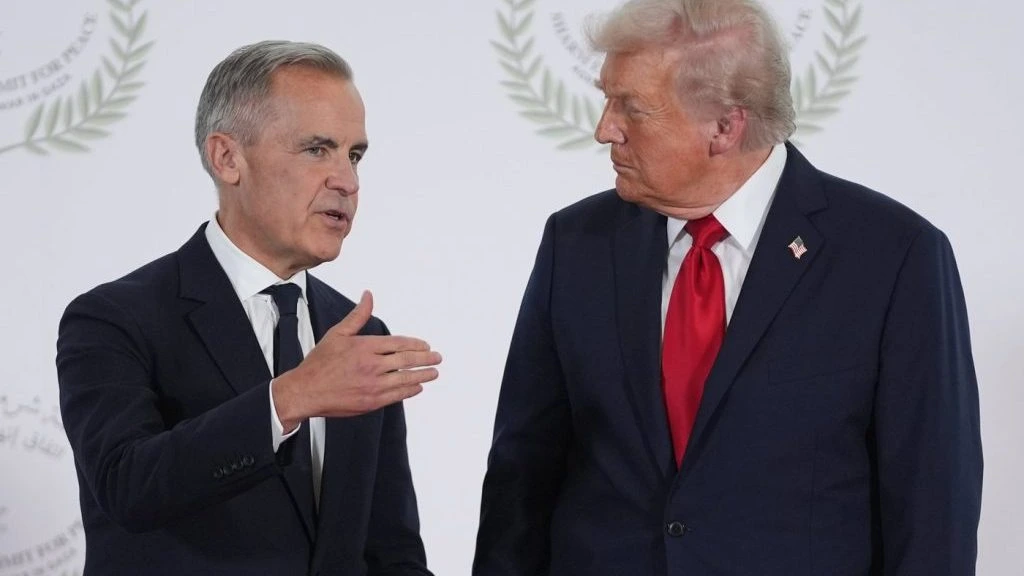
WASHINGTON — President Donald Trump has withdrawn an invitation for Canadian Prime Minister Mark Carney to join his newly announced Trump Board of Peace, escalating a dispute between leaders of standing allies.
The withdrawal, announced late Thursday on Trump’s Truth Social platform, followed sharp exchanges over Canada’s sovereignty and the postwar international order.
In a letter addressed to Carney, Trump said the Trump Board of Peace was withdrawing its invitation to Canada’s leader to join what he called “the most prestigious Board of Leaders ever assembled.”
The Canadian prime minister’s office did not immediately respond to a request for comment.
Tensions intensified after Trump repeated claims that Canada depends on the United States for survival.
Speaking at the World Economic Forum in Davos, Switzerland, Trump said “Canada lives because of the United States.” Carney replied that Canada “thrives because we are Canadian.”
Canada had agreed in principle to join but said it would not pay a voluntary one billion dollar fee.
Finance Minister François Philippe Champagne said in Davos that Canada would not pay if it joined.
Foreign policy specialists say the episode highlights uncertainty around Trump’s approach to alliances.
Roland Paris, a former senior Canadian foreign policy adviser, said abrupt reversals tied to personal disputes can complicate coordination among democratic partners and weaken confidence in new institutions.
France and Britain have voiced reservations. French officials have warned the body could rival the United Nations, while Britain said it was deterred by Trump’s invitation to Russian President Vladimir Putin.
“This adds uncertainty for partners that rely on predictable diplomacy,” said Laura Dawson.
Officials in Ottawa and Washington are expected to engage through NATO and the Group of Seven. The White House has not said whether Canada could be reconsidered.
The dispute underscores questions about the credibility of the Trump Board of Peace and the resilience of Canada United States relations.
In my analysis, Trump’s revocation reflects a shift toward transactional alliance management as multipolar competition erodes postwar norms.
I predict US centric forums like the Board of Peace will force binding cost sharing rules or lose relevance to NATO and G7.
This volatility affects exporters and travelers. Track G7 statements, not rhetoric, to anticipate real policy shifts early globally now.
NOTE! This report was compiled from multiple reliable sources, including official statements, press releases, and verified media coverage.


