
KEY POINTS
- Trump’s Greenland ultimatum risks triggering a trans Atlantic trade confrontation.
- European leaders emphasize that Greenland’s fate must be determined by Denmark and its people.
- Europe may respond using the “anti coercion instrument,” a trade tool designed to counter political pressure.
WASHINGTON — In a sudden escalation of trade and diplomatic tensions, former President Donald Trump demanded in a Saturday night post on Truth Social that European nations agree to a deal allowing the United States to acquire Greenland.
Threatening tariffs of 10 percent in February and 25 percent in June if they refuse. The move has put the US, long Europe’s closest ally, on a confrontational path with multiple European nations.
Trump’s post immediately froze European momentum on prior trade negotiations, forcing leaders to weigh economic retaliation against potential security consequences.
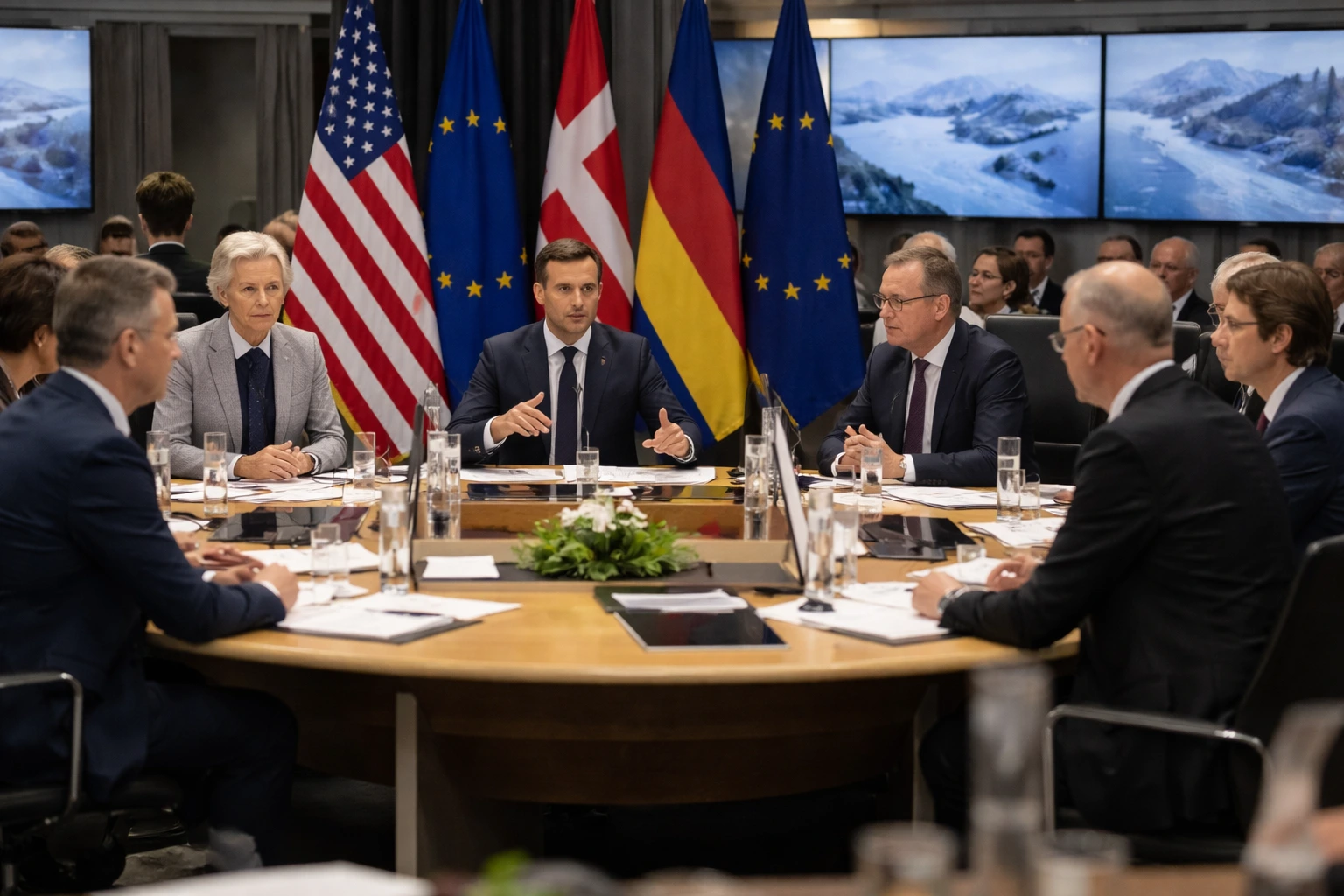
The ultimatum has intensified discussions in Brussels and Paris, where policymakers are now preparing responses to a highly unconventional US demand.
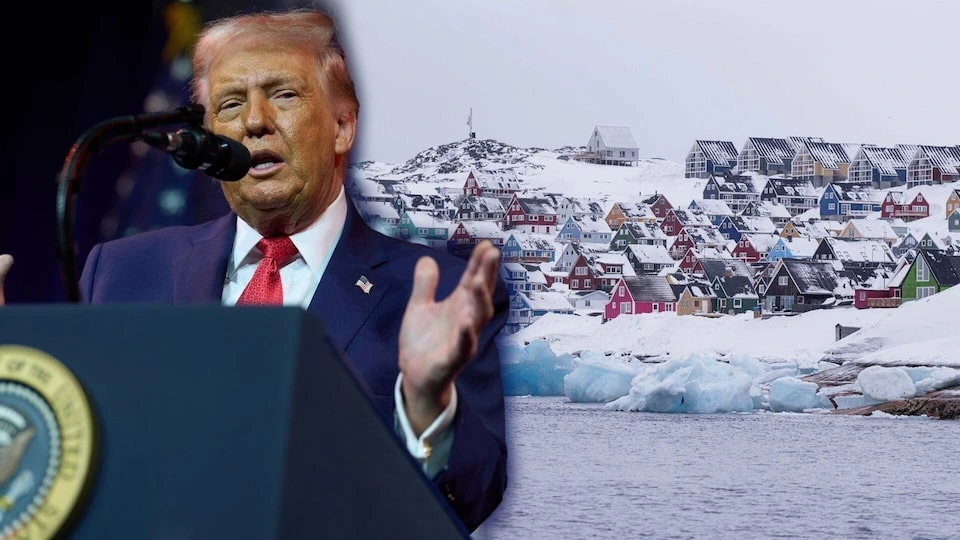
Greenland, an autonomous Danish territory, has historically been considered strategically important for Arctic security and natural resources.
European nations, including Denmark, have maintained that Greenland is not for sale and any decisions regarding its future must involve the island’s residents.
Recent military exercises by European countries in Greenland were intended to assert security commitments in the Arctic but coincided with Trump’s renewed push for acquisition.
Jacob Funk Kirkegaard, a senior fellow at the Brussels based think tank Bruegel, said, “We either fight a trade war, or we’re in a real war,” highlighting the economic security tension for Europe.
Penny Naas of the German Marshall Fund said Trump’s “fixation on owning the island” leaves little room for negotiation.
Analysts note that Europe faces a dilemma retaliate through trade and risk NATO and security support or acquiesce and undermine principles of territorial sovereignty.
Swedish Prime Minister Ulf Kristersson said, “We will not let ourselves be blackmailed.” French President Emmanuel Macron called Trump’s threats “intimidation,” announcing he will request activation of Europe’s anti-coercion trade mechanism.
British Prime Minister Keir Starmer criticized the tariffs as “completely wrong,” emphasizing dialogue with the US administration.
Why Does Trump Want Greenland?
Experts point to Greenland’s strategic Arctic location, which could allow the United States to enhance military presence, monitor Russia, and secure natural resources.
Trump has repeatedly framed the acquisition as a national security imperative, suggesting that owning Greenland would strengthen U.S. defense capabilities in the Arctic region.
European nations are exploring measured trade countermeasures while maintaining NATO cooperation. Talks between US and European officials continue, though initial optimism for negotiation has waned.
The activation of Europe’s anti coercion tool remains a possible response if Trump’s threats advance. Trump’s Greenland ultimatum has highlighted the fragility of trans Atlantic trade and security relations.
European leaders are balancing economic interests with territorial sovereignty and defense commitments, marking a rare convergence of trade policy and geostrategic considerations.
In my analysis, Trump’s Greenland ultimatum signals a shift toward geoeconomic leverage in Arctic policy.
I predict Europe will formalize the anti coercion trade mechanism into law, creating a new regulatory standard. Citizens and businesses face higher tariffs and strategic uncertainty. Monitor EU/US trade talks closely.
NOTE! This report was compiled from multiple reliable sources, including official statements, press releases, and verified media coverage.
Adnan Rasheed, Lead Research Analyst


