
KEY POINTS
- Trump is seeking Starlink assistance to restore connectivity during Iran’s internet blackout.
- The move highlights how private satellite networks now shape modern geopolitical conflicts.
- Iran’s digital shutdown strategy reflects broader efforts to restrict protest coordination and global visibility.
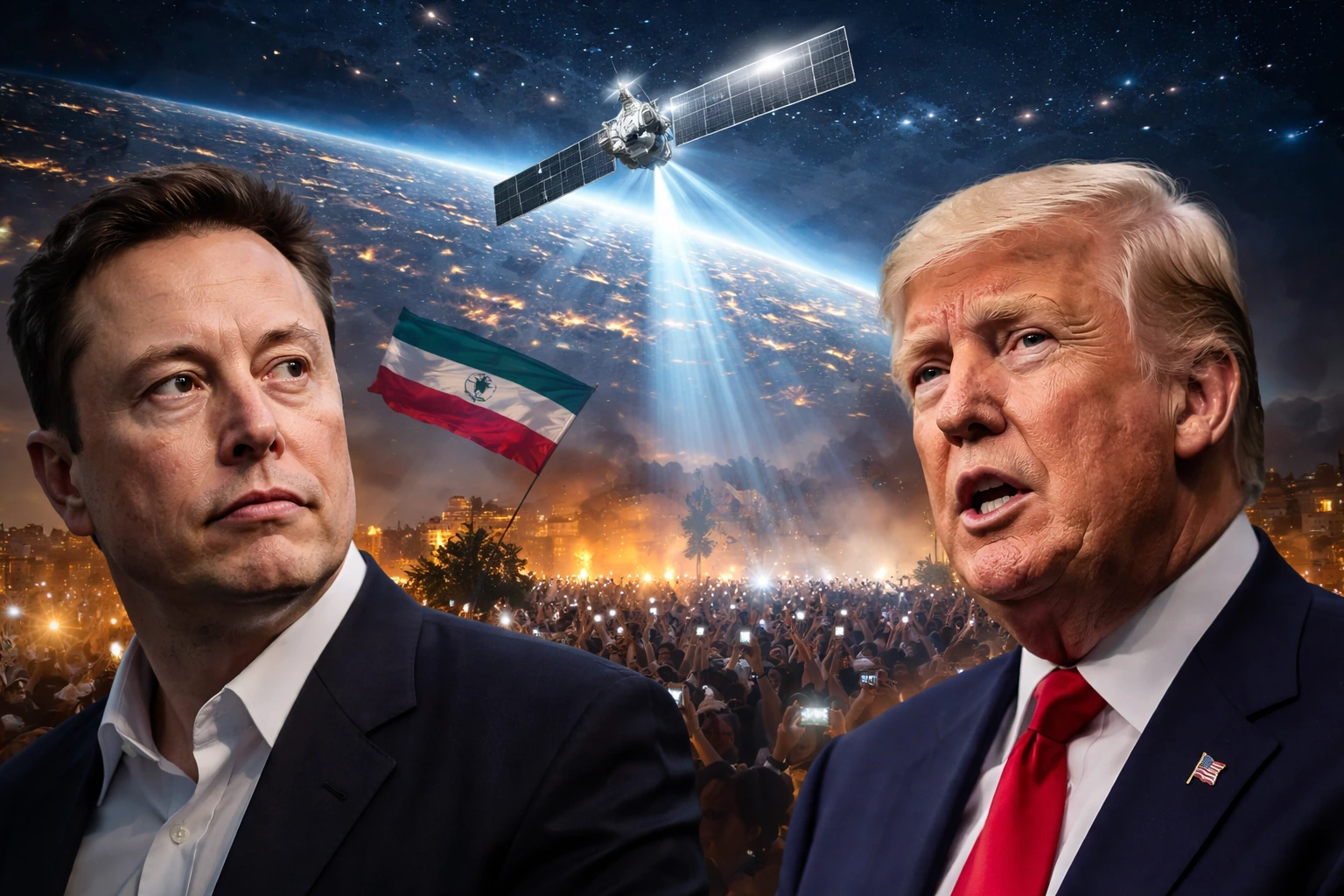
President Donald Trump said he plans to consult with billionaire entrepreneur Elon Musk about using Starlink satellite internet services to bypass Iran’s government imposed internet blackout.
A move that would place a private US technology company at the center of a major international standoff over information control, civil unrest and digital sovereignty.
Trump’s comments come as Iranian authorities continue to restrict nationwide access to mobile data, broadband networks and international platforms following days of widespread protests.
The blackout has isolated millions of people from global communications, disrupted businesses and cut off real time reporting from inside the country.
By turning to Starlink, Trump is signaling that satellite based connectivity could become a diplomatic and strategic tool, not just a commercial service.
Iran has repeatedly used internet shutdowns as a tactic during periods of political unrest. These blackouts are designed to disrupt protest organization, limit the spread of videos and prevent international media from verifying events on the ground.
Unlike traditional censorship methods such as filtering websites or throttling platforms, nationwide shutdowns sever nearly all digital communication.
Starlink, operated by Musk’s SpaceX, uses a constellation of low Earth orbit satellites to deliver broadband internet directly to user terminals.
Because it does not rely on terrestrial infrastructure, it is harder for governments to block using conventional methods.
However, authorities can still criminalize its use, confiscate equipment and attempt signal interference.
Iran has declared Starlink illegal, warning citizens that possession of unauthorized satellite internet devices carries severe penalties.
Despite this, activists and technology networks have reportedly smuggled terminals into the country during previous crackdowns.
Digital policy experts say Trump’s outreach to Musk underscores a broader shift in how governments now view commercial technology platforms.
“Satellite networks have become strategic assets,” said Farah Malik, a researcher specializing in authoritarian information control.
“They shape how protests are documented, how narratives spread and how governments respond.”
The involvement of a private company raises legal and ethical questions. International law traditionally governs state to state interactions, not partnerships between governments and private satellite operators.
Analysts warn this could create new tensions over neutrality, corporate liability and cross border digital intervention. Economists also note the financial implications.
Starlink terminals are expensive and require steady power sources, making them inaccessible to many ordinary citizens.
This raises concerns that any restored connectivity could remain uneven, favoring activists and urban areas while leaving rural regions isolated.
| Factor | Traditional Internet | Satellite Internet (Starlink) |
|---|---|---|
| Infrastructure | Ground-based cables, towers | Space-based satellites |
| Government blocking | High control | Limited control |
| Deployment speed | Slow | Rapid |
| Legal vulnerability | Moderate | High in authoritarian states |
| User cost | Low to moderate | High |
A Tehran-based university student, speaking anonymously for safety reasons, said the blackout has left many people feeling cut off from the world.
“We cannot contact family abroad, cannot check news and cannot show what is happening. It feels like we disappeared.”
Technology rights advocate Hamid Rezaei said satellite internet has become symbolic. “It is not just about access. It is about whether governments can still fully control narratives in the digital age.”
A former Iranian telecom official, now living in Europe, said authorities fear losing control of information more than street protests. “If images spread, pressure multiplies. That is why they shut everything down.”
Any attempt to expand Starlink access inside Iran would face significant obstacles. The government could intensify equipment seizures, impose harsher penalties or escalate electronic interference.
Diplomatically, Tehran may accuse Washington of violating sovereignty by facilitating alternative communications.
Meanwhile, governments around the world are closely watching how satellite networks reshape crisis response.
Similar systems could soon influence conflicts, humanitarian emergencies and disaster zones, challenging traditional notions of territorial control over information.
Trump’s outreach to Musk over Iran’s internet blackout illustrates how power in the modern era is increasingly exercised through control of connectivity.
As satellite technology becomes more widespread, the struggle between governments seeking to restrict information and citizens seeking to share it will no longer be confined to cables and towers.
It will extend into orbit, reshaping how political crises unfold in real time.
Author’s Perspective
In my analysis, Trump’s move to involve Starlink reflects a major shift in global power dynamics, where control over digital infrastructure is becoming as influential as military or economic leverage. Connectivity is now a strategic asset, not just a utility.
I predict that satellite internet access will be formally recognized as a geopolitical and humanitarian tool, with new international frameworks emerging to govern its use during political crises and state imposed shutdowns.
For everyday citizens, this determines whether they can communicate, work and document reality during unrest making internet access a matter of survival, not convenience.
Watch how governments regulate low Earth orbit satellite networks. These rules will shape the future of digital freedom and crisis connectivity.
NOTE! This report was compiled from multiple reliable sources, including official statements, press releases, and verified media coverage.


