
KEY POINTS
- The Allegiant Sun Country deal values Sun Country at $18.89 per share, a premium of nearly 20 percent over its Friday close.
- The merger would combine two leisure focused carriers with limited route overlap, according to the companies.
- Regulatory review will test how the current US administration approaches airline consolidation after recent antitrust actions.
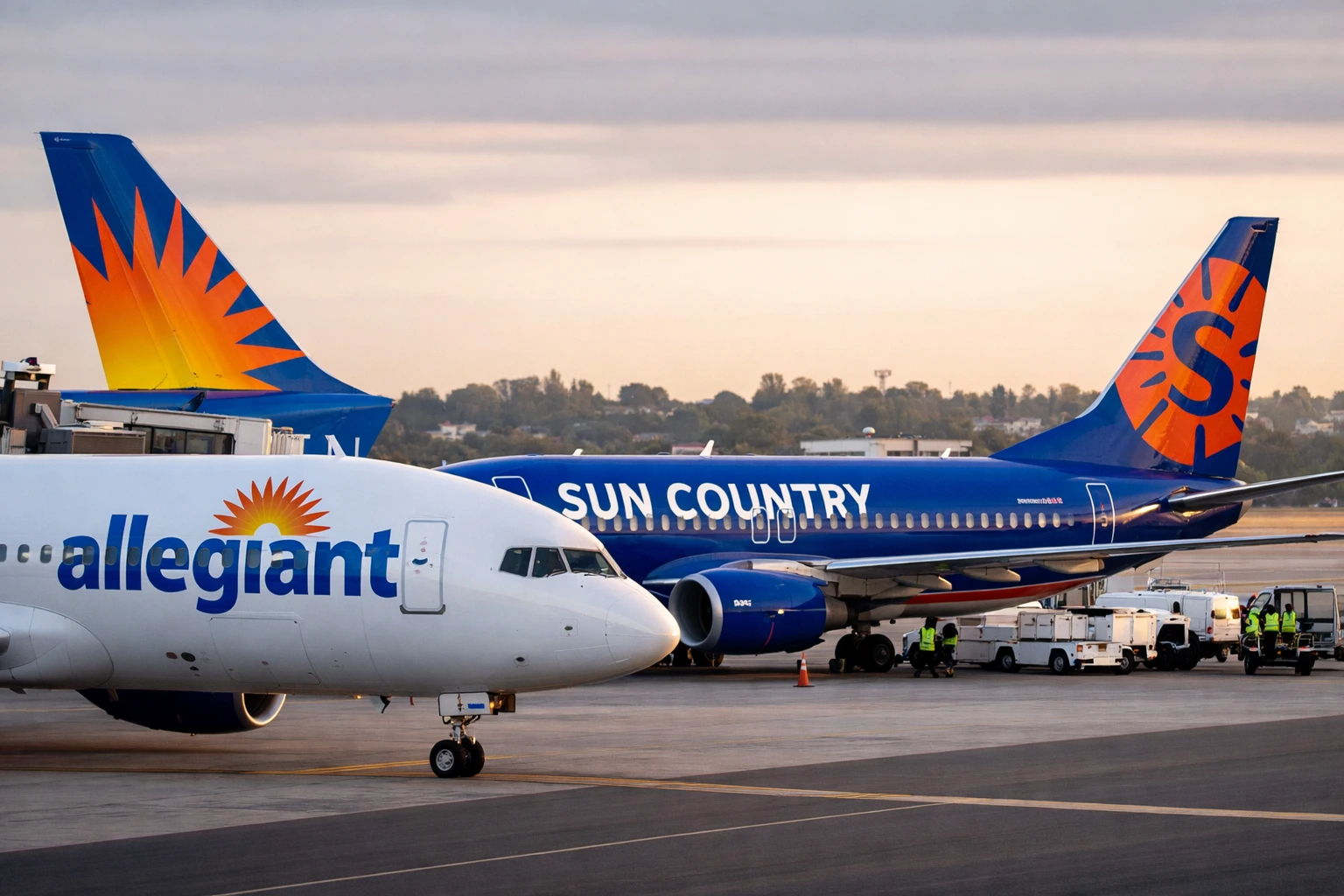
Allegiant Travel Co. said Sunday it will acquire rival leisure carrier Sun Country Airlines in a $1.5 billion cash and stock transaction.
A move that underscores growing consolidation pressure among US budget airlines struggling with higher post pandemic operating costs and expanding domestic capacity.
The proposed Allegiant Sun Country merger brings together two carriers known for low fares, seasonal leisure routes and secondary market service.
Executives say the deal aims to create a stronger network, broaden access to vacation destinations and provide greater financial resilience at a time when fuel, labor and maintenance costs remain elevated across the industry.
Under the terms, Sun Country shareholders will receive 0.1557 shares of Allegiant common stock and $4.10 in cash for each share they own.
Allegiant said the transaction represents an implied value of $18.89 per Sun Country share, or nearly $1.5 billion in total consideration.
Budget airlines expanded aggressively after the pandemic as pent-up travel demand rebounded.
That expansion coincided with persistent supply chain disruptions, higher aircraft leasing costs and rising wages for pilots and mechanics.
The result has been tighter margins for carriers that rely heavily on low fares and ancillary revenue.
Sun Country, based in Minneapolis, has carved out a niche serving leisure travelers while also operating contracted cargo flights for Amazon.
Allegiant, headquartered in Las Vegas, focuses on point to point routes linking smaller US cities to popular vacation destinations.
Mergers have been one way airlines attempt to spread costs over a larger network, improve aircraft utilization and gain negotiating leverage with suppliers.
The Allegiant Sun Country deal follows a turbulent period for consolidation the Biden administration blocked JetBlue Airways’ proposed acquisition of Spirit Airlines on antitrust grounds, while Alaska Air Group’s purchase of Hawaiian Airlines was approved in 2024.
In an interview with CNBC, Allegiant Air CEO Greg Anderson said he expects the merger to win regulatory approval because the two airlines serve largely distinct markets.
He said Allegiant approached Sun Country in late fall and emphasized that Sun Country’s cargo flying for Amazon will continue under the new structure.
Industry analysts say the Allegiant Sun Country merger reflects a broader recalibration among low-cost carriers.
“The ultra low cost model depends on scale, dense networks and predictable demand,” said a senior aviation economist at a US university, speaking generally about consolidation trends.
“Smaller carriers increasingly face pressure to either grow quickly or combine with peers.”
The deal will be reviewed by US antitrust authorities, who have signaled heightened scrutiny of airline mergers in recent years.
Regulators typically assess whether a transaction reduces competition on specific routes or raises barriers for new entrants.
| Item | Allegiant | Sun Country | Combined Impact |
|---|---|---|---|
| Primary focus | Leisure routes | Leisure and charter | Broader seasonal network |
| Headquarters | Las Vegas | Minneapolis | Dual hubs |
| Deal value | — | $1.5 billion | Cash and stock |
| Premium offered | — | Nearly 20% | Shareholder incentive |
| Cargo operations | Limited | Amazon contract | Maintained post deal |
Source: Company statements
Anderson said in a statement that the companies’ “limited network overlap” should ease regulatory concerns and allow the combined airline to offer more nonstop options for travelers.
Sun Country said its board unanimously approved the deal, citing the premium for shareholders and the potential for long-term stability.
The airline added that its Amazon cargo contract, which provides a steady revenue stream, will continue.
Consumer advocacy groups have urged regulators to scrutinize airline mergers carefully.
A spokesperson for a US based passenger rights organization said any consolidation should preserve fare competition and route access for smaller communities.
If approved, the Allegiant Sun Country deal would add momentum to a slow but steady wave of consolidation among smaller US carriers.
Executives from both companies plan to hold a joint investor and media call Monday morning to discuss integration plans, governance and expected timelines.
Regulatory review typically takes several months and involves public comment, data requests and economic analysis.
The process will likely examine pricing on overlapping routes, access to airport gates and the impact on service to underserved markets.
The Allegiant Sun Country merger highlights the shifting economics of the U.S. airline industry, where cost pressures and volatile demand continue to reshape business strategies.
For travelers, the deal could mean broader route networks and potentially more nonstop options, though its ultimate impact will depend on regulatory decisions and how the combined airline executes its plans.
Author’s Perspective
In my analysis, the Allegiant Sun Country deal signals a deeper shift in the low cost airline sector, where scale and cost sharing are becoming essential to withstand rising fuel, labor and maintenance expenses.
I predict Iregulators will adopt a more nuanced merger framework for leisure focused carriers, potentially accelerating niche airline consolidations.
For everyday travelers, this could mean more stable seasonal routes but fewer ultra cheap flash fares.
Watch how bundled pricing and ancillary fees evolve post merger these changes often preview the next industry wide pricing model.
NOTE! This report was compiled from multiple reliable sources, including official statements, press releases, and verified media coverage.


