
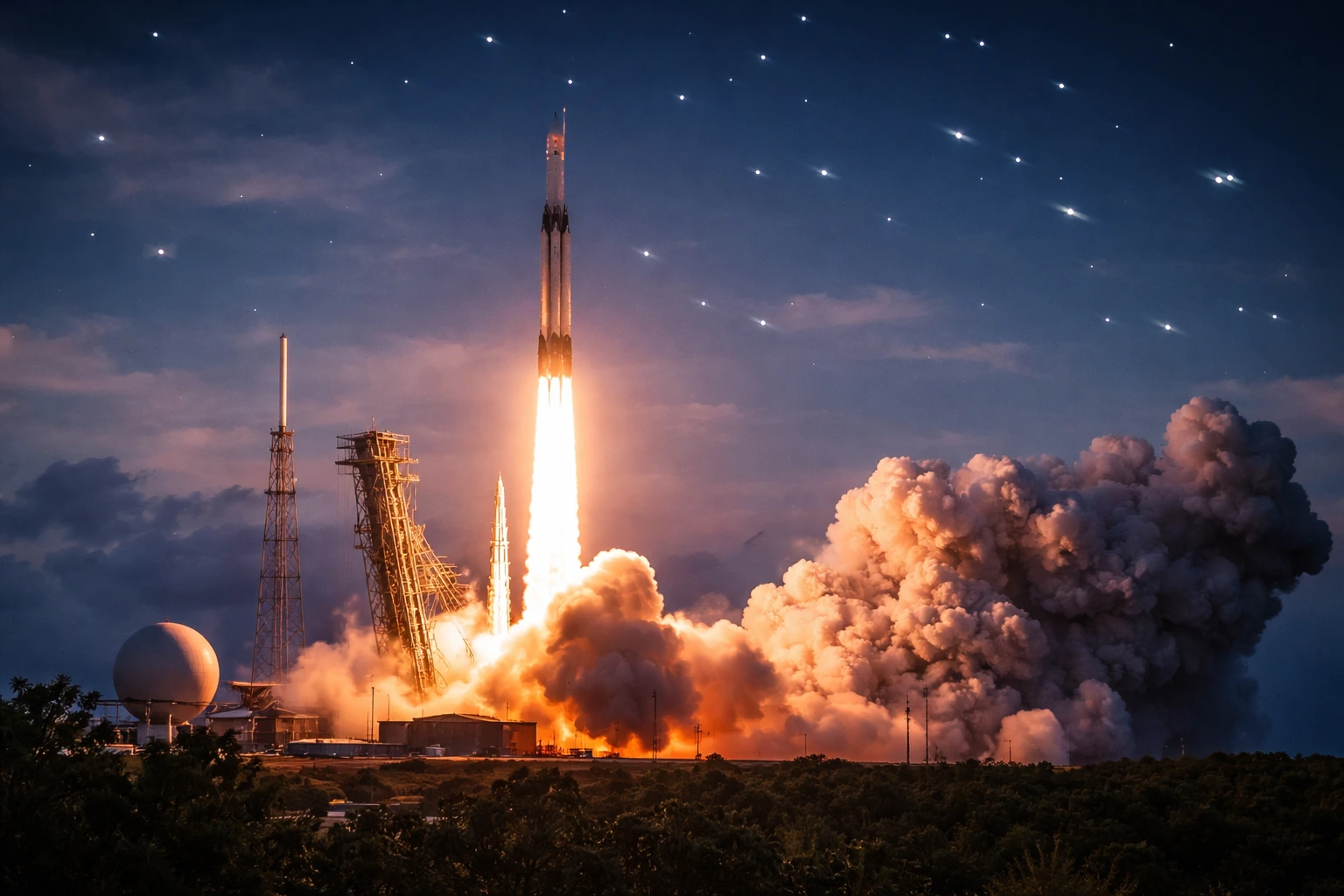
SpaceX is facing renewed resistance at the Federal Communications Commission over its proposal to launch fifteen thousand additional satellites for its cellular Starlink network.
A plan that has drawn objections from rival satellite operators, environmental groups and spaceflight companies as regulators weigh how to manage crowded orbits and limited radio spectrum.
KEY POINTS
- The FCC has opened a public comment period on SpaceX’s request to expand its Starlink constellation with fifteen thousand new satellites.
- Rivals warn the expansion of SpaceX Starlink satellites could strain orbital space and create radio interference risks.
- Environmental and launch industry groups are urging closer scrutiny of atmospheric and operational impacts.
The debate over SpaceX’s next Starlink expansion highlights a growing challenge for global regulators.
How to balance rapid innovation in satellite connectivity with competition, environmental protection and space safety.
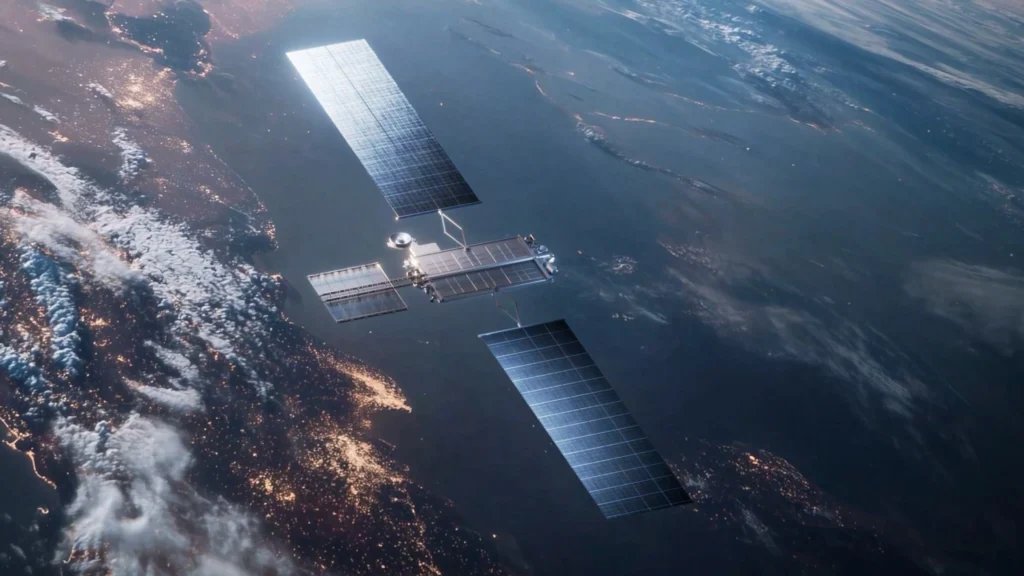
The proposal would significantly expand SpaceX Starlink satellites designed to deliver direct to cellphone service.
A market that has become increasingly competitive as governments and technology companies seek to close coverage gaps worldwide.
SpaceX currently holds FCC authorization to operate roughly twelve thousand Starlink satellites in low Earth orbit.
About six hundred fifty of those are already configured to support cellular connectivity, allowing compatible smartphones to connect without specialized equipment.
The company says that number is insufficient to deliver consistent bandwidth, particularly for data heavy services such as video calling and high speed downloads.
The new filing seeks approval for fifteen thousand additional satellites operating at very low Earth orbit, or vLEO, at altitudes near three hundred thirty kilometers.
Taken together with previously approved and pending Starlink plans, rivals estimate SpaceX ultimately aims to place close to forty nine thousand satellites in orbit.
Such scale would dwarf existing commercial constellations and mark one of the largest single uses of orbital and spectrum resources in history.
Viasat, a competing satellite broadband provider, argues the proposal would give SpaceX excessive influence over shared orbital pathways and radio frequencies.
In comments filed with the FCC, the company said the expansion would increase SpaceX’s “ability and incentive” to block competitors from accessing limited space and spectrum resources.
Globalstar, which supports satellite features on Apple iPhones, raised separate concerns about spectrum overlap.
The company said SpaceX Starlink satellites would use portions of the 1.6 gigahertz band outside the United States, potentially causing harmful interference even if US licenses are not directly violated.
Globalstar said SpaceX did not provide sufficient technical analysis to demonstrate interference could be avoided.
Environmental scrutiny has also intensified. DarkSky International, which campaigns against light pollution, urged regulators to examine the cumulative impact of mass satellite reentries.
While most Starlink satellites are designed to burn up in the atmosphere, scientists are still studying how aluminum and other materials released during reentry may affect the ozone layer.
Launch providers are watching closely as well. Blue Origin, owned by Jeff Bezos, did not oppose the plan outright.
ut warned that dense satellite populations at lower altitudes could complicate rocket launches and constrain available launch windows if coordination mechanisms are not strengthened.
Scale of the Proposed Expansion
| Category | Current Authorization | Proposed Addition | Potential Total |
|---|---|---|---|
| Starlink satellites approved | ~12,000 | 15,000 | ~27,000 |
| Satellites used for cellular service | ~650 | Not specified | Thousands |
| Orbital altitude range | 340–550 km | ~330 km | Multiple shells |
| Estimated total Starlink plans cited by rivals | — | — | ~49,000 |
“New operator entry into the Big LEO band is technically infeasible under these conditions,” Globalstar said in its FCC filing, citing interference risks tied to SpaceX Starlink satellites.
Viasat told regulators that approving the request without tighter safeguards could undermine fair competition in satellite communications.
Blue Origin said in its comments that without institutionalized coordination, dense vLEO operations risk “unnecessary launch availability constraints” for both government and commercial missions.
DarkSky International said the proposed satellites would introduce significant environmental impacts both in space and on the ground.
Urging a more comprehensive review of atmospheric effects. The FCC’s decision will unfold against a shifting regulatory backdrop.
Under Chairman Brendan Carr, the commission has emphasized US leadership in space and has moved toward limiting environmental reviews for large satellite constellations.
At the same time, international regulators and scientific bodies are increasingly focused on orbital congestion, debris mitigation and atmospheric impacts.
The FCC may seek additional technical studies, impose phased deployment requirements or require coordination measures before granting full approval.
Public comments are expected to continue from industry, environmental groups and academic researchers.
The dispute over SpaceX Starlink satellites underscores the tensions created by rapid growth in the space economy.
As satellite networks expand to serve billions of potential users, regulators face pressure to ensure that innovation does not outpace safeguards for competition, safety and the environment.
The outcome of the FCC review could shape not only Starlink’s future but also the rules governing the next generation of global satellite infrastructure.
Author’s Perspective
In my analysis, the pushback against SpaceX’s satellite expansion reflects growing concern over who controls limited orbital and spectrum resources.
I believe regulators are now being forced to balance innovation with long term sustainability in space, not just speed to market.
I predict that regulators will require phased approvals for mega constellations, linking future launches to proven interference control and orbital safety compliance.
Monitor FCC filings and spectrum decisions closely, as they will increasingly influence the future of global connectivity and space based services.
NOTE! This report was compiled from multiple reliable sources, including official statements, press releases, and verified media coverage.


