
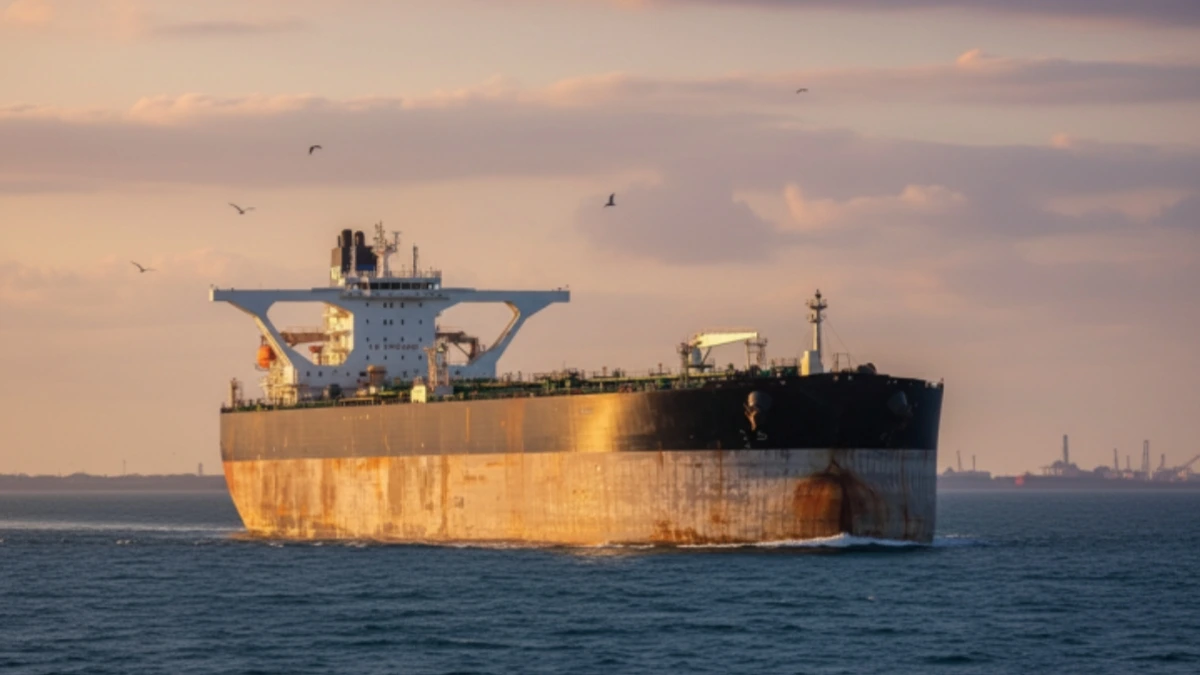
North Atlantic — US authorities launched an operation Wednesday to seize a Russian flagged oil tanker connected to Venezuela following a more than two week chase across the Atlantic Ocean, officials said.
The vessel, originally named Bella‑1 and now sailing as the Marinera, had evaded US Coast Guard boarding attempts while being monitored near Iceland’s maritime zone, according to anonymous US sources.
KEY POINTS
- The Marinera, linked to sanctioned Venezuelan oil exports, is being pursued by US forces after refusing to comply with boarding requests.
- Russian naval assets, including a submarine, were reported near the vessel, raising tensions during the high seas operation.
- The incident highlights the complex enforcement of US sanctions against Venezuelan oil and potential legal disputes under international maritime law.
The US Coast Guard, supported by military units, initiated the seizure after the tanker avoided previous interception efforts in Caribbean waters.
US officials said the vessel switched to a Russian flag while under pursuit, complicating the legal authority for boarding.
The operation comes amid heightened geopolitical tensions as Washington and Moscow navigate conflicting claims over sanctioned oil shipments.
The Bella‑1, a tanker sanctioned by the United States in 2024, was implicated in transporting Venezuelan crude in violation of US export controls.
Following unsuccessful interdiction attempts, the vessel altered its course northward into the Atlantic, prompting a weeks long chase.
Re-registering under a Russian flag introduced additional legal complexity, as vessels are generally protected by the sovereignty of their flagged state under the United Nations Convention on the Law of the Sea.
Historically, US maritime enforcement against sanctioned tankers has relied on a combination of Coast Guard patrols and military support, often in coordination with allied nations.
However, the presence of Russian military assets near the Marinera marks an unusual escalation.
Experts warn that the situation tests the limits of high seas enforcement of economic sanctions.
A maritime law specialist noted that reflagging a vessel mid pursuit does not automatically shield it from seizure if authorities can demonstrate it engaged in illicit activity.
“Switching flags in the middle of a chase is increasingly being used as a tactic to avoid sanctions enforcement, but legal arguments over nationality are complex and can delay action,” the specialist said.
A former Coast Guard officer added that the operation’s scale spanning thousands of nautical miles demonstrates both the logistical and legal challenges of maritime enforcement in contested waters.
Analysts suggest the standoff could influence future policies on how sanctioned vessels are monitored and intercepted.
A European maritime security analyst said the operation reflects growing friction in sanctions enforcement and underscores the strategic role of naval presence.
“This pursuit could set a precedent if the US successfully seizes a vessel under a foreign flag on the high seas,” the analyst said.
Meanwhile, a former US Coast Guard official emphasized the operational challenges, “Intercepting a tanker over several thousand miles.
Especially when it refuses boarding and is potentially escorted, requires careful coordination and legal scrutiny.” The immediate outcome of the operation remains uncertain.
Legal and diplomatic discussions are expected to continue as both Washington and Moscow navigate international law regarding maritime sovereignty and sanctions enforcement.
Analysts also caution that the incident could influence broader oil market stability if it escalates tensions or inspires retaliatory actions.
The US pursuit of the Marinera underscores the growing complexity of enforcing sanctions against state linked oil shipments in contested waters.
The resolution of this high seas confrontation will have implications for international maritime law, sanctions enforcement, and geopolitical dynamics between the United States, Russia, and Venezuela.
Author’s Perspective
In my analysis, the US pursuit of the Marinera shows how sanctions enforcement can quickly escalate into high stakes maritime standoffs.
I believe flag switching tactics signal a new challenge for international law and monitoring.
I predict a rise in dual flagged tankers in high risk corridors, forcing stronger multinational tracking systems.
Track vessel registrations and naval movements to anticipate shifts in global oil flows.
NOTE! This report was compiled from multiple reliable sources, including official statements, press releases, and verified media coverage.


