
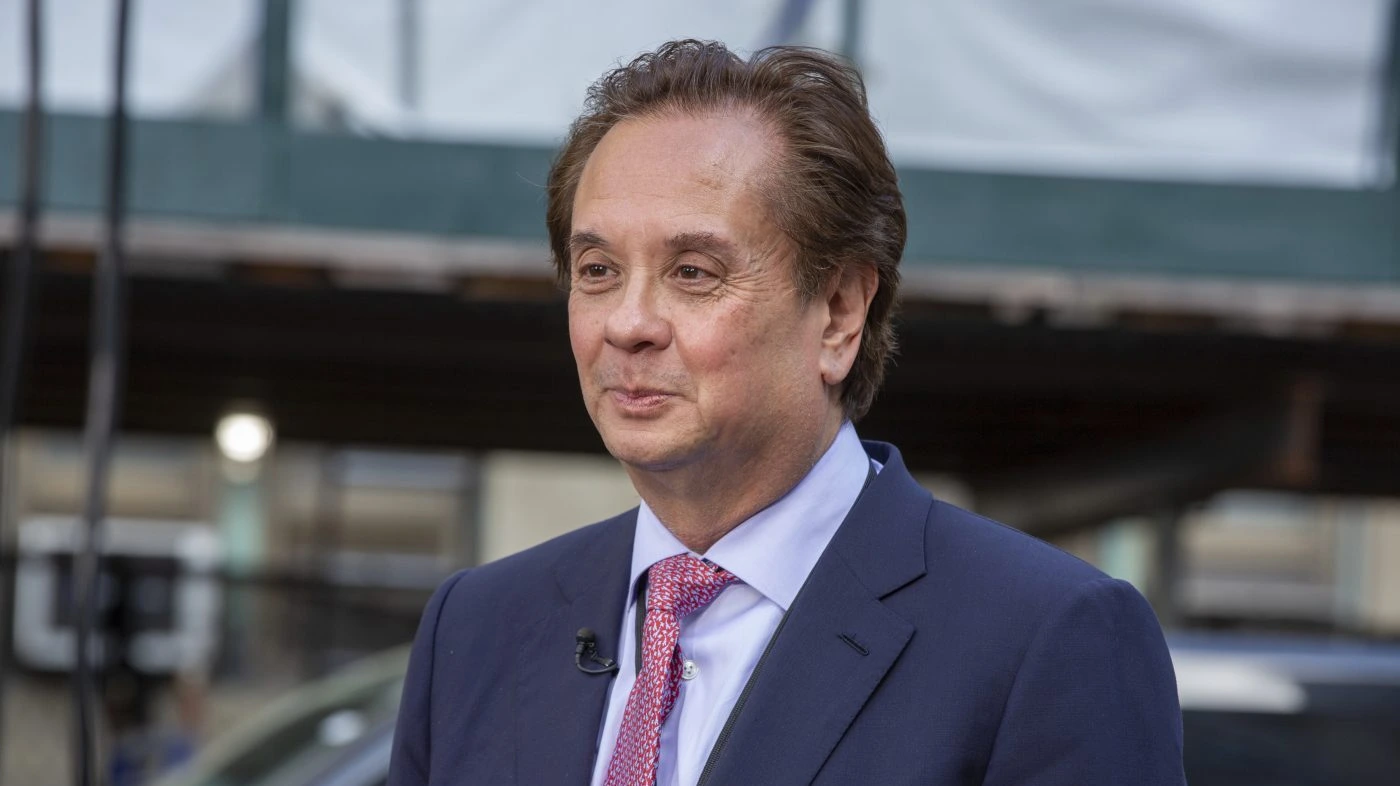
George Conway, a former Republican lawyer and prominent critic of President Donald Trump, announced January six that he is running as a Democrat for Congress in New York’s Twelfth District.
Entering a crowded primary race with a campaign centered almost exclusively on confronting the president and restoring what he describes as constitutional accountability.
KEY POINTS
- George Conway congressional run adds a nationally known Trump critic to one of the most competitive Democratic primaries in the country.
- The race to succeed retiring Rep. Jerry Nadler is drawing candidates with deep political roots and strong name recognition.
- Conway’s candidacy highlights broader questions about party realignment, political identity and the role of anti Trump conservatives within Democratic coalitions.
The George Conway congressional run immediately drew national attention, not because of its electoral math but because of its symbolism.
Conway, once aligned with Republican legal circles and married to Trump’s former campaign manager Kellyanne Conway, is seeking office as a Democrat in one of the nation’s most reliably blue districts.
His announcement on the anniversary of the January six Capitol attack underscored his central message: opposition to Trump is not a policy preference but, in his words, a constitutional obligation.
New York’s Twelfth Congressional District, encompassing much of Manhattan, has been represented for more than three decades by Rep. Jerry Nadler, a leading House voice on civil liberties and impeachment efforts against Trump.
Nadler’s retirement opened a rare political vacuum in a district where general elections are largely symbolic and the Democratic primary effectively determines the outcome.
Conway’s political evolution traces a broader rupture within the Republican Party during the Trump era.
A longtime partner at the elite New York law firm Wachtell Lipton, Conway voted for Trump in two thousand sixteen and initially supported his then wife’s role in the campaign.
After Trump’s election, Conway was considered for a senior Justice Department post but withdrew amid growing concerns about the administration.
By two thousand eighteen, he had left the Republican Party, become a vocal Trump critic and helped form organizations such as the Lincoln Project and the Society for the Rule of Law.
His sustained media presence and legal commentary turned him into one of the most recognizable conservative defectors of the Trump era, a background that now defines the George Conway congressional run.
Political analysts say Conway’s candidacy tests the limits of ideological crossover in modern primaries.
New York Democratic strategist Camille Rivera said Conway’s anti Trump credentials are well established but primary voters often prioritize local ties and legislative focus.
“Voters in this district are sophisticated and policy driven,” Rivera said. “Opposition to Trump is assumed. The question is whether a candidate offers district level representation beyond that.”
Others note that Conway’s legal background could resonate in a district with a high concentration of professionals and voters attuned to constitutional issues.
Norman Ornstein, a senior fellow at the American Enterprise Institute, said Conway’s framing reflects a post Trump reality.
“The George Conway congressional run reflects a segment of the electorate that sees accountability as the central governing issue,” Ornstein said.
“Whether that translates into votes depends on turnout dynamics and how voters weigh national versus local priorities.”
Roberta Kaplan, a lawyer and Democratic donor serving as a finance co-chair for Conway, said his party history is less relevant than his public stance.
“This race is about constitutional norms and the rule of law,” she said. State Rep. Alex Bores, another Democratic candidate, welcomed Conway while emphasizing local engagement.
“This district values year round presence and constituent work,” Bores said.
Former Manhattan Borough President Gale Brewer, who supports state Rep. Micah Lasher, echoed that view.
“Voters want someone who knows the neighborhoods block by block,” she said.
The Democratic primary is expected to be decided by turnout among highly engaged voters rather than ideological persuasion.
Conway has said he does not intend to serve a long political career, framing his bid as a temporary intervention during what he calls an extraordinary moment.
Election officials say the primary calendar leaves several months for candidates to build field operations and define their priorities beyond national politics.
Whether the George Conway congressional run reshapes the race or simply adds a high profile voice will become clearer as debates and endorsements unfold.
The entry of George Conway into the New York Democratic primary underscores the enduring political aftershocks of the Trump era.
His campaign reflects shifting alliances and unresolved tensions over how much national accountability should define local representation.
As voters weigh experience, ideology and connection to the district, the race offers a closely watched test of how post Trump political identities translate at the ballot box.
Author’s Perspective
In my analysis, George Conway’s candidacy reflects how post Trump politics is reshaping political identity beyond party lines.
I believe his legal background and singular focus on accountability speak to a segment of voters who now view constitutional governance as a core issue, not a niche concern.
I predict that campaigns like Conway’s will normalize former Republicans running as Democrats in deep blue districts.
Especially where anti Trump sentiment is assumed and voters seek institutional expertise over traditional politics.
Pay close attention to how primary voters respond to candidates emphasizing rule of law credentials rather than standard policy platforms.
NOTE! This report was compiled from multiple reliable sources, including official statements, press releases, and verified media coverage.


