
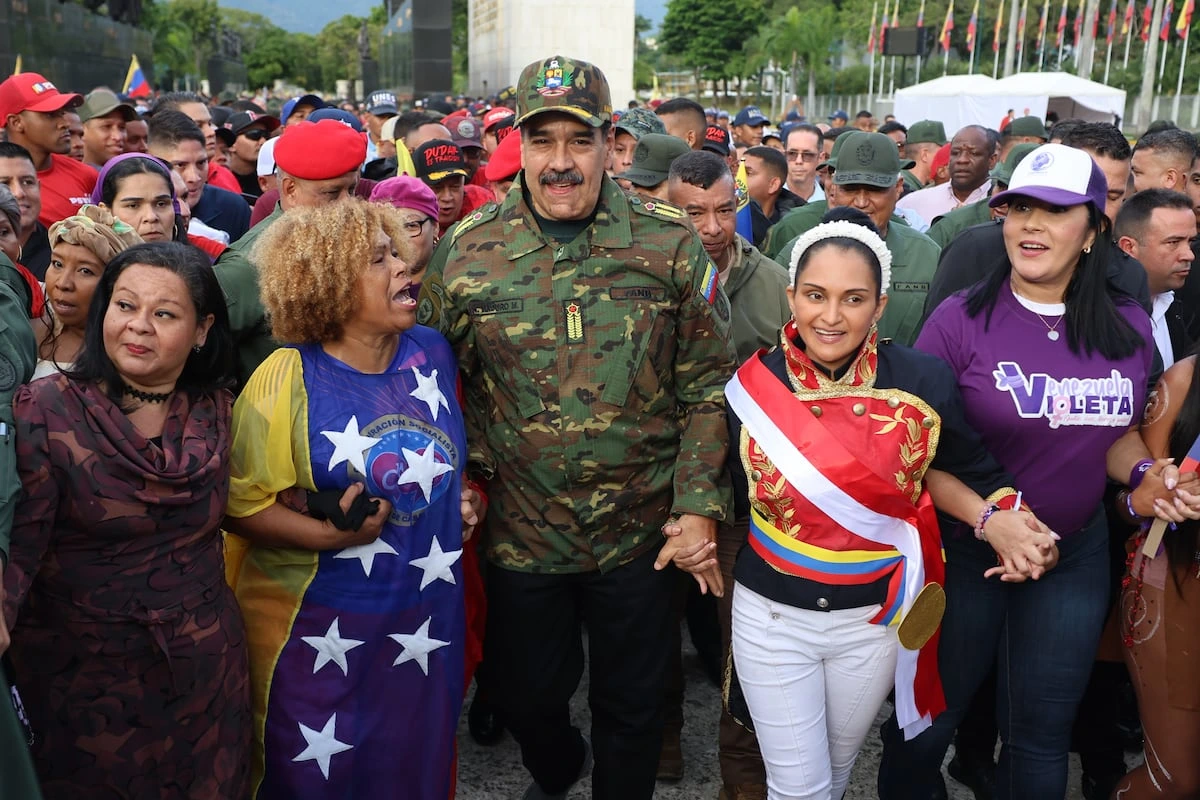
CARACAS, Venezuela — The sudden capture of Venezuelan President Nicolás Maduro by US forces and Washington’s decision to recognize Vice President Delcy Rodríguez as an interim leader have triggered a Venezuela power transition with far reaching political, economic and regional consequences, according to US, Venezuelan and international officials.
KEY POINTS
- The Venezuela power transition follows a US military operation that detained Nicolás Maduro and transferred him to New York to face drug trafficking charges.
- Washington has signaled conditional engagement with interim leader Delcy Rodríguez while maintaining oil sanctions as leverage.
- The move sidelines opposition leader María Corina Machado, reshaping international approaches to Venezuela’s legitimacy crisis.
The detention of Mr. Maduro and the elevation of Ms. Rodríguez mark one of the most dramatic shifts in Venezuela’s modern political history.
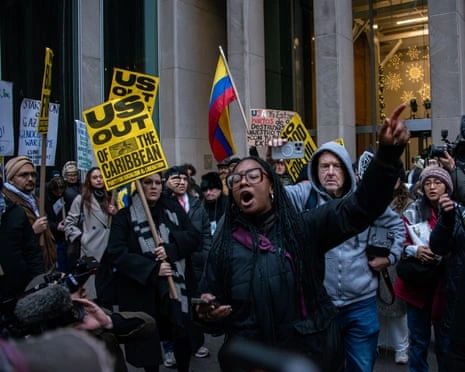
For the United States, the move represents a sharp escalation after years of sanctions, indictments and diplomatic pressure.
For Venezuela, it deepens uncertainty over sovereignty, governance and economic recovery at a time when institutions remain fragile and political legitimacy is contested.
Venezuela has been mired in political crisis since the disputed two thousand eighteen election that returned Mr. Maduro to power.
Western governments and much of the Venezuelan opposition rejected the result, citing irregularities and repression.
The crisis deepened after the two thousand twenty four presidential election.
Which international observers and opposition groups said was won decisively by Edmundo González, running as a surrogate for María Corina Machado.
Venezuelan authorities declared Mr. Maduro the victor. US prosecutors have accused Mr. Maduro and senior officials of running a narco trafficking network tied to armed groups.
Washington imposed sweeping sanctions on Venezuela’s oil sector beginning in two thousand nineteen, sharply reducing exports and government revenue.
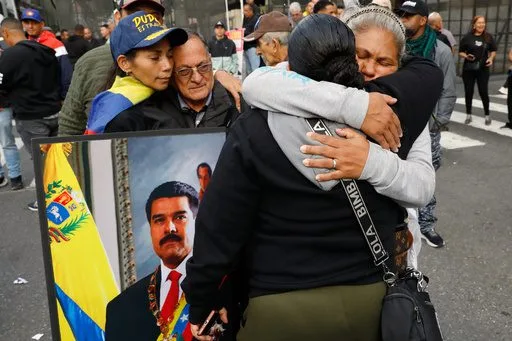
Despite the pressure, Mr. Maduro retained control through the loyalty of the armed forces and security services.
The latest US action bypassed years of diplomatic stalemate.
Officials said the operation was designed to neutralize alleged criminal activity and force a reset in Caracas.
The Venezuela power transition that followed reflects Washington’s calculation that internal regime change was unlikely without direct intervention.
Analysts say the decision to work with Ms. Rodríguez reflects US priorities centered on energy security and regional stability rather than democratic restoration.
“Washington is signaling that manageability matters more than electoral legitimacy at this stage,” said Michael Shifter, senior fellow at the Inter American Dialogue.
He said the approach carries risks for US credibility in Latin America, where memories of intervention remain strong.
Energy experts note that Ms. Rodríguez played a central role in stabilizing oil production despite sanctions, quietly coordinating with foreign firms and domestic elites.
Her technocratic reputation contrasts with the security heavy inner circle that surrounded Mr. Maduro.
At the same time, human rights organizations caution that Ms. Rodríguez has never publicly challenged abuses committed under the previous government.
They warn that the Venezuela power transition could preserve core elements of the existing system unless accompanied by institutional reforms.
| Indicator | 2019 | 2025 |
|---|---|---|
| Oil production (barrels per day) | About 500,000 | About 800,000 |
| Annual inflation rate | Over 10,000\% | Estimated under 200\% |
| U.S. oil sanctions | Fully imposed | Select licenses, restrictions remain |
| GDP change | -28\% | Modest growth reported |
A senior US official, speaking on condition of anonymity, said engagement with Ms. Rodríguez would be “strictly transactional” and dependent on cooperation over security and energy issues.
In Caracas, business leaders expressed cautious optimism. One oil services executive said Ms. Rodríguez understands how the system works and how to talk to investors.
But added that uncertainty over sanctions remains a major obstacle. Opposition figures were more critical.
Juan Francisco García, a former ruling party lawmaker now aligned with reformists, said the transition risks “freezing the political conflict rather than resolving it.”
Residents in the capital reported confusion rather than celebration.
A public sector worker said daily life remains dominated by inflation and shortages, regardless of who claims power.
US officials say sanctions on Venezuelan oil exports will remain in place while Washington evaluates the interim government’s actions.
Any easing is expected to be gradual and tied to guarantees for US companies and security cooperation.
Internationally, governments are divided. Some Latin American leaders have called for respect for Venezuelan sovereigntY.
While others are waiting to see whether the Venezuela power transition leads to stability or further unrest. The armed forces and security groups remain a key variable.
Analysts say their response will determine whether Ms. Rodríguez can consolidate authority or whether parallel centers of power persist.
The removal of Nicolás Maduro and Washington’s embrace of Delcy Rodríguez have reshaped Venezuela’s political landscape without resolving its underlying legitimacy crisis.
The Venezuela power transition underscores shifting US priorities and highlights the tension between stability, economic interests and democratic norms.
How the interim leadership governs, and how the international community responds, will shape Venezuela’s trajectory for years to come.
Author’s Perspective Adnan Rasheed
In my analysis, Washington’s handling of Venezuela signals a decisive shift from democracy first rhetoric to transactional power politics.
Where energy security and control outweigh electoral legitimacy.
I believe this approach may deliver short term stability but risks entrenching elite rule while sidelining popular mandates, creating lonG term volatility beneath a calm surface.
I predict that Venezuela will see a controlled economic reopening driven by selective US sanctions relief tied to oil output benchmarks.
While meaningful political reform remains frozen, increasing the gap between economic recovery narratives and public trust.
Watch US Treasury license updates and Venezuelan oil export data closely, as these technical moves will reveal more about the country’s real direction than public political statements.
NOTE! This report was compiled from multiple reliable sources, including official statements, press releases, and verified media coverage.


