
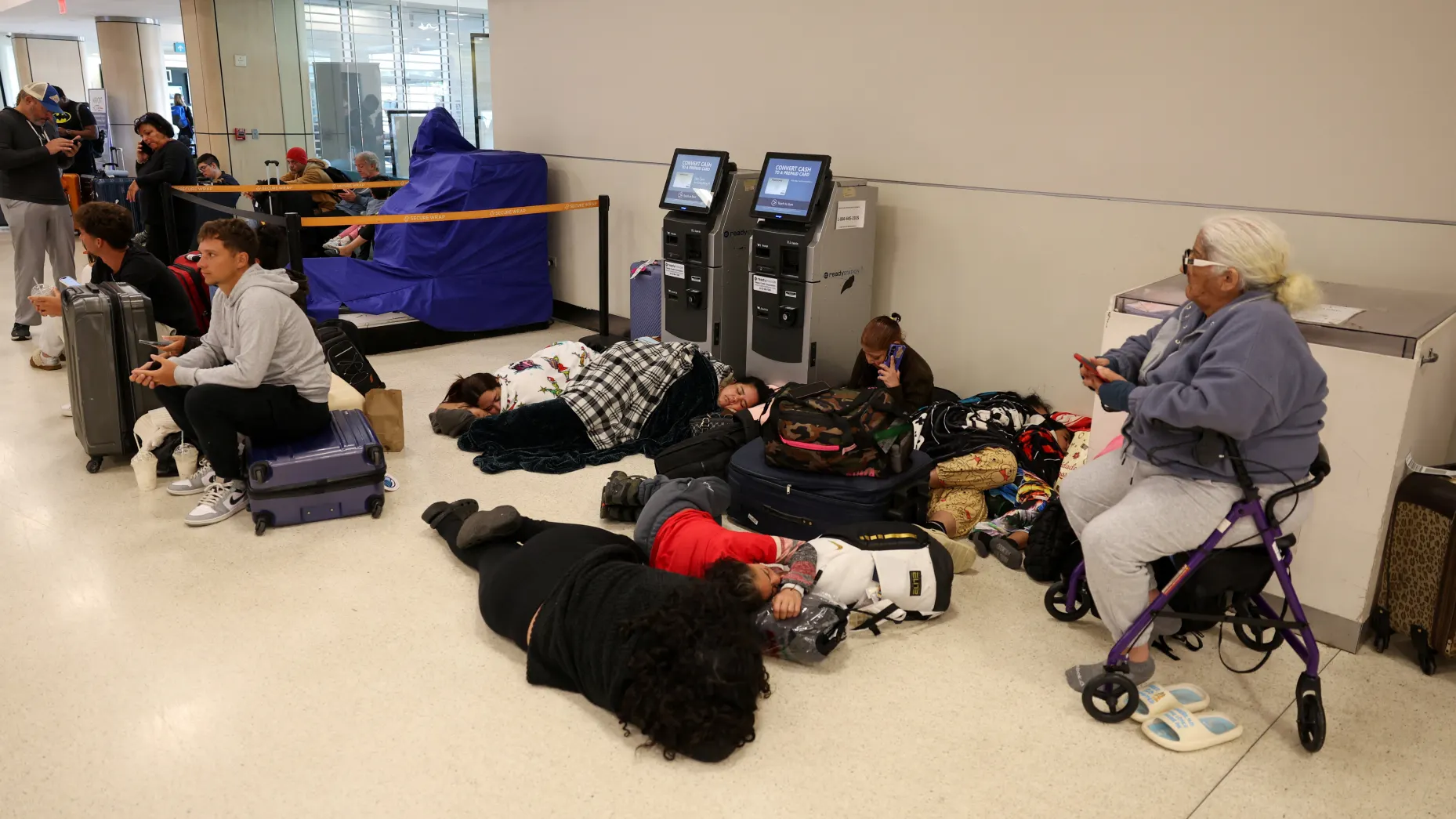
Caribbean flight disruptions spread across the region over the weekend after a US military operation captured Venezuelan President Nicolás Maduro and prompted aviation authorities to restrict airspace.
Forcing airlines to cancel hundreds of flights at the tail end of a peak holiday travel period.
KEY POINTS
- Caribbean flight disruptions followed temporary airspace restrictions tied to US military activity in Venezuela.
- Major airlines canceled or suspended flights to Puerto Rico, Aruba and multiple Lesser Antilles destinations.
- Aviation and tourism officials warned that recovery could take several days even after restrictions ease.
The sudden halt to commercial air traffic over Venezuela and parts of the Caribbean exposed how quickly geopolitical events can disrupt one of the world’s most travel dependent regions.
With millions of travelers still returning home after the New Year holidays, airlines, airports and tourism dependent economies faced immediate operational and financial strain as Caribbean flight disruptions cascaded through interconnected air routes.
US aviation authorities imposed temporary airspace restrictions Saturday following a US military operation that removed Maduro from Venezuela and flew him out of the country, according to US officials.
Flight tracking data showed no commercial aircraft crossing Venezuelan airspace for much of the day, forcing airlines to reroute or cancel flights across the eastern Caribbean.
The Caribbean’s geography makes it especially vulnerable to such restrictions.
Many north south and east west flight paths linking the United States, South America and island nations pass near or over Venezuelan airspace.
When those corridors close, alternatives are limited and often exceed aircraft range or crew duty limits, leading to cancellations rather than delays.
Aviation analysts say the scope of the Caribbean flight disruptions reflects structural realities of regional air travel rather than airline specific failures.
Smaller island airports depend heavily on narrow scheduling windows and shared aircraft rotations.
When a single leg is canceled, multiple downstream flights can be affected.
Transportation policy specialists also note that US Federal Aviation Administration decisions often carry regional consequences beyond US territory.
While the FAA’s mandate is passenger safety, its airspace restrictions frequently influence international carriers that coordinate routes and traffic flow with US authorities, particularly in the Caribbean basin.
Tourism economists say the timing amplified the impact. Although the peak thirteen day holiday travel window had passed, resorts and cruise operators still rely on strong early January traffic.
Missed arrivals translate into lost hotel nights, delayed cruise departures and added costs for travelers forced to extend stays.
| Indicator | Typical January Weekend | This Weekend |
|---|---|---|
| Active commercial flights over Venezuela | Regular daily traffic | Near zero |
| Caribbean destinations reporting cancellations | Limited, weather-related | More than fifteen |
| Airlines issuing travel waivers | Occasional | Widespread across major carriers |
At Queen Beatrix International Airport in Aruba, airport officials said operations were expected to normalize Sunday after a full day of cancellations stranded inbound and outbound passengers.
In Barbados, Prime Minister Mia Mottley said the conflict’s fallout was “exceedingly disruptive” to both the island’s airport and cruise port, underscoring the dual impact on air and sea travel.
US Transportation Secretary Sean Duffy said on social media that the FAA restricted airspace “to ensure the safety of the flying public” and that restrictions would be lifted when appropriate.
Airlines including JetBlue, American, Delta, United and Southwest confirmed widespread cancellations and schedule adjustments, while waiving change fees or offering refunds.
Travelers felt the effects immediately. Lou Levine, returning to the Washington area from Puerto Rico with his family.
Said a canceled flight extended their holiday by a week, creating school absences and unexpected expenses.
Cruise operator Virgin Voyages said affected passengers unable to reach San Juan in time for departures would receive full future cruise credits.
Aviation authorities have not provided a firm timeline for fully lifting airspace restrictions, though several airlines plan to resume limited service within days.
Industry officials caution that even after clearance is restored, aircraft positioning, crew availability and airport congestion could prolong Caribbean flight disruptions into the coming week.
Tourism boards across the region are coordinating with airlines to manage traveler flow and communications.
Aviation experts say the episode may renew calls for more resilient regional routing agreements and contingency planning for geopolitical shocks.
The weekend’s Caribbean flight disruptions highlighted the region’s exposure to sudden geopolitical events far beyond its borders. As airlines gradually restore service.
The episode underscores how closely Caribbean travel, tourism and economic stability remain tied to global security decisions and airspace governance, with impacts felt immediately by travelers and island economies alike.
Author’s Perspective Adnan Rasheed
In my analysis, the scale of Caribbean flight disruptions following the US operation in Venezuela highlights how modern air travel remains tightly bound to geopolitical decision making. Often with little buffer for regions dependent on narrow air corridors.
I believe this episode exposes a structural vulnerability in Caribbean aviation that goes beyond temporary security measures and directly affects tourism driven economies.
I predict that Caribbean flight disruptions will increasingly push regional governments and airlines to formalize alternative airspace routing agreements and shared contingency frameworks.
Reducing reliance on a single geopolitical corridor and reshaping how trans Caribbean flights are planned during security crises.
Travelers to geopolitically sensitive regions should prioritize airlines with flexible rebooking policies and real time alert systems.
And consider travel insurance that explicitly covers airspace closures, not just weather related delays.
NOTE! This report was compiled from multiple reliable sources, including official statements, press releases, and verified media coverage.
Source: AP, New York Time, CNN


