
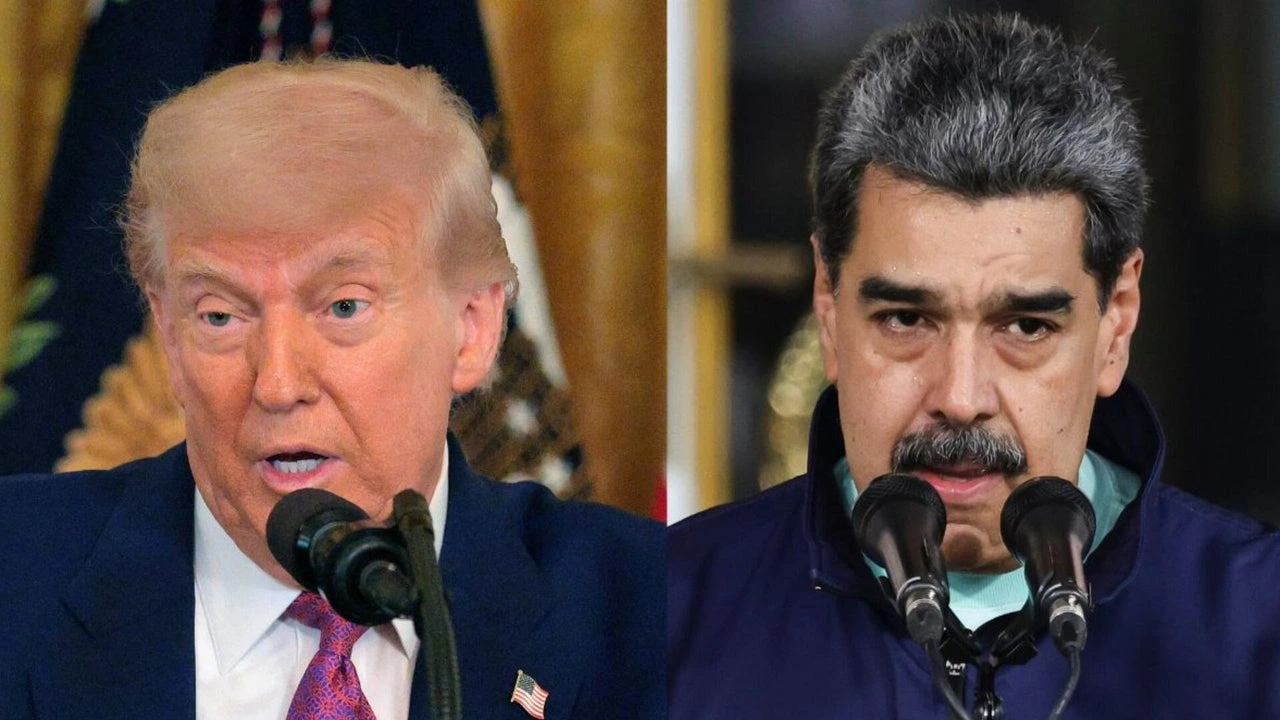
CARACAS/MIAMI — President Donald Trump said Saturday that a US military operation removed Venezuelan President Nicolás Maduro from power with no American fatalities and only a handful of injuries.
Adding that Maduro and his wife, Cilia Flores, are being transported to New York to face criminal charges.
Speaking from his Mar-A-Lago club in Florida, Trump described the operation as “extremely complex” and said he observed it “like I was watching a television show.”
He also indicated that Venezuela’s oil reserves would see “strong US involvement” following Maduro’s capture.
The announcement represents an unprecedented escalation in US policy toward Venezuela and has raised questions about international law, regional stability, and global energy markets.
KEY POINTS
- US military operation reportedly removed Nicolás Maduro from power with minimal injuries to American personnel.
- Maduro and his wife are being transferred to the United States to face criminal charges.
- Venezuela’s oil reserves could see increased US involvement, intensifying global geopolitical implications.
The operation comes amid reports of explosions and disruptions across Caracas early Saturday.
Trump emphasized the operation’s precision, noting that a second wave of troops prepared for deployment was unnecessary.
The US leader framed the mission as a major success, citing the absence of fatalities and the capture of a long standing adversary accused of corruption and drug trafficking.
US Venezuelan relations have deteriorated over the past decade due to sanctions, allegations of human rights abuses, and conflicting geopolitical interests.
US sanctions on Venezuela’s state owned oil company PDVSA have severely curtailed revenue.
US prosecutors previously indicted Maduro and senior officials on drug trafficking and narco terrorism charges.
Military presence: Since late 2025, the US positioned naval and special operations forces in the Caribbean to enforce sanctions and disrupt revenue networks.
Maduro’s government has consistently rejected US pressure, asserting sovereignty and seeking support from allies such as Russia and China.
Legal and geopolitical experts note that removing a sitting head of state by force and bringing them to trial in another country raises complex international law issues.
Customary law generally provides heads of state with sovereign immunity, and US officials have not publicly disclosed authorization from the United Nations or other international bodies.
Eliot Cohen, an international security scholar, said, “Capturing a foreign leader without international consensus challenges established norms and could set a precedent with long term consequences for global governance.”
Energy analysts emphasize that Venezuela’s vast oil reserves, the largest globally, are central to U.S. strategic considerations.
Control of these resources could significantly impact global energy markets and influence alliances.
Venezuelan Foreign Minister Yván Gil condemned the operation as an act of aggression and called on the United Nations Security Council to intervene.
Maduro’s government declared a state of external commotion and mobilized forces nationwide.
In Washington, Republican Senator Marco Rubio praised the operation as a blow against what he called a “narco terrorist regime,” highlighting Maduro’s alleged involvement in drug trafficking.
International reactions are mixed. Some European capitals emphasize adherence to international law, while other governments urge restraint and diplomatic engagement to avoid further instability.
Maduro’s removal could trigger significant changes in Venezuelan governance, especially if a successor or interim government emerges.
US engagement with Venezuelan institutions and civil society will be closely monitored.
The fate of Venezuela’s oil sector remains uncertain, as US involvement may encounter resistance from China, Russia, and other partners with vested interests in Caracas.
The legal and economic implications of US control over these resources will face international scrutiny.
The US operation that removed Nicolás Maduro marks a highly unusual chapter in US Latin American relations.
Its legal, economic, and geopolitical ramifications are likely to be analyzed extensively in the months ahead, with lasting implications for regional stability and global energy markets.
Author’s Perspective Adnan Rasheed
In my analysis, Maduro’s capture shifts US influence in Latin America but raises questions about long term stability.
I predict Venezuela’s oil sector will see multilateral negotiation, with countries like India and Brazil gaining influence.
Investors should track energy auctions and policy changes closely.


