
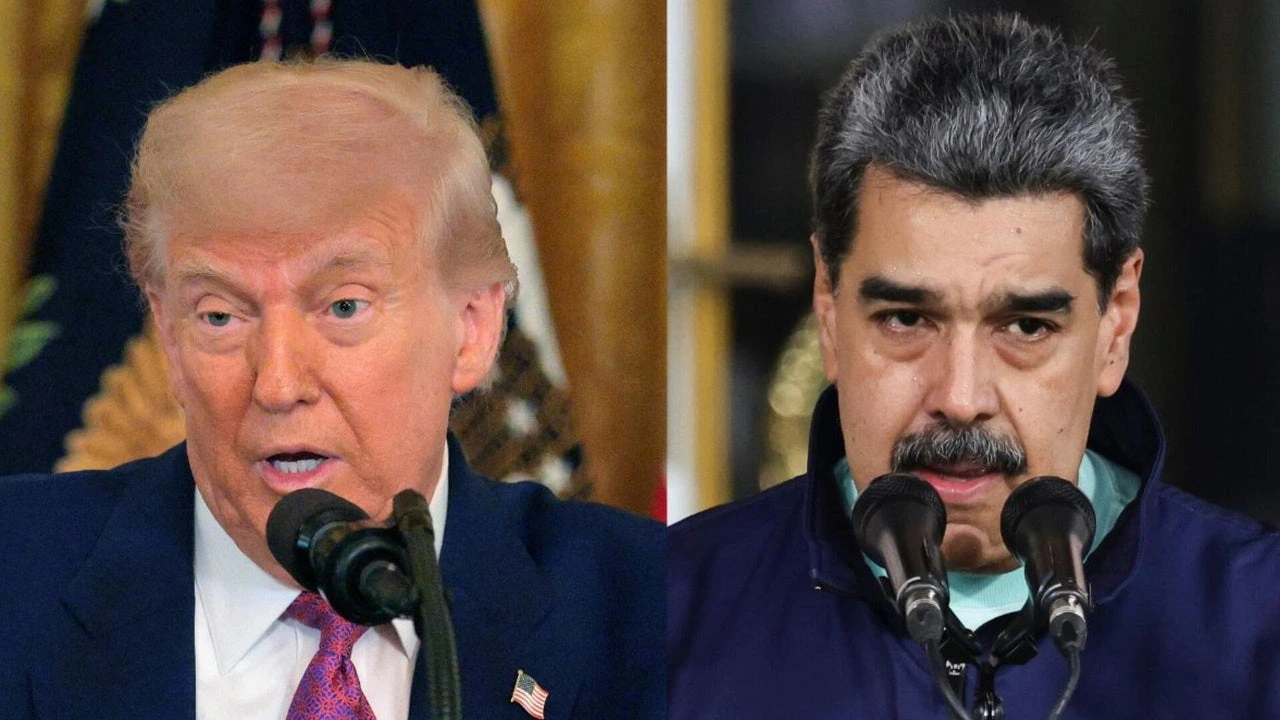
CARACAS, Venezuela (Jan. 3, 2026) — Venezuela’s Defense Minister Vladimir Padrino said the nation would oppose the presence of foreign troops following reports of US military strikes and claims that President Nicolás Maduro was captured and removed from the country.
Padrino said explosions hit civilian areas and that the government is collecting data on casualties from the attacks.
US President Donald Trump announced early Saturday on Truth Social that a “large scale strike” had targeted Venezuelan forces and that Maduro and his wife had been captured and flown out of the country.
The statement marked the most direct US military action in Latin America since the 1989 invasion of Panama.
Key Points
- President Trump announced a major strike against Venezuela and said Maduro and his wife were taken out of the country.
- Defense Minister Padrino rejected any foreign military presence and confirmed the government is tracking civilian casualties.
- The strike represents a rare direct US intervention in South America, prompting global attention and concern from international organizations.
Reports of US military action in Venezuela escalated tensions in the region, as President Trump claimed the capture of President Maduro.
While Venezuelan authorities denied that foreign troops were on the ground. The developments have heightened uncertainty in Caracas, where residents reported explosions and power outages in parts of the city early Saturday.
The incident occurs amid a long history of US Venezuelan tensions, involving accusations of drug trafficking.
Allegations of electoral fraud, and disputes over Venezuela’s vast oil reserves. US Venezuelan relations have been strained for years.
Since Maduro succeeded Hugo Chávez in 2013, Washington has imposed sanctions, accused the government of running a “narco state,” and supported opposition movements.
Past US military involvement in Latin America has been limited, with the 1989 Panama invasion the last comparable intervention.
Earlier in 2025, the United States increased naval presence in the Caribbean and launched operations targeting drug trafficking
Which Venezuela labeled as violations of its sovereignty. The reported Saturday strikes mark an escalation in this pattern of confrontation.
Residents of Caracas reported hearing multiple explosions and aircraft overhead. “We heard loud blasts, and everyone ran to find shelter,” said a local shopkeeper who requested anonymity.
A Venezuelan military officer, speaking on condition of anonymity, said troops were mobilizing to protect key installations and maintain public order.
Independent verification of troop movements and casualty figures remains limited.
Analysts say any US military action on Venezuelan soil would mark a significant shift in regional policy.
“A direct strike and the claimed capture of a sitting head of state would have far reaching consequences under international law,” said a Latin America policy expert based in Washington, DC.
Experts warn that even limited action could destabilize the region, affect global oil markets, and complicate relations with neighboring countries.
The absence of independent verification makes it difficult to confirm the scope of the operation or the status of Venezuelan leadership.
The situation remains fluid. Venezuela’s government has declared a national emergency, and regional leaders are monitoring developments closely.
International organizations have called for verification of events and for protection of civilians.
Observers note that any further military action could trigger diplomatic, legal, and humanitarian challenges.
Confirmation of Maduro’s status and official casualty numbers will shape the international response in the coming days.
The reported US military operation and Maduro’s alleged capture underscore a major flashpoint in US Venezuelan relations.
Venezuelan authorities have vowed to resist foreign troops, highlighting both immediate security concerns and broader geopolitical implications for the region.
Author’s Perspective Adnan Rasheed
In my analysis, the reported US strike on Venezuela and the claims of President Maduro’s capture highlight a significant turning point in hemispheric geopolitics.
I believe this move underscores how military actions, even when publicly announced with limited verification, can reshape international perceptions of power and influence, especially in Latin America.
The immediate impact on civilian safety and regional stability cannot be underestimated, as local governments and populations face uncertainty amid escalating tensions.
I predict that this event will accelerate a realignment of regional alliances, prompting Latin American nations to strengthen multilateral defense and diplomatic mechanisms to mitigate unilateral interventions.
Governments may increasingly invest in regional intelligence sharing and crisis response frameworks, reducing reliance on traditional global powers and reshaping how hemispheric security is managed.
For policymakers, investors, and regional analysts, closely monitor Venezuela’s internal military communications and emergency declarations.
Early signals from these channels can provide critical insight into potential shifts in both domestic governance and regional geopolitical alliances.
NOTE! This report was compiled from multiple reliable sources, including official statements, press releases, and verified media coverage.


