
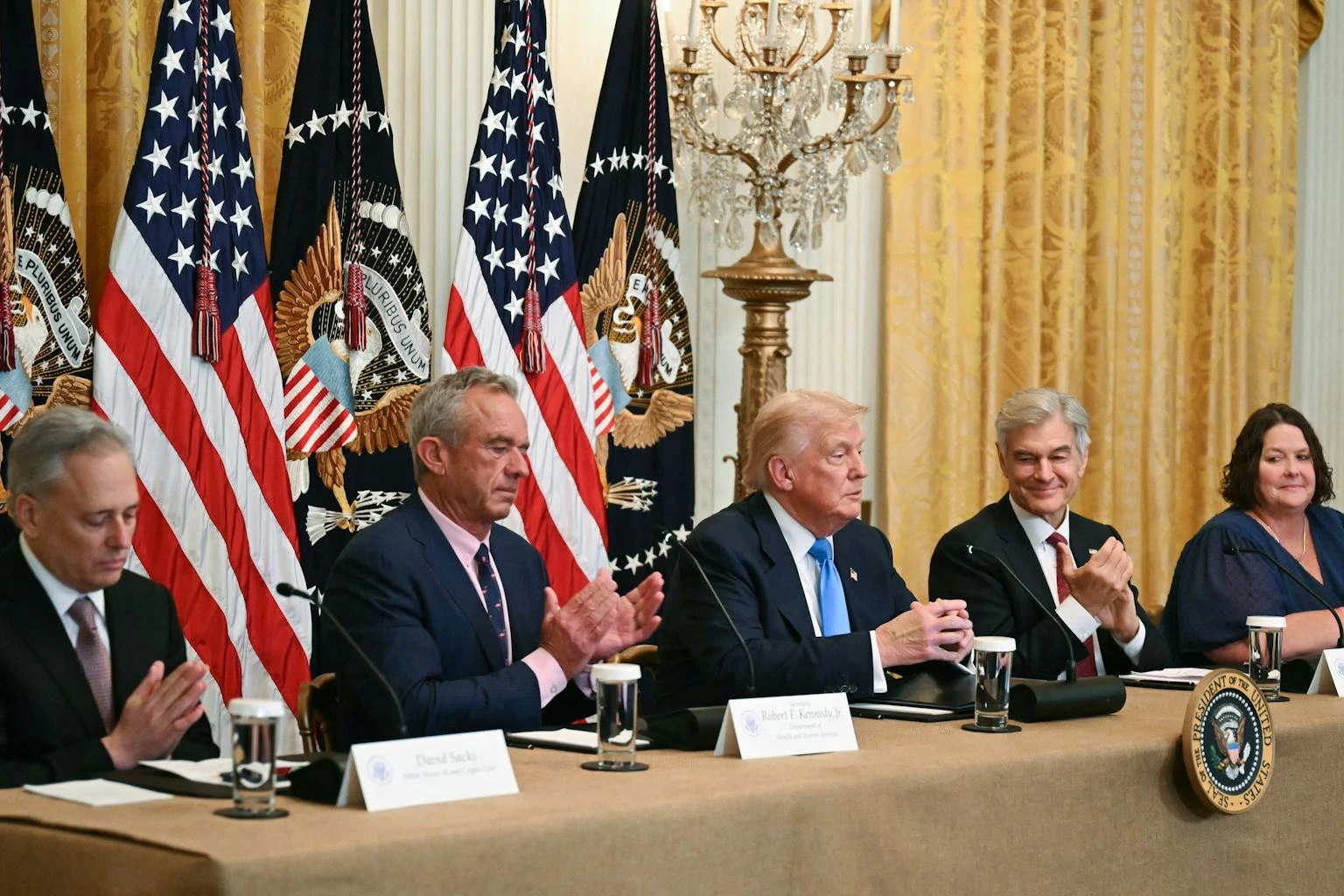
WASHINGTON (TECHY QUANTUM) — US President Donald Trump, the oldest president ever inaugurated, has offered one of his most detailed public discussions of his health.
Telling The Wall Street Journal that he considers himself in “perfect” condition despite taking higher than recommended doses of aspirin, declining regular exercise and using makeup to conceal bruising on his hands.
Key Points
- Donald Trump health disclosures highlight aspirin use, medical scans and lifestyle choices as age scrutiny intensifies
- The White House says recent CT testing showed no cardiovascular abnormalities
- Medical experts note aspirin benefits and bleeding risks increase with age, especially for older adults
The comments come as Trump, seventy nine, faces heightened global scrutiny over age, stamina and fitness for office during his second presidency.
While the White House has routinely released physician summaries attesting to his fitness.
Trump’s own remarks provided uncommon insight into personal routines, medical decisions and his irritation with repeated public questioning about his health.
Age and presidential fitness have become a defining issue in recent US politics. Trump surpassed his predecessor Joe Biden as the oldest person to take the oath of office.
Biden, a Democrat, withdrew from the 2024 race after a widely criticized debate performance intensified concerns about cognitive sharpness.
Trump has since confronted similar questions, particularly following public appearances where he appeared to close his eyes during events or showed visible bruising on his hands.
In the interview, Trump acknowledged that he incorrectly told reporters he had received a magnetic resonance imaging scan at Walter Reed National Medical Center in October.
He clarified that the test was instead a computed tomography scan. His physician, Navy Capt Sean Barbabella, said the CT scan was conducted to rule out cardiovascular issues and showed no abnormalities.
Trump also confirmed he was diagnosed with chronic venous insufficiency, a common condition among older adults that can cause leg swelling.
He declined to wear compression socks as advised but said more frequent movement during the day has helped reduce symptoms.
Trump’s aspirin use has drawn particular attention. He said he takes three hundred twenty five milligrams daily, four times the eighty one milligram dose often recommended for preventive therapy.
According to the Mayo Clinic, daily aspirin therapy can reduce the risk of heart attack and stroke by thinning the blood but also increases bleeding risk, especially in older adults.
The clinic lists a therapeutic range of seventy five to three hundred twenty-five milligrams per day, emphasizing individualized medical guidance.
Dr. Eric Topol, a cardiologist at Scripps Research who has studied aging and cardiovascular risk, said aspirin decisions in older adults are increasingly nuanced.
“The balance between clot prevention and bleeding risk shifts with age,” Topol said. “Guidelines now stress personalization rather than routine use.”
Trump said he has followed the same regimen for twenty five years and prefers not to change.
He attributed easy bruising to aspirin use and said he sometimes applies makeup to cover marks after his hand is “whacked.”
| Health Factor | Trump Disclosure | General Medical Guidance |
|---|---|---|
| Daily aspirin dose | 325 mg | 75 mg to 325 mg depending on risk |
| Cardiac imaging | CT scan in October | CT or MRI used based on indication |
| Exercise routine | Golf only | Regular moderate activity advised |
| Venous insufficiency | Declined compression socks | Compression often recommended |
Barbabella said Trump remains in “exceptional health and perfectly suited to execute his duties as Commander in Chief.”
Dr. Lindsay Rosenthal, a geriatric specialist at Mount Sinai Hospital, said visible bruising and venous issues are common in older adults taking blood thinners.
“These findings alone do not indicate incapacity,” she said. White House aides, speaking on background, said Trump maintains a demanding daily schedule and regularly works late into the night.
The White House is expected to continue releasing periodic physician statements, a practice followed by modern administrations amid public demand for transparency.
As the president advances through his term, questions surrounding Donald Trump health disclosures are likely to persist, particularly during high profile international travel and extended public events.
Trump’s latest remarks offer a rare, detailed look at personal medical choices made by a sitting US president at an advanced age.
While official evaluations continue to affirm his fitness for office, the discussion underscores how health transparency, aging leadership and public trust remain closely linked in the modern presidency.
Author’s Perspective
In my analysis, President Trump’s health choices high dose aspirin, limited exercise, and selective scans highlight the tension between personal routines and public scrutiny.
I predict that aging leaders’ health transparency will increasingly rely on independent medical evaluations, setting a new global standard for political accountability.
Observe lifestyle patterns and public behavior alongside official reports to gauge stamina and resilience.
NOTE! This report was compiled from multiple reliable sources, including official statements, press releases, and verified media coverage.


