
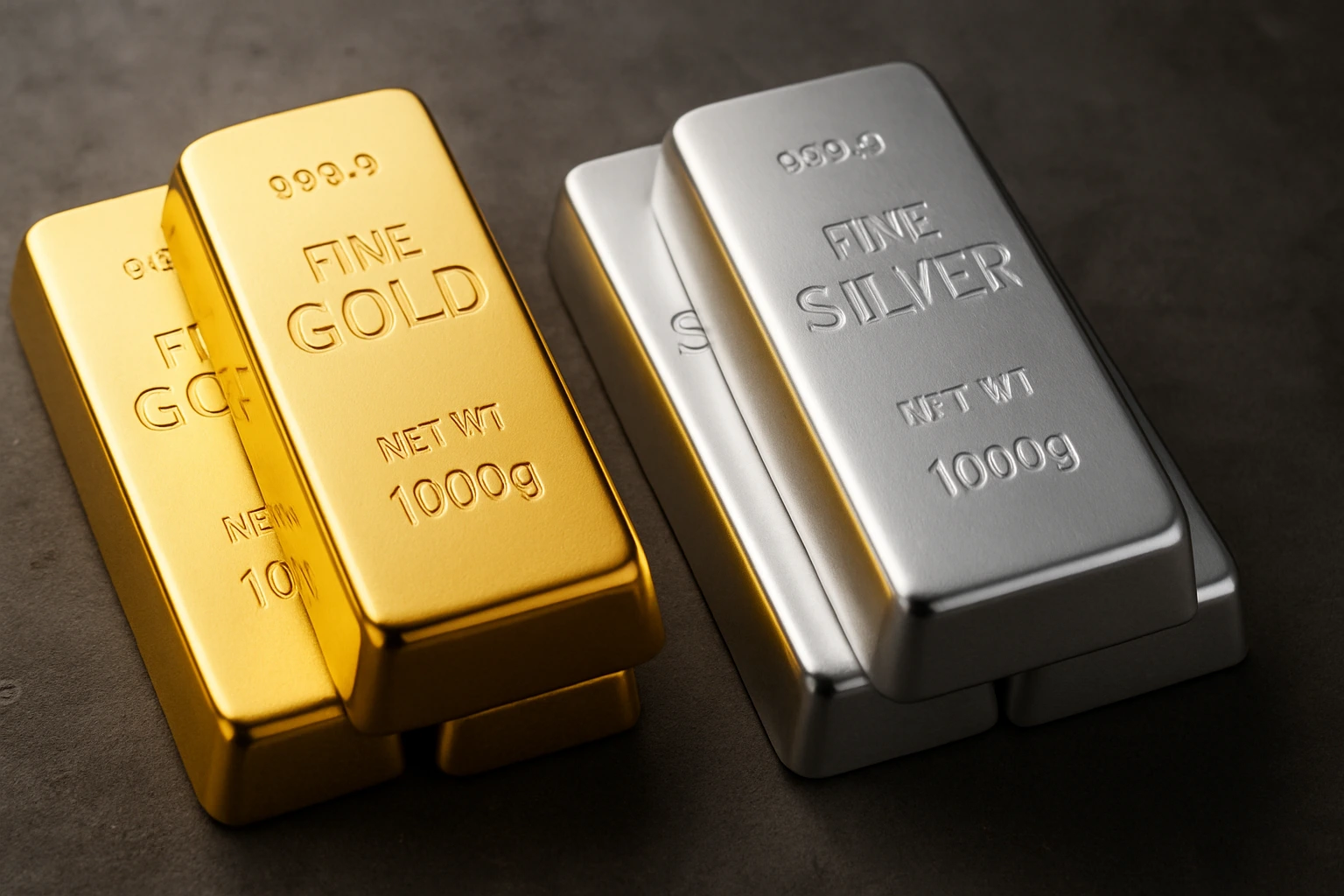
Silver prices retreated sharply Monday after briefly surpassing $80 an ounce for the first time, halting a record breaking rally driven by surging Chinese investment demand. Gold also fell in its steepest decline in two months as traders reevaluated the metals’ rapid gains.
Spot silver fell 9.2 percent to $71.96 an ounce in New York as of 10:17 am, after earlier reaching a record $84.01. Gold dropped 4.4 percent to $4,334.14 an ounce, pulling back from last week’s record high, while platinum and palladium experienced even steeper losses, falling more than 13 percent and 15 percent respectively.
The sharp sell off comes after weeks of speculative buying in global markets. Premiums for spot silver in Shanghai exceeded $8 an ounce above London prices, marking the largest spread on record. Analysts said such distortions reflect intense Chinese demand and potential supply constraints.
“Markets are adjusting to the reality that silver’s rally had outpaced fundamentals,” said Jonathan Li, commodity strategist at Global Metals Research. “The extreme premiums in Shanghai indicated that prices were unsustainably high.”
Silver’s 14-day relative strength index, a gauge of market momentum, showed a reading near 67, down from above 70 for the past three weeks.
A reading above 70 typically signals an overbought condition. Gold, which similarly had surged to record highs, fell sharply on signs of overvaluation.
Investors and fund managers cautioned that such rapid gains carried heightened risks. UBS SDIC Fund Management Co. raised concerns about potential heavy losses for investors exposed to silver’s volatility, noting that the fund’s premium on Shanghai silver contracts had exceeded 60 percent over underlying assets.
“Silver is not just a precious metal for investment; it is an industrial commodity with growing demand in solar cells and electronics,” said Priya Desai, commodities analyst at EcoMetals. “Low inventories amplify price swings when speculative flows intensify.”
Futures exchanges are also moving to manage risk. The CME Group announced that margins for some Comex silver contracts will be increased, aiming to curb speculative positions and stabilize markets.
The current sell off follows a prior supply squeeze in London’s silver market just two months ago, when flows into exchange traded funds and exports to India drained inventories.
While London vaults have seen inflows since, much of the world’s available silver remains in New York, with traders awaiting the outcome of a US investigation that could result in tariffs or trade restrictions.
By comparison, gold’s correction has been less severe but still notable, reflecting its dual role as both a safe haven and speculative asset. Platinum and palladium, with more limited market liquidity, experienced some of the sharpest percentage declines.
Traders in Shanghai described the market as “tense and unpredictable” amid record premiums. “We have not seen such divergence between local and international prices,” said Chen Wei, a Shanghai based silver trader. “It creates both opportunity and risk for investors.”
In London, vault managers noted inflows from ETF redemptions have somewhat replenished silver supplies. “While inventories are recovering, the global market remains highly sensitive to investor behavior,” said Thomas Grant, operations manager at a major London vault.
Analysts suggest that silver and other precious metals may continue to experience volatility in the near term. With industrial demand strong and inventories low, price swings could remain pronounced. Some market observers expect consolidation below $80 per ounce before any renewed upward trend.
“Investors should expect a choppy period ahead,” said Desai. “Speculation may ease, but structural demand for silver and gold remains intact, particularly in technology and renewable energy sectors.”
Monday’s sell off underscores the risks of rapid speculative rallies in precious metals. Silver’s retreat from record highs highlights the influence of both investor behavior and industrial demand on pricing.
Gold, platinum, and palladium also experienced significant corrections, reflecting broader market recalibration.
As global inventories remain tight and Chinese demand persists, analysts expect continued volatility, with metals likely to stabilize once speculative pressures subside.


