
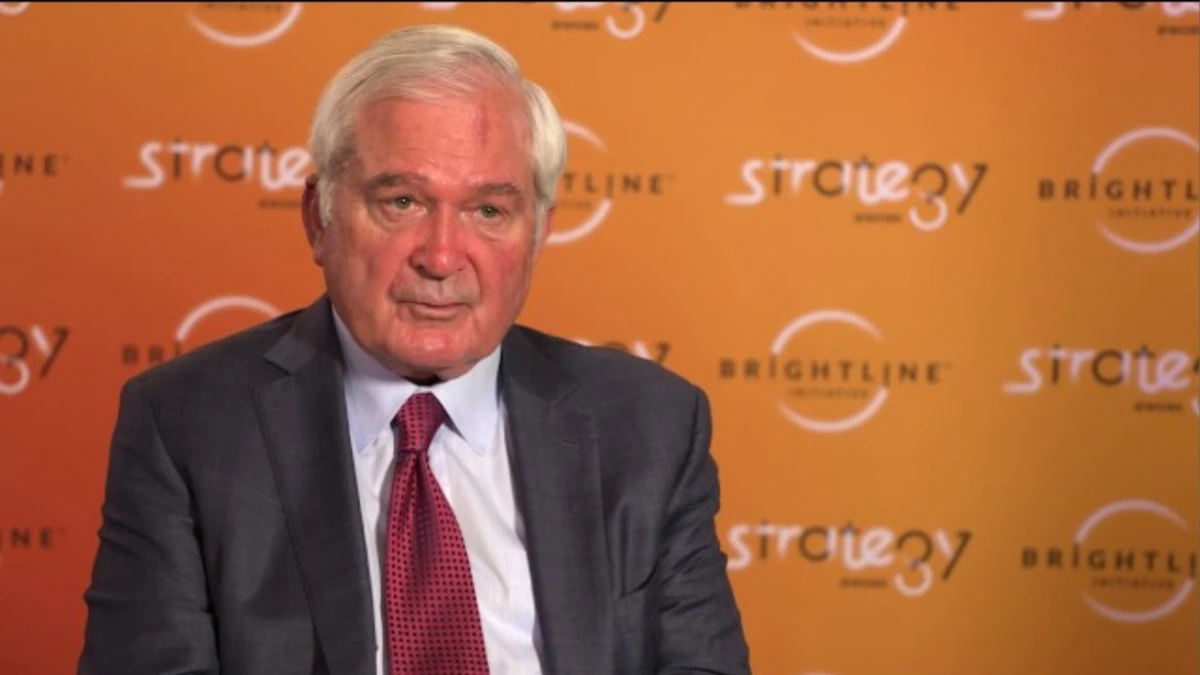
Louis V. Gerstner Jr., the former chairman and chief executive officer of International Business Machines Corp. credited with orchestrating one of the most significant turnarounds in corporate history, died at the age of 83.
Gerstner led IBM from 1993 to 2002, guiding the technology giant through a period of profound uncertainty as the industry underwent rapid change.
When Gerstner assumed the helm of IBM, the company faced declining profits, fragmented business units, and questions about its relevance in a rapidly evolving technology market.
Industry analysts at the time debated whether the company should split or focus on core operations.
Gerstner, who arrived from American Express with no prior experience in technology, immediately signaled a cultural and strategic shift.
One of his early actions, recalled in IBM histories, was to halt a lengthy internal presentation and simply say, “Let’s just talk.” The message underscored his emphasis on direct communication, customer focus, and practical decision making.
“He understood that IBM had become too inward looking,” said Karen Mitchell, a technology historian at Northeastern University.
“His insistence on putting clients at the center of every decision was a game changer for the company and for the broader industry.”
Experts credit Gerstner with redefining corporate strategy in the information technology sector.
Rather than dismantle IBM’s multiple divisions, he opted to maintain the company’s integrated structure, believing clients sought unified solutions rather than fragmented offerings.
“Lou’s approach was both strategic and human,” said Mark Reynolds, former chief operating officer at a major enterprise software firm. “He recognized that culture drives execution.
His focus on renewing IBM’s values and encouraging employees to confront reality directly enabled innovation that was relevant to clients, not just internally interesting.”
Gerstner emphasized facts and client outcomes over hierarchy and tradition, introducing a results oriented culture that valued execution alongside long term relevance.
Analysts note that this mindset contributed to IBM regaining profitability and market share during his tenure.
Under Gerstner’s leadership, IBM shifted from near record losses in the early 1990s to steady growth by the late 1990s.
Revenue, which fell to $69 billion in 1993, rose to $88 billion by 2000, reflecting strong demand for integrated IT solutions.
The company’s stock also rebounded, with share prices more than doubling during his tenure, illustrating renewed investor confidence.
Industry data indicate that IBM’s competitors, such as Hewlett Packard and Dell, were increasingly focused on hardware commoditization, while Gerstner’s IBM invested in services and solutions that addressed enterprise needs end to end.
This repositioning became a model for large scale corporate transformation in the technology sector. Former IBM employees recall Gerstner’s accessibility and focus on candid discussion.
“He would walk the halls, ask what was really happening on the client side, and insist on honest feedback,” said Michael Tan, who joined IBM in 1995.
“It was a new way of working. People began measuring success by client impact rather than internal politics.”
Clients also noticed the shift. “Working with IBM in the late 1990s, we saw a company that was genuinely listening and adapting,” said Laura Simmons, CIO of a multinational banking firm at the time.
“Gerstner’s leadership made IBM a partner rather than just a vendor.” Gerstner’s death prompts reflection on the enduring influence of his strategies on IBM’s current operations.
Analysts suggest that his principles of customer centricity, cultural alignment, and integrated solutions remain relevant as IBM navigates artificial intelligence, cloud computing, and global enterprise services.
“While the technology landscape has changed dramatically, the lessons of Gerstner’s tenure are still applicable,” said Reynolds. “Leadership that aligns culture with strategy is always in demand, especially for companies undergoing transformation.”
Louis Gerstner’s passing marks the end of a significant chapter in corporate history. His leadership not only stabilized IBM during a critical period but also set a template for integrating culture, strategy, and client focus in large enterprises.
Gerstner’s approach continues to inform business practices across industries, leaving a legacy of pragmatic leadership grounded in human understanding and operational excellence.


