
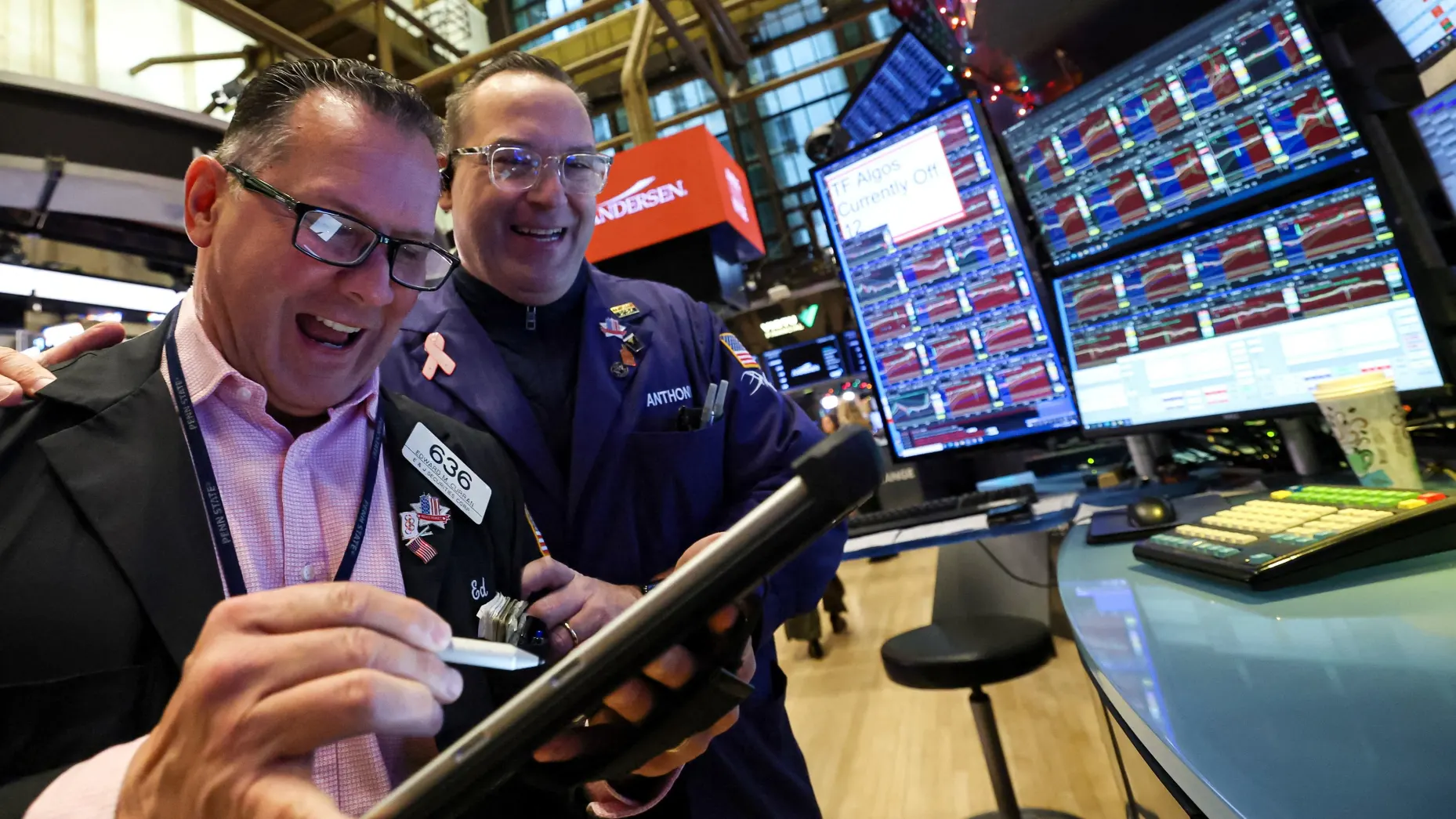
New York — The S&P 500 rose to a new intraday record Wednesday as investors navigated a holiday shortened trading session, building on gains from the previous day.
The broad market index was last up 0.3 percent, while the Nasdaq Composite advanced 0.2 percent and the Dow Jones Industrial Average gained 269 points, or 0.6 percent.
Nike shares surged four percent after Apple CEO Tim Cook disclosed purchases in the apparel maker, while Micron Technology climbed three percent.
Tech heavy stocks that had driven gains on Tuesday, including Alphabet, Nvidia, Broadcom and Amazon, continued to show strength. The S&P 500 closed at a record 6,909.79 on Tuesday.
The market momentum follows the release of a third quarter US gross domestic product report that exceeded expectations. The Commerce Department reported GDP growth of 4.3 percent, surpassing the Dow Jones consensus estimate of 3.2 percent.
The reading was delayed by the recent government shutdown, causing initial market uncertainty. The strong GDP report initially led traders to temper expectations for early interest rate cuts.
Nevertheless, futures markets still signal two potential cuts by the end of 2026, according to the CME FedWatch Tool.
Investors are also monitoring the potential for a Santa Claus rally, a historically observed year end stock market surge that occurs in the final trading days of December and the opening days of January.
This year, the rally period is expected to run from the opening bell on Dec. 24 through Jan. 5. Thomas Martin, senior portfolio manager at Globalt Investments, described the period as likely to remain “quiet” due to lower trading volume.
However, he noted that market trends remain slightly biased upward. “Could it be up one percent or two percent before the end of the year? Sure, that’s sort of standard,” Martin said.
“Do I expect an eye popping kind of rally? No, because I don’t really think we’re going to get any news that’s going to do that.”
Other analysts emphasized that while current momentum supports record level valuations, investors remain cautious.
“Markets have been resilient, but the pace of growth may be constrained by ongoing global uncertainties,” said Laura Chen, an equity strategist at Meridian Capital.
The S&P 500 has steadily climbed in 2025, supported by technology and consumer discretionary sectors. Year to date gains have been driven by strong corporate earnings, resilient consumer spending and signs of a moderating inflation environment.
Meanwhile, the Dow Jones Industrial Average has shown a 0.6 percent increase in Wednesday trading, reflecting steady contributions from industrial and financial stocks. Nasdaq’s 0.2 percent rise highlights continued strength among major tech companies.
Investors expressed cautious optimism amid the holiday season. “It’s encouraging to see the S&P 500 reach a new record, but I’m keeping a close eye on potential interest rate moves next year,” said Michael Rivera, a portfolio manager in New York.
Retail traders also noted a willingness to maintain positions. “Even in a quiet market, there’s an opportunity to see modest gains before the end of the year,” said Sarah Thompson, a small investor in Chicago.
Market watchers expect subdued trading activity over the Christmas period, with the New York Stock Exchange scheduled to close early at 1 pm. ET Wednesday and remain closed Thursday for Christmas Day.
Analysts anticipate that, barring unexpected economic data or corporate announcements, the S&P 500 could continue modest gains into the first week of January.
“While record highs are positive for sentiment, investors are weighing the potential impacts of global economic trends and policy decisions,” Chen said. “The market may move gradually, rather than sharply, over the coming weeks.”
The S&P 500 reached a fresh intraday record Wednesday amid continued gains in technology and consumer sectors, supported by a stronger than expected GDP report and hopes for a year end rally.
Analysts expect modest gains in the holiday shortened session, with investors monitoring interest rates and broader economic trends into the new year.


