
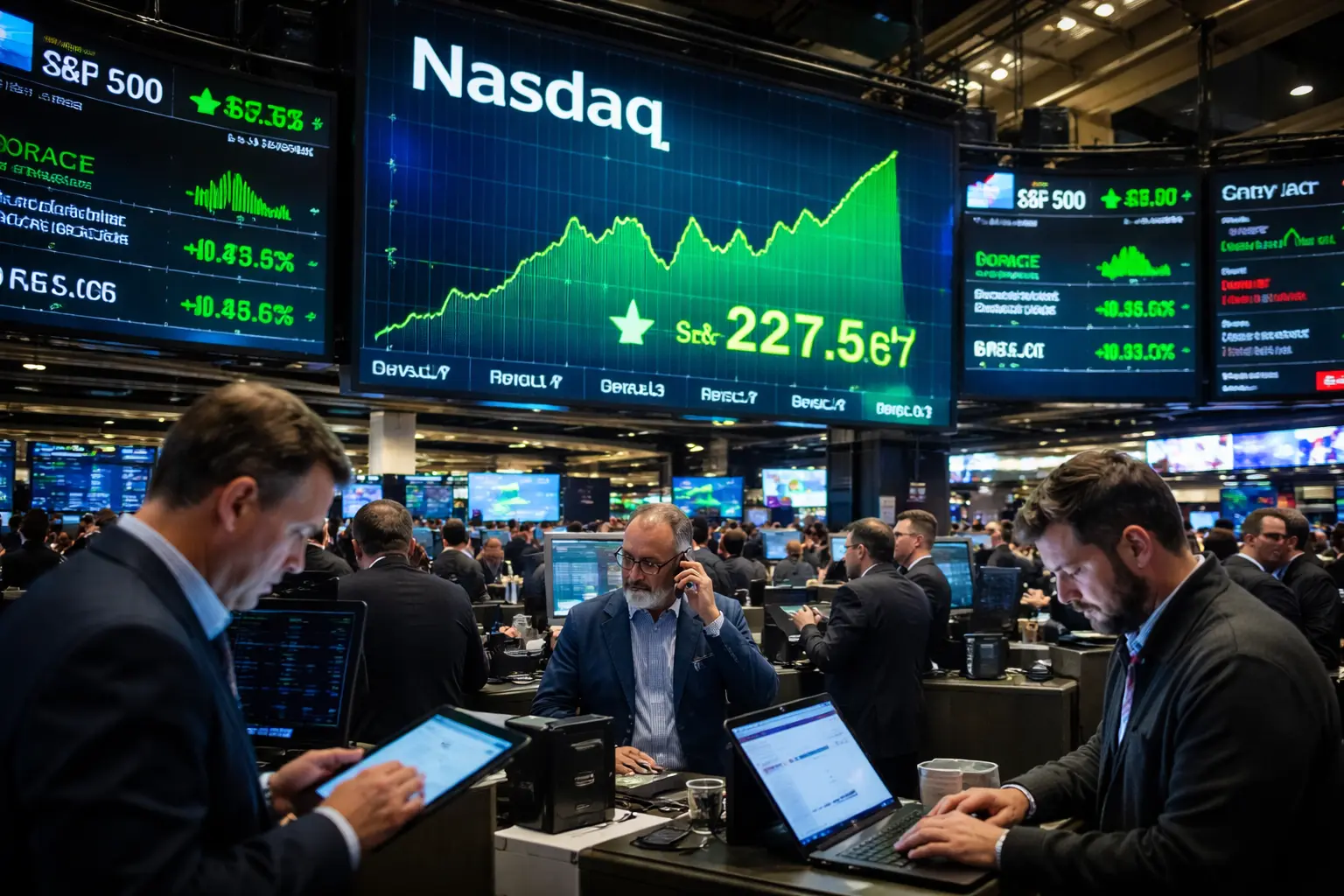
The Nasdaq rises one percent on Friday as US stocks posted broad gains, buoyed by strength in artificial intelligence linked shares and a sharp rebound in Oracle.
The rally offered a measure of relief to investors after a choppy period that tested confidence in the AI trade, which has driven much of the market’s momentum this year.
The Nasdaq Composite finished up about one point two percent. The S&P five hundred climbed zero point nine percent, while the Dow Jones Industrial Average added two hundred fifty nine points, or zero point five percent.
Friday’s advance followed several volatile sessions in which concerns over capital spending, data center financing and policy uncertainty weighed on technology stocks.
Oracle shares jumped more than seven percent after news that TikTok agreed to sell its US operations to a new joint venture involving Oracle and private equity firm Silver Lake.
Earlier in the week, Oracle had come under pressure after reports that a key backer pulled out of one of its data center projects, a development that rippled through other AI-related stocks including Broadcom and Advanced Micro Devices.
The Nasdaq rises amid signs that investors are reassessing whether recent pullbacks in the sector went too far, particularly as companies continue to post strong revenue guidance tied to AI demand.
Market strategists cautioned that while the rebound is notable, volatility may persist. Tom Garretson, senior portfolio strategist at RBC Wealth Management, said the scale of spending required to support AI infrastructure remains a key issue.
“The kind of onslaught of issuance from some of the hyperscalers and some of the AI trades could weigh on markets into two thousand twenty six,” Garretson said.
“At the same time, these are among the best rated companies in terms of credit quality, and they have the capacity to finance large projects.”
Garretson added that expectations for continued capital expenditures are still underpinning broader growth forecasts across the market.
Other major AI linked stocks also moved higher. Nvidia rose more than three percent after Reuters reported that the Trump administration is reviewing whether the company can sell advanced AI chips to China.
Earlier this month, President Donald Trump said Nvidia would be allowed to ship its H two hundred chips to approved customers in the country.
Micron Technology extended gains from the prior session, climbing more than seven percent. The stock had surged ten percent on Thursday after the memory chipmaker issued strong revenue guidance for the current quarter, easing investor jitters around demand trends.
Despite Friday’s gains, weekly performance remained mixed. The Nasdaq has risen about zero point three percent for the week, while the S&P five hundred was little changed. The Dow remained down about zero point five percent week to date.
Traders and investors said the tone felt cautiously optimistic. “There’s relief seeing some of these names bounce back,” said Daniel Moore, a portfolio manager at a New York-based investment firm. “But no one thinks the path higher will be smooth from here.”
On the trading floor, activity was elevated as options tied to stocks, indexes and exchange traded funds expired simultaneously in an event known as quadruple witching.
Goldman Sachs estimated more than seven point one trillion dollars in notional options exposure was set to expire, the largest such expiration on record.
Looking ahead, analysts said policy decisions, earnings updates and spending plans from major technology firms will remain central to market direction.
The Nasdaq rises on optimism tied to AI growth, but investors are also monitoring risks from tariffs, global demand and regulatory scrutiny.
Not all companies shared in the gains. Nike fell about eleven percent after reporting weaker revenue in Greater China during its fiscal second quarter. The company also cited higher tariffs as a drag on gross margins.
The Nasdaq rises to cap a volatile week as AI linked stocks regained footing and investors weighed signs of durable demand against longer term risks.
While the rebound reflects renewed confidence in select technology leaders, market participants remain alert to potential swings as the year draws to a close and uncertainty extends into the next.


