
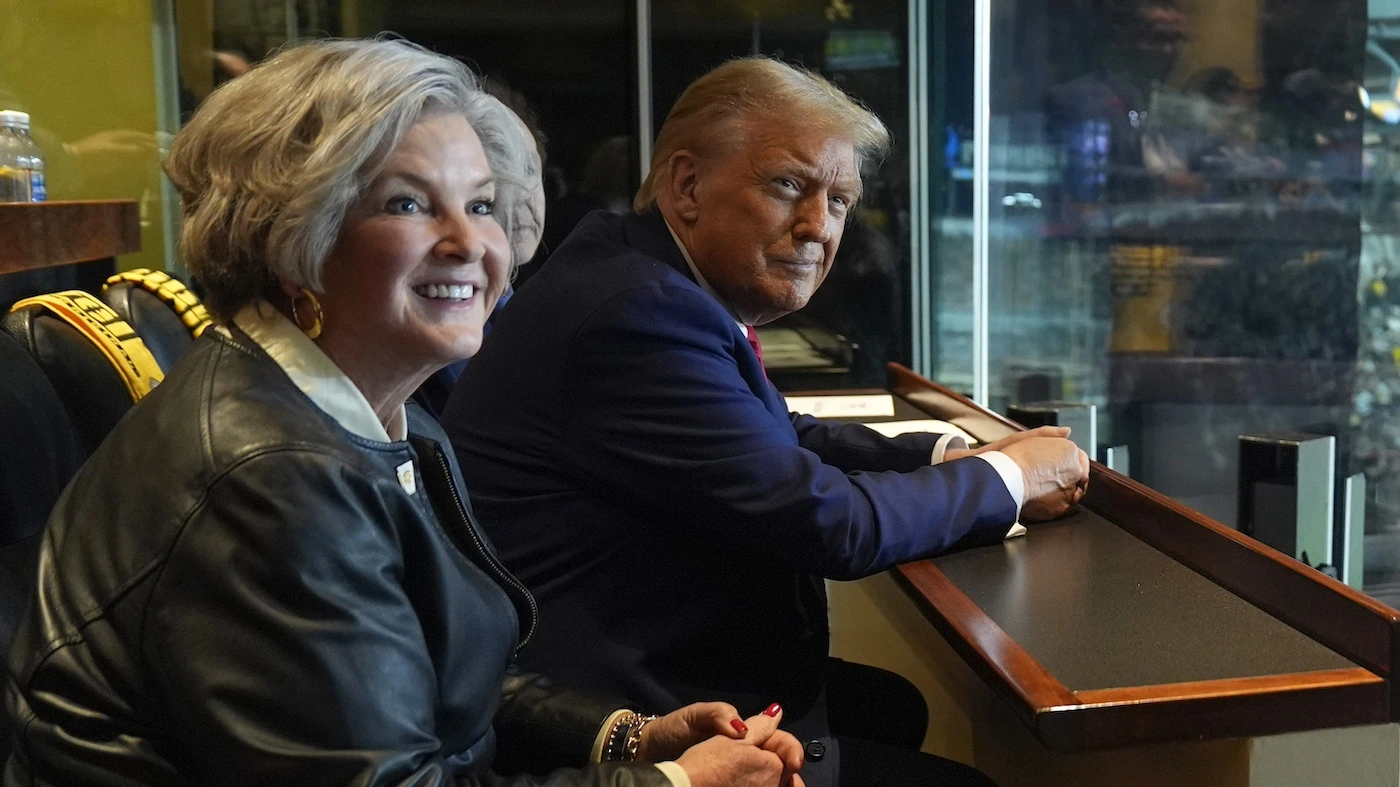
WASHINGTON — A series of candid interviews given by White House chief of staff Susie Wiles has drawn renewed attention to the inner workings of President Donald Trump’s second term administration, offering an unusually frank portrait of the president’s leadership style, decision making and governing instincts.
The interviews, conducted over the past year with author Chris Whipple and published Tuesday by Vanity Fair, include Wiles’ reflections on Trump’s temperament, his approach to political opponents and moments where he dismissed her advice.
The disclosures, and Wiles’ subsequent public pushback, have prompted discussion in Washington about transparency, loyalty and the role of a chief of staff in a highly centralized presidency.
Susie Wiles, a veteran Republican strategist, became Trump’s chief of staff at the start of his second term, succeeding a succession of short tenured aides during his first administration.
Known for maintaining a low public profile, Wiles has been credited by allies and critics alike with stabilizing daily operations in the West Wing.
In the interviews, Wiles described Trump as possessing “an alcoholic’s personality,” despite the president’s long standing abstention from alcohol.
She attributed the comparison to exaggerated traits rather than substance use, citing her upbringing with an alcoholic parent.
She also acknowledged Trump’s willingness to pursue retribution when opportunities arise, though she stopped short of describing it as a governing obsession.
Following publication, Wiles said the Vanity Fair article distorted her remarks and omitted broader context, calling it a “disingenuously framed hit piece” in a post on X.
Presidential historians said the Susie Wiles interviews are notable less for their content than for their source.
“It is extremely rare for a sitting chief of staff to speak with this level of candor while remaining in office,” said Dr. Alan Mercer, a political historian at Georgetown University. “Traditionally, chiefs of staff act as buffers, not narrators.”
Mercer added that the comments reflect the tension inherent in the role. “You are expected to be both loyal and honest, often simultaneously, which is a difficult balance.”
Former White House officials from both parties noted that Wiles’ descriptions align with long observed aspects of Trump’s leadership style, though they emphasized that such traits are interpreted differently by supporters and critics.
Historically, most chiefs of staff reserve detailed assessments for memoirs written years after leaving office. According to a review by the Miller Center, fewer than ten percent of senior White House aides have spoken on the record about internal dynamics while still serving.
In Trump’s first term, four chiefs of staff cycled through the role in four years. By contrast, Wiles has remained in position since the start of the second term, underscoring her influence and the president’s confidence in her management.
Reaction among voters was mixed. “She’s just saying what a lot of people already believe,” said Mark Reynolds, a Republican voter from Ohio. “Trump is intense, and that’s why his supporters like him.”
Others viewed the remarks as inappropriate. “If you’re the chief of staff, you shouldn’t be airing internal views, even in interviews,” said Linda Chavez, an independent voter from Arizona.
Administration officials declined to comment beyond Wiles’ public statement, while White House allies stressed that policy outcomes, not personality descriptions, should remain the focus.
It remains unclear whether the interviews will have lasting political impact. Wiles continues to attend meetings and public events alongside the president, and there has been no indication of a change in her standing.
Analysts said the episode may reinforce Trump’s long running distrust of media portrayals while also highlighting the challenges of governing under constant scrutiny.
The Susie Wiles interviews have provided a rare, inside look at the dynamics of Trump’s second term White House, revealing both the proximity and tension that define the chief of staff role.
While Wiles disputes the framing of her remarks, the episode underscores the enduring interest in how personality, power and process intersect at the highest levels of government.


