
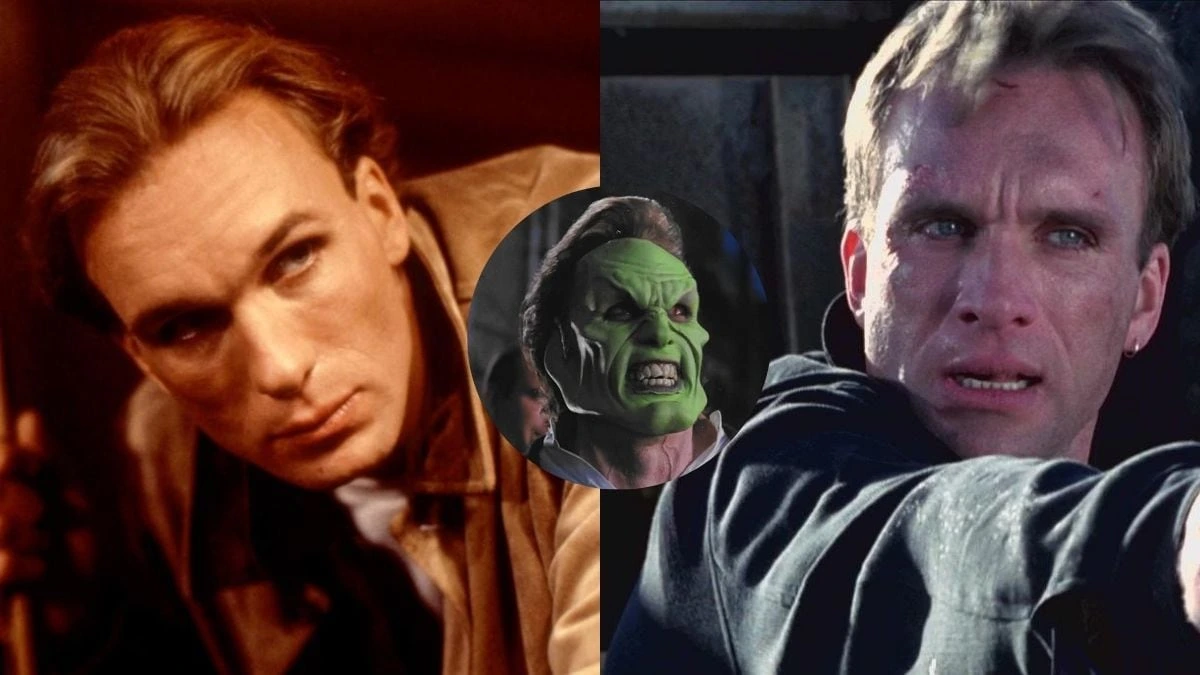
Actor Peter Greene, whose intense performances helped define a generation of crime and thriller films, was found dead Friday afternoon inside his Lower East Side apartment, according to police and his longtime manager.
Peter Greene found dead at age sixty marks the sudden end of a career that spanned decades and left a distinct imprint on Hollywood’s portrayal of complex villains.
Greene was discovered unresponsive in his Clinton Street residence at about three twenty five pm He was pronounced dead at the scene. New York City police said no foul play was suspected and that the medical examiner would determine the cause of death.
His manager, Gregg Edwards, confirmed the death and said Greene had remained active in film projects until shortly before his passing.
Peter Greene rose to prominence during the nineteen nineties with memorable roles in major studio films. He was widely recognized for portraying Dorian Tyrell, the ruthless mobster in “The Mask,” opposite Jim Carrey and Cameron Diaz.
He also appeared briefly in Quentin Tarantino’s “Pulp Fiction” and later in “The Usual Suspects,” cementing his reputation as a formidable character actor.
Born in Montclair, New Jersey, Greene’s early life was marked by instability. In a nineteen ninety six interview with Premier magazine, he said he ran away from home at fifteen and spent years living on the streets of New York City.
During that period, he struggled with drug use and later became involved in dealing before turning his life toward acting.
Peter Greene found dead has prompted renewed attention to his long and uneven journey through Hollywood, where his talent often outweighed his opportunities.
Film historian Laura Mendelson said Greene represented a specific era of American cinema. “He embodied a raw realism that directors sought in crime films of the nineties,” Mendelson said.
“His performances were unsettling because they felt authentic rather than theatrical.” Entertainment industry analyst Robert Chan said Greene’s career reflected how character actors often face limited paths.
“Actors known for villain roles frequently struggle to escape that image,” Chan said. “Greene had range, but the industry often returned him to similar characters.”
According to data from the Screen Actors Guild Foundation, fewer than one in five supporting actors who achieve breakout recognition in a major studio film go on to sustain consistent leading or high profile roles beyond ten years.
Greene’s career followed a pattern common among character actors of his era, marked by bursts of visibility followed by long periods in independent or low budget productions.
Despite that, industry records show Greene appeared in more than forty film and television projects over three decades, a figure that places him among the more consistently working character actors of his generation.
Peter Greene found dead adds to a growing list of performers from the nineteen nineties whose careers bridged studio blockbusters and independent cinema.
Neighbors on Clinton Street described Greene as a quiet presence in the building. “He kept to himself but was always polite,” said Maria Alvarez, who lives in the same apartment complex.
“People knew he was an actor, but he lived like everyone else here.” Edwards said Greene had recently been preparing for a new role in an independent thriller titled “Mascots,” scheduled to begin production in January with Mickey Rourke.
“He was focused and excited,” Edwards said. “He wanted to get the performance exactly right.” A representative for the project confirmed production plans were now on hold.
Authorities said the medical examiner’s findings would be released after an autopsy. No timeline was provided.
Greene’s final completed works may still reach audiences through independent distribution channels. Industry observers said renewed interest in his earlier films was likely as viewers reassess his contributions.
Peter Greene found dead also raises broader questions about the long term support systems available to actors whose careers fluctuate between mainstream and independent projects.
Peter Greene found dead at sixty closes a chapter on a career defined by intensity, resilience and complexity.
Known for unforgettable supporting roles and a life marked by hardship and persistence, Greene leaves behind a body of work that reflects a distinctive moment in American film.
Authorities continue to investigate the cause of death as colleagues and neighbors remember an actor whose presence resonated far beyond the screen.


